






























Coordinating Minister for Economic Affairs Airlangga Hartarto revealed on January 14 that the Indonesian government is set to initiate significant developments following discussions with President Prabowo Subianto and relevant ministers in Bogor, West Java.
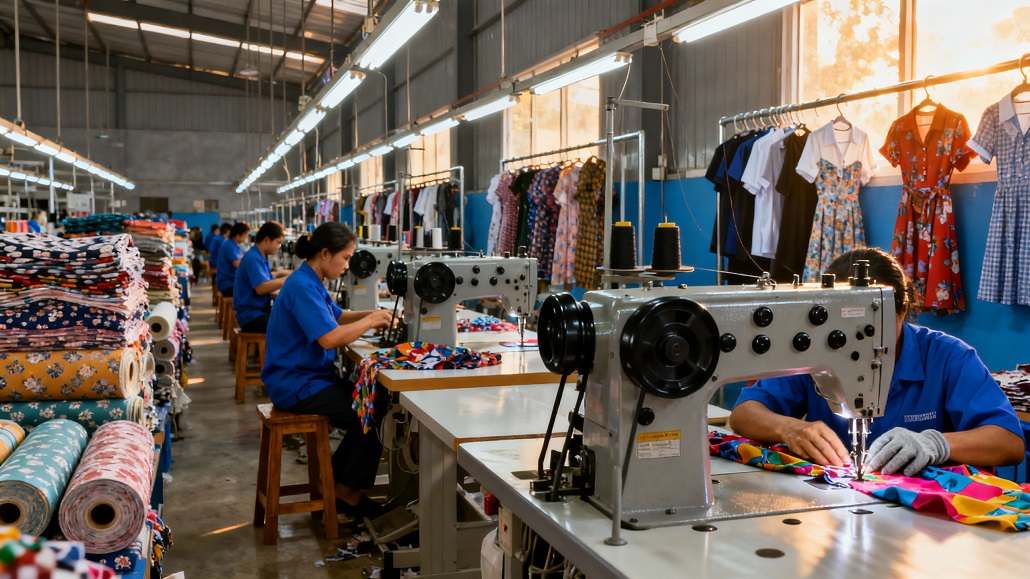
The primary goal of this initiative is to revitalize the textile sector, which is crucial for employment and greatly contributes to national exports, according to local news outlet Jakarta Globe ID. The Indonesian government also aims to address challenges faced by associated industries, including footwear and garments.
The textile industry plays a vital role in Indonesia’s economy, providing jobs for many individuals and making substantial contributions to export revenue. Airlangga noted that the sector is currently grappling with increasing challenges, particularly due to tariffs imposed by the United States—a key market for Indonesian textile and footwear products.
Historically, the Indonesian government operated a State-Owned Enterprise (SOE) in the textile sector, and there are plans to restore this function. “Indonesia once had a textile SOE, and this will be revived with $6 billion in funding to be prepared by Danantara Indonesia,” stated Airlangga during a recent meeting of the Indonesian Business Council in Jakarta.
The new SOE is expected to enhance production capabilities and improve Indonesia’s competitiveness on the global stage. To support the industry further, authorities are implementing policy measures aimed at expanding market access through trade partnerships with the European Union (EU) under the Comprehensive Economic Partnership Agreement.
Airlangga highlighted that with these efforts, Indonesia targets national textile exports to reach $40 billion in the upcoming years. The textiles and apparel sectors remain key employers, particularly in regions like Central Java, West Java, and Banten.
These industries mainly employ semi-skilled and low-to-middle-income workers who often have limited job alternatives outside manufacturing. Variations in these sectors can lead to significant social and economic consequences, including job losses, factory closures, and a rise in informal employment.
Earlier this month, local news indicated that Indonesia had introduced safeguard duties on cotton woven fabrics as of January 10 to protect its domestic textile industry. The government signed this policy on December 22, intending to activate these measures when rising imports pose a threat to local producers. These actions reflect the commitment to reviving the textile sector and ensuring its sustainable growth.