































Washington, D.C. — January 29, 2026 — The National Council of Textile Organizations (NCTO), which represents a wide array of U.S. textile manufacturers—from fiber production to finished goods has warmly welcomed the announcement of a reciprocal trade agreement with El Salvador. This agreement fortifies and enhances trade relations in line with the Dominican Republic-Central America-United States Free Trade Agreement (CAFTA-DR).
Kim Glas, President and CEO of NCTO, emphasized the significance of this deal: “NCTO and our industry greatly appreciate the administration’s actions on qualified textile and apparel goods for El Salvador under CAFTA-DR. These steps will help fortify a critical export market for the U.S. textile industry and our workforce.”
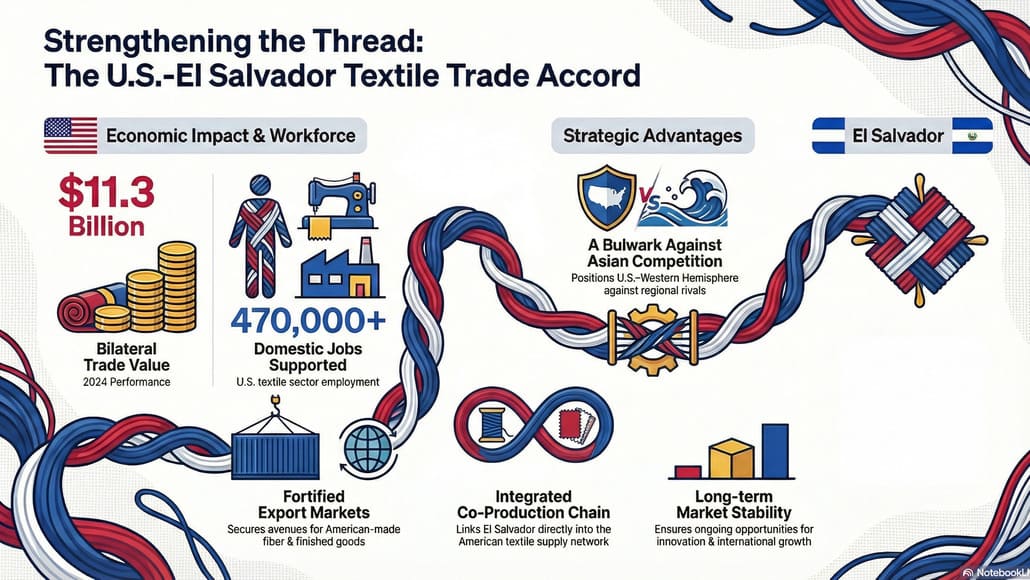
The agreement is crucial as El Salvador acts as a vital component of the CAFTA-DR region, contributing to the co-production chain alongside the American textile supply network. In 2024, this partnership facilitated an impressive $11.3 billion in bilateral trade while supporting over 470,000 jobs within the domestic textile sector.
Glas further pointed out the strategic advantages: “Today’s action will reinforce the strength of the U.S. textile industry. The U.S.–Western Hemisphere supply chain is a strategic bulwark against China and other Asian competitors. We welcome the opportunity to work with the Trump administration to further fortify this vital region and strongly appreciate this important announcement.”
This reciprocal trade agreement with El Salvador aligns harmoniously with the textile industry’s pursuit of enhanced market stability and growth, ensuring ongoing opportunities for American-made textiles in competitive international landscapes.
The initiative not only strengthens ties with El Salvador but also ensures that the U.S. textile sector secures its position and opens new avenues for future growth.
In an ever-evolving textile landscape, NCTO remains committed to advocating for policies that promote American manufacturers, fostering an environment where domestic production can continue to innovate and thrive.
Overall, this reciprocal trade agreement with El Salvador signifies a pivotal step toward reinforcing the resilience and global competitiveness of the U.S. textile industry, while also bolstering jobs and economic development in the region.