































PSI 2026

Vietnam Textile and Garment Sector to Raise Export Revenue

Note* - All images used are for editorial and illustrative purposes only and may not originate from the original news provider or associated company.

Subscribe

- Never miss a story with notifications

- Gain full access to our premium content

- Browse free from up to 5 devices at once

Media Packs

Expand Your Reach With Our Customized Solutions Empowering Your Campaigns To Maximize Your Reach & Drive Real Results!
– Access The Media Pack Now!
– Book a Conference Call
Leave Message for us to Get Back

Related stories

Proposed Anti-Dumping Duties on MEG Imports See Opposition

The textile and apparel industry organizations in India have...

The Environmental Benefits and Carbon Savings of Textile Recycling

Textile recycling delivers substantial and quantifiable environmental benefits spanning carbon emission reduction, water conservation, chemical usage elimination, and resource preservation. Comprehensive lifecycle assessment data demonstrates that fiber-to-fiber textile recycling achieves 87% carbon reduction compared to virgin polyester production, eliminates 99% of water consumption compared to virgin cotton cultivation, and reduces chemical usage dramatically across production stages. These environmental advantages compound across material cycles, creating cumulative environmental benefit justifying aggressive circular textile system scaling as critical climate change mitigation and environmental protection strategy.

How Textile Recycling Supports Sustainable Fashion Trends and Market Shifts

Textile recycling is fueling emerging sustainable fashion movements and accelerating market shifts toward circular business models as consumer preferences increasingly prioritize environmental impact alongside style and quality. Generational preference evolution, regulatory momentum, brand sustainability positioning, and genuine circular product availability are converging to reshape fashion industry toward sustainable and circular models. Textile recycling infrastructure and technology advancement directly enables these market shifts by providing the material foundation necessary for authentic circular fashion transition at scale.

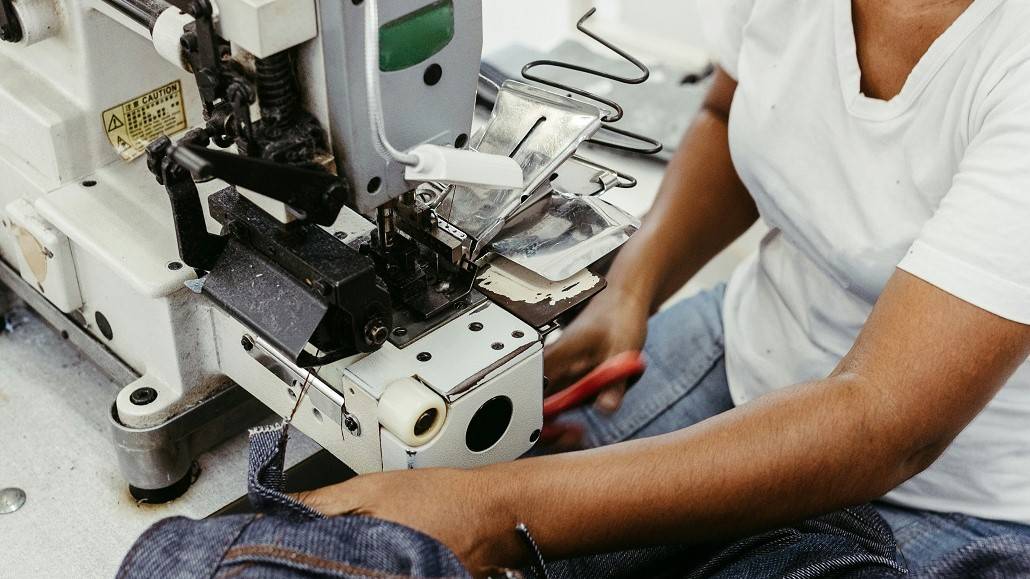
In spite of the global market volatility, the Vietnam textile and garment sector has maintained growth momentum, discovered new markets, and is also on the verge of raising its 2025 export revenue by 5.6% year on year – YoY to $46 billion, which is a tad short of the $48 billion target that it set at the start.

The chairman of the Vietnam Textile and Apparel Association – VITAS, Vu Duc Giang, has gone on to attribute the $2 billion shortfall to the market fluctuations along with international policy transitions.

It is well to be noted that due to the escalating trade tensions between the US and China, higher tariffs on numerous textile and garment products, and also the complicated geopolitical situation, the global orders and consumer demand have been directly affected.

Because of controlled consumer spending, businesses are indeed forced to accept smaller orders and much shorter delivery schedules as well as tighter production timelines. Due to this, profit margins have been significantly shrunk.

Companies are managing fragmented orders, altering production plans, and also raising investment in order to meet green standards as well as traceability requirements so as to retain the international clients, a domestic media outlet cited Giang as opining this.

The general director of the Vietnam National Textile and Garment Group – Vinatex, Cao Huu Hieu, went on to point out that the biggest challenge of the industry is its heavy dependence on imported inputs.

The absolute dependence when it comes to imported cotton and somewhere around 90-95% dependence on imported fibres, in addition to dyes and chemicals, goes on to leave the sector exposed if the U.S. raises tariffs on products having a high proportion of third-country origin material.

Interestingly, VITAS said that the Middle East and Africa are indeed emerging as new markets as the traditional destinations go on to face quite a rising uncertainty.

There are numerous Vietnamese companies in the sector that are expanding their reach overseas. Almost 30 enterprises now function in Indonesia, Bangladesh, Myanmar, Egypt, and Africa, as well as Latin America, thereby forming multinational production networks in order to elevate competitiveness along with resilience.

Giang remarked that the multi-site production model in the Vietnam textile and garment sector enables the companies to spread political as well as trade risks, optimize the labor along with logistics costs, and also strengthen the credibility with global buyers.

Labor costs across numerous countries are significantly lower as compared to Vietnam, while the preferential trade arrangements over there offer further tariff benefits.

Latest stories

Related stories

Proposed Anti-Dumping Duties on MEG Imports See Opposition

The textile and apparel industry organizations in India have...

The Environmental Benefits and Carbon Savings of Textile Recycling

Textile recycling delivers substantial and quantifiable environmental benefits spanning carbon emission reduction, water conservation, chemical usage elimination, and resource preservation. Comprehensive lifecycle assessment data demonstrates that fiber-to-fiber textile recycling achieves 87% carbon reduction compared to virgin polyester production, eliminates 99% of water consumption compared to virgin cotton cultivation, and reduces chemical usage dramatically across production stages. These environmental advantages compound across material cycles, creating cumulative environmental benefit justifying aggressive circular textile system scaling as critical climate change mitigation and environmental protection strategy.

How Textile Recycling Supports Sustainable Fashion Trends and Market Shifts

Textile recycling is fueling emerging sustainable fashion movements and accelerating market shifts toward circular business models as consumer preferences increasingly prioritize environmental impact alongside style and quality. Generational preference evolution, regulatory momentum, brand sustainability positioning, and genuine circular product availability are converging to reshape fashion industry toward sustainable and circular models. Textile recycling infrastructure and technology advancement directly enables these market shifts by providing the material foundation necessary for authentic circular fashion transition at scale.

Subscribe

- Never miss a story with notifications

- Gain full access to our premium content

- Browse free from up to 5 devices at once

Media Packs

Expand Your Reach With Our Customized Solutions Empowering Your Campaigns To Maximize Your Reach & Drive Real Results!

– Access The Media Pack Now!
– Book a Conference Call
Leave Message for us to Get Back

Translate »