
































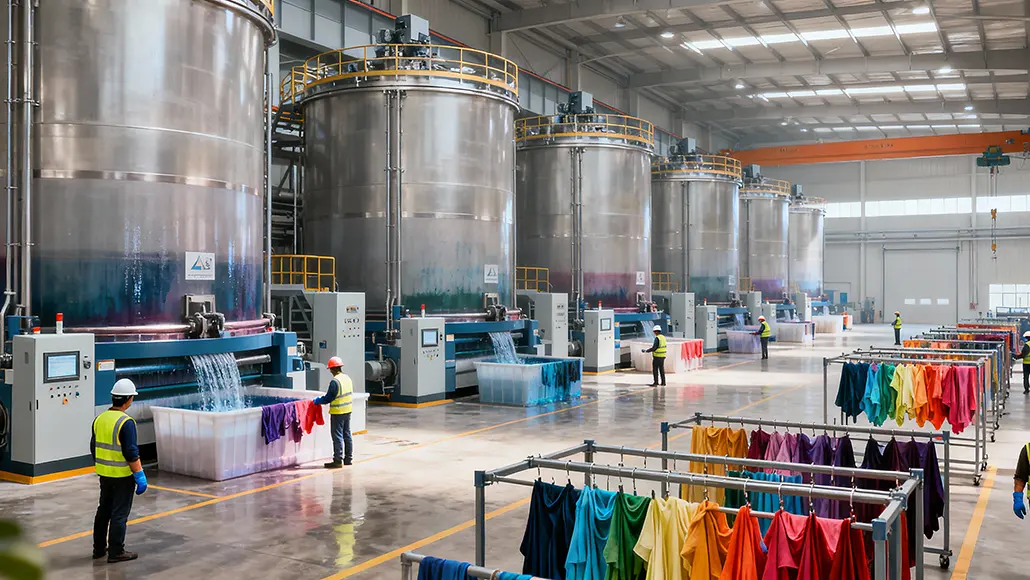

The textile industry confronts an environmental crisis of staggering proportions. Conventional manufacturing processes generate approximately 10 to 20 percent of global wastewater pollution, while simultaneously consuming unprecedented quantities of freshwater and generating significant greenhouse gas emissions. Dyeing and finishing operations alone account for three percent of global carbon dioxide emissions while consuming enormous volumes of water and introducing hundreds of chemical compounds into environmental systems. This production paradigm has become fundamentally unsustainable as global population increases, middle-class consumption grows, and climate change intensifies water scarcity across textile-manufacturing regions. Yet transformative solutions are emerging through low impact manufacturing methods that maintain apparel quality and performance while radically reducing environmental footprints. These technological innovations and process improvements represent the textile industry’s pathway toward genuine sustainability.
The Environmental Imperative for Low Impact Manufacturing
The global fashion and textile industry generates profoundly damaging environmental consequences across multiple dimensions. Conventional cotton production, despite representing significant portions of global fiber consumption, depends on intensive pesticide applications. Cotton cultivation consumes approximately 16 percent of global pesticides despite occupying merely 2.5 percent of cultivated agricultural land, creating severe ecosystem toxicity and agricultural worker health impacts. Synthetic fiber production relies on petroleum extraction and energy-intensive polymerization processes generating significant carbon emissions throughout production chains.
Textile dyeing and finishing operations present perhaps the most acute environmental challenge. These production stages transform raw fibers into colored, textured, finished products suitable for garment manufacturing. Conventional dyeing requires vast water quantities—typically 40 to 150 liters of water per kilogram of fabric processed. This enormous water consumption proves particularly problematic in regions like India, Bangladesh, Vietnam, and Indonesia, where textile manufacturing concentrates heavily despite chronic water scarcity affecting agricultural production and drinking water availability.
Water pollution accompanying conventional dyeing proves equally concerning. Dyeing processes introduce synthetic dyes, chemical auxiliaries, heavy metals, and other toxic substances into wastewater streams. Though some jurisdictions require wastewater treatment, contaminated water frequently enters rivers, groundwater, and coastal ecosystems despite treatment. These chemicals persist in aquatic environments for decades, accumulating in fish and other organisms, eventually transferring through food chains to human consumers. The ecological consequences extend beyond direct toxicity to disruption of aquatic ecosystems and loss of biodiversity in waterways receiving textile industry discharge.
Chemical usage in conventional dyeing creates multiple environmental problems simultaneously. Synthetic dyes often require hazardous chemical auxiliaries to fix color to fibers—compounds including chromium, copper, mercury, and other heavy metals that accumulate in environments and organisms. Chemical fixation processes generate toxic byproducts requiring careful disposal. The sheer chemical volume—textile dyeing utilizes approximately 8,000 synthetic chemicals—creates management challenges even in facilities implementing best practices.
Energy consumption in conventional dyeing contributes substantially to textile industry carbon footprints. Heating enormous volumes of water to specific temperatures, maintaining those temperatures throughout dyeing cycles, and subsequently cooling water for discharge consumes vast energy quantities. In regions where electricity generation depends on fossil fuels, this energy consumption translates directly to significant carbon emissions. Even in regions utilizing renewable electricity, energy conservation remains desirable for reducing overall environmental impacts and improving economic efficiency.
Textile dyeing’s disproportionate environmental impact relative to its share of fashion industry production presents both challenges and opportunities. By transforming dyeing processes, manufacturers can achieve dramatic environmental improvements across multiple impact categories while maintaining product quality, performance, and consumer appeal.
Waterless Dyeing Technologies and Mechanisms
Waterless dyeing represents the most mature and commercially viable category of low impact manufacturing methods. These technologies fundamentally reimagine the dyeing process, eliminating water as the primary medium for color application while maintaining color quality and fastness equivalent to conventional methods. Multiple waterless dyeing approaches have reached commercial scale implementation, with leading fashion and outdoor brands actively adopting these technologies.
Supercritical carbon dioxide dyeing represents the most prominent waterless technology. This method exploits carbon dioxide’s unique properties under specific temperature and pressure conditions. At temperatures above 31 degrees Celsius and pressures exceeding 72 bar, CO2 enters a supercritical state where it behaves simultaneously as a liquid and a gas, penetrating fiber structures with remarkable effectiveness. Dyestuffs dissolve in supercritical CO2 and transfer to fibers through controlled diffusion, achieving color transfer comparable to conventional water-based dyeing while using zero water.
The process begins with fabric and dyestuff placement in sealed vessels. Liquid CO2 introduction followed by precise temperature and pressure control transforms the carbon dioxide to its supercritical state. As dyes dissolve and penetrate fibers, color fixation occurs through temperature and pressure adjustments optimized for specific dyestuff chemistries. Upon completion, pressure reduction transforms supercritical CO2 back to gaseous form, which exits the vessel—essentially evaporating without generating any wastewater. A single process batch can dye multiple kilograms of fabric using no water whatsoever.
Environmental benefits of supercritical CO2 dyeing prove substantial across multiple metrics. Water consumption drops to zero in the actual dyeing process, though some facilities employ minimal water for pre-treatment and post-treatment steps. Carbon footprint reduces by approximately 40 percent compared to conventional dyeing. Chemical usage decreases dramatically; supercritical CO2 serves as the dyeing medium, eliminating need for chemical auxiliaries and fixation compounds required in water-based processes. Post-dyeing wastewater, which represents a major environmental problem in conventional dyeing, simply does not exist. CO2 recycling in closed-loop systems further improves environmental performance by capturing and reusing carbon dioxide across multiple dyeing cycles rather than releasing it to atmosphere.
Commercially proven supercritical CO2 platforms like Dye Coo have enabled major brands including IKEA and Nike to implement waterless dyeing at scale. The technology proves particularly effective for synthetic fibers and synthetic fiber blends, though applications to natural fibers continue expanding. Color precision in supercritical CO2 dyeing often exceeds conventional methods, producing more consistent, uniform, and vibrant colors with superior fastness properties.
Solvent-based dyeing represents an alternative waterless approach employing organic solvents rather than water as the dyeing medium. These solvents, selected carefully based on environmental and health characteristics, dissolve dyes and enable color transfer to fibers. Unlike single-use solvents that create disposal challenges, closed-loop solvent-based systems capture and recycle solvents continuously across multiple dyeing cycles, theoretically achieving near-complete chemical recovery. This recycling capability differentiates advanced solvent-based systems from processes generating solvent waste.
Solution dyeing or fiber dyeing approaches solve dyeing challenges by incorporating color earlier in fiber production. Rather than dyeing finished fabrics, color additives are introduced to molten polymer solutions before fiber spinning, or to fiber-forming solutions before fiber precipitation. Fibers emerge already colored, eliminating need for subsequent dyeing. This approach provides profound advantages: entirely eliminating water and chemical usage in dyeing operations, achieving perfect color uniformity throughout fibers, and generating zero wastewater. Solution dyeing proves particularly effective for synthetic fiber production, though limitations exist for achieving certain fashion colors and for blended fiber situations where multiple fibers require different colors.
Innovative dyeing approaches continue emerging from research and pilot implementations. Air dyeing technologies employ compressed air rather than water to transport dyes to fibers. Advanced membrane filtration systems capture and concentrate dyes from minimal water quantities used in dyeing, enabling water recycling and dramatic usage reduction. Enzymatic dyeing approaches utilize specialized enzymes to facilitate color fixation, potentially enabling more efficient dyeing with reduced chemical requirements.
Complementary Low Impact Manufacturing Innovations
While waterless dyeing represents the most visible low impact innovation, sustainable manufacturing transformation extends across entire textile production chains through multiple complementary innovations.
Energy optimization in textile production encompasses multiple specific improvements. Modern manufacturing facilities invest in energy-efficient equipment reducing power consumption throughout production processes. Process optimization—through improved batch management, production scheduling, and waste reduction—fundamentally lowers energy requirements. Renewable energy utilization, with solar, wind, and hydroelectric power supplying increasing percentages of manufacturing facility electricity, transforms dyeing operations from carbon-intensive to carbon-neutral or carbon-negative activities.
Water conservation beyond dyeing operations deserves significant attention. Cooling systems utilizing closed-loop approaches rather than open-circuit cooling reduce freshwater consumption by millions of liters annually in major facilities. Wastewater treatment and recycling enables water reuse within manufacturing facilities, further reducing freshwater demand. Advanced water management approaches—including rainwater harvesting, greywater recycling, and wastewater polishing for reuse—cumulatively reduce freshwater consumption to fractions of conventional requirements.
Chemical reduction strategies extend beyond dyeing to all textile finishing operations. Conventional finishing applies multiple chemical treatments—sizing chemicals to add body and stiffness, softening agents to improve hand feel, water repellency treatments, wrinkle-resistant finishes, and antimicrobial agents. Advanced finishing technologies accomplish equivalent results using significantly fewer chemicals or non-toxic alternatives. Enzymatic treatments replace harsh chemical finishing in many applications. Plasma technology treats fiber surfaces, creating desired properties without chemical application. Nanotechnology enables application of functional properties through minute quantities of advanced materials rather than large volumes of conventional chemicals.
Waste reduction throughout manufacturing operations simultaneously improves environmental performance and economic efficiency. Lean manufacturing principles eliminate unnecessary process steps, reduce scrap rates, and optimize resource utilization. Circular waste approaches repurpose manufacturing byproducts—capturing waste fibers for regeneration into new products, utilizing textile trimmings for industrial applications, and recovering dyes and chemicals for reuse. Some advanced facilities achieve zero waste operations, sending no material to landfills or incineration through comprehensive waste management and circular approaches.
Commercial Implementation and Market Adoption
The transition from low impact manufacturing innovations to commercial-scale implementation requires not merely technical capability but also economic viability, supply chain coordination, and regulatory environment support. Examining implementation patterns across leading brands reveals both opportunities and challenges.
Brands implementing low impact manufacturing methods report multiple benefits justifying investment in transformation. Manufacturing facilities utilizing waterless dyeing technologies report water savings exceeding 80 percent, energy reductions approaching 50 percent in some processes, and chemical usage reductions exceeding 90 percent. These improvements simultaneously reduce environmental impacts and operational costs through reduced water treatment, chemical handling, and waste management requirements.
However, commercial viability remains challenged by higher capital investment requirements for advanced equipment and more complex operational requirements. Supercritical CO2 dyeing equipment costs substantially more than conventional dyeing vats. Solvent-based closed-loop systems require sophisticated chemical recovery infrastructure. Training staff to operate advanced technologies and manage novel chemical systems increases operational complexity. These factors create barriers particularly for smaller manufacturers, potentially accelerating industry consolidation favoring larger companies capable of absorbing transition costs.
Supply chain coordination challenges emerge when brands attempt to scale sustainable manufacturing across global production networks. Different facilities possess varying technical capabilities, capital availability, and willingness to invest in transformation. Some brands address this through strategic facility selection, concentrating orders in facilities capable and committed to sustainable practices. Others invest in supplier support programs providing financing, training, and technical assistance enabling smaller suppliers to upgrade capabilities.
Regulatory frameworks increasingly push manufacturers toward low impact methods through extended producer responsibility programs, chemical regulations restricting hazardous substances, and wastewater discharge standards. European Union regulations, Indian environmental standards, Vietnamese restrictions on certain chemicals, and North American initiatives all drive momentum toward sustainable manufacturing practices. Manufacturers in regions with strict standards gain competitive advantages in global markets as implementation of compliant processes becomes increasingly expected.
Consumer demand for sustainably manufactured products supports price premiums justifying transition investments. Surveys consistently demonstrate that consumers, particularly younger demographics, value environmental responsibility and willingly pay premiums for demonstrably sustainable products. Brands transparently communicating manufacturing sustainability gain competitive advantages in environmentally conscious market segments.
Global Leaders and Implementation Examples
Multiple global brands have emerged as leaders in implementing low impact manufacturing methods, demonstrating commercial viability and establishing industry benchmarks.
Nike has aggressively invested in waterless dyeing technologies, integrating supercritical CO2 dyeing into significant portions of footwear and apparel production. The company’s commitment to eliminating water from dyeing operations aligns with broader sustainability goals while positioning the brand advantageously in environmentally conscious consumer markets.
IKEA, as a major textile producer for home furnishings, has extensively implemented Dye Coo technology for furnishing fabrics. This implementation dramatically reduces environmental impacts across enormous production volumes, translating to measurable improvements in global water and chemical consumption metrics.
Gap Inc. developed proprietary waterless dyeing technology for denim production through its Washwell program, reducing water consumption by 50 percent, chemical usage by significant margins, and creating a model for sustainable denim manufacturing that competitors increasingly emulate.
Smaller innovative companies including Renewcell, Circ, and Ambercycle focus specifically on sustainable fiber production and textile chemistry, developing and commercializing advanced technologies that larger manufacturers subsequently adopt.
Future Trajectory and Emerging Opportunities
The convergence of environmental necessity, regulatory momentum, consumer demand, and technological capability suggests that low impact manufacturing will progress from innovative niche toward industry mainstream within the next five to ten years. Digital technologies including artificial intelligence, Internet of Things sensors, and blockchain enable enhanced monitoring and optimization of manufacturing processes, further reducing environmental impacts and improving operational efficiency.
Emerging fiber innovations including laboratory-grown alternatives to conventional fibers, advanced regenerated fibers from waste streams, and protein-based synthetic fibers offer opportunities to reduce upstream environmental impacts before manufacturing begins. Integration of advanced fibers with low impact manufacturing methods compounds environmental improvements across full product lifecycles.
The expansion of low impact manufacturing from major global brands to mid-sized and smaller manufacturers depends on continued technology cost reduction, financing availability, technical support, and regulatory requirements. As these conditions continue evolving favorably, transformation pace will accelerate. For manufacturers currently operating using conventional processes, strategic investments in low impact technologies today position companies advantageously to serve increasingly environmentally conscious markets and meet emerging regulatory requirements, while simultaneously improving operational efficiency and reducing long-term resource costs.