




















Europe’s push toward a circular textile economy is gaining legislative momentum, yet the infrastructure and market conditions required to make it a practical reality remain critically underdeveloped. A comprehensive new report by PESCO-UP titled Unlocking textile circularity in the EU: From challenges to opportunities sheds light on the structural gaps standing between policy ambition and on-the-ground execution in textile circularity across Europe.
The Gap Between Policy and Practice
The European Union has placed textile circularity at the centre of its sustainability agenda, pushing for broader adoption of recycled fibres and extended producer responsibility schemes. However, the findings make clear that legislation alone cannot drive the transition. Recycling systems in Europe currently lack the scale, technology, and coordination needed to process the volume of textile waste being generated across the continent.
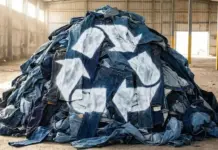
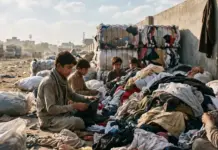
Collection rates for used textiles remain inconsistent across member states, and a significant portion of what is collected does not meet the quality threshold required for fibre-to-fibre recycling. This shortfall means that large quantities of post-consumer textile waste are either downcycled into lower-value applications or directed to landfill and incineration — outcomes that directly undermine the goals of textile circularity.
Recycling Systems Are Not Yet Fit for Purpose
One of the central concerns highlighted in the report is that existing recycling systems were not designed with fibre-to-fibre circularity in mind. Mechanical recycling, which remains the most widely deployed method, tends to degrade fibre quality with each processing cycle, limiting its suitability for producing recycled textile inputs that meet the standards demanded by apparel and home textile manufacturers.
Chemical recycling technologies, which hold greater promise for maintaining fibre integrity, are still largely at pilot or early commercial stage. Scaling these technologies to an industrial level requires substantial investment, supportive regulatory frameworks, and long-term demand certainty — conditions that the current European market has not yet fully established.
The report also flags the issue of blended textiles — garments made from mixed fibre compositions — as a persistent technical barrier. The majority of recycling technologies struggle to efficiently separate and process blended materials, which make up a dominant share of the textiles in circulation today.
Market Support Is Falling Short
Beyond the technical dimension, the report identifies weak market support as a compounding obstacle to textile circularity in Europe. Recycled fibres currently face a cost disadvantage relative to virgin materials, particularly in periods of low commodity prices. Without mechanisms to correct this imbalance — whether through green public procurement, mandatory recycled content requirements, or other market instruments — demand for recycled textile inputs remains fragile and insufficient to justify the capital investment needed to expand recycling systems.
The analysis draws attention to the importance of creating stable, long-term demand signals for recycled textiles. Brands and manufacturers are more likely to commit to sourcing recycled fibres when they can rely on consistent availability and pricing, neither of which is currently guaranteed given the early-stage nature of much of Europe’s textile recycling infrastructure.
Collection and Sorting: The Foundation That Needs Fixing
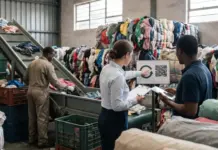
Effective textile circularity cannot be achieved without robust collection and sorting systems as its foundation. The report underlines that improvements in collection infrastructure — making it easier for consumers to return used garments and household textiles — must be paired with advances in sorting technology to separate materials by fibre type, colour, and quality.
Automated sorting, including near-infrared and other sensor-based technologies, is being trialled across parts of Europe and shows meaningful potential to increase the efficiency and accuracy of textile sorting. However, broader deployment requires coordinated investment and, in many cases, shared infrastructure models that allow smaller operators to access capabilities they could not finance independently.
The Road Ahead for Textile Circularity
The report does not suggest that progress has stalled. It acknowledges that Europe is further along in developing a framework for textile circularity than most other regions globally. Several member states have introduced or are advancing extended producer responsibility legislation for textiles, and industry coalitions are working on voluntary commitments to increase recycled content.
What the report makes evident, however, is that the pace of infrastructure development and market development must accelerate significantly to match the ambition of existing and forthcoming EU policy. Textile circularity in Europe will require coordinated action across the value chain — from fibre producers and fabric manufacturers through to brands, retailers, collectors, sorters, and recyclers — supported by public investment and coherent regulatory signals.
Closing the loop on textile waste is technically achievable, but achieving textile circularity at scale across Europe will depend on building the recycling systems and market support structures that currently remain insufficient for the task.