
































Key Takeaways
- Sustainable materials are redefining the feel of lingerie
Eco conscious lingerie green fashion starts with fabric choices such as organic cotton, TENCEL Lyocell, modal and recycled polyamides, which reduce reliance on fossil fuels and harsh chemicals. These eco friendly fabrics offer softness, breathability and performance while lowering environmental impact, proving that comfort and sustainability can coexist at the most intimate layer. - Low-impact dyeing and finishing protect skin and waterways
Low impact dyeing, certified processes and cleaner finishing techniques are replacing conventional, chemical-heavy colouration. By using better dyes, treating wastewater and avoiding problematic finishes like PFAS-based repellents, sustainable lingerie brands create pieces that are gentler on sensitive skin and significantly kinder to rivers, seas and surrounding ecosystems. - Ethical supply chains centre the human side of green fashion
Truly eco-conscious lingerie extends beyond materials to fair, transparent and ethical supply chains. Brands are disclosing factory partners, investing in long-term relationships, prioritising safe working conditions and fair pay, and reducing waste in packaging and logistics, making social responsibility an integral part of their sustainability story rather than an afterthought. - Design longevity and informed consumers drive sustainable trends
Thoughtful design, timeless silhouettes and durable construction help sustainable lingerie last longer in real wardrobes, reducing overconsumption and waste. As consumers become more informed and demand details on fibre content, certifications and care, eco conscious lingerie green fashion is shifting from a niche positioning to a new baseline for how intimate apparel should be made and worn.
Intimates at the heart of the green fashion shift
Few categories illustrate the intersection of comfort, intimacy and ethics as clearly as lingerie. What sits closest to the skin is increasingly expected to align with personal values, not only in fit and aesthetics but also in environmental and social impact. As consumers scrutinise labels, materials and brand narratives, eco conscious lingerie green fashion has emerged as a powerful pairing.
Lingerie brands once followed broader fashion cycles, with frequent drops, synthetic fabrics and opaque supply chains. Today, a growing cohort of eco conscious lingerie labels is rewriting the rules, championing eco friendly fabrics, reduced-impact processes and genuine transparency. Their message is simple: it is possible to feel beautiful, supported and sensual without compromising the planet or the people who make our clothes.
This evolution is being accelerated by a more informed consumer. Shoppers are reading fibre content, asking about certifications and questioning whether “nude” shades, lace trims and elastic finishes are as harmless as they appear. As a result, sustainable lingerie is no longer a niche; it is becoming a benchmark for what green fashion should look and feel like at its most personal layer.
Materials matter: from organic cotton to innovative fibres
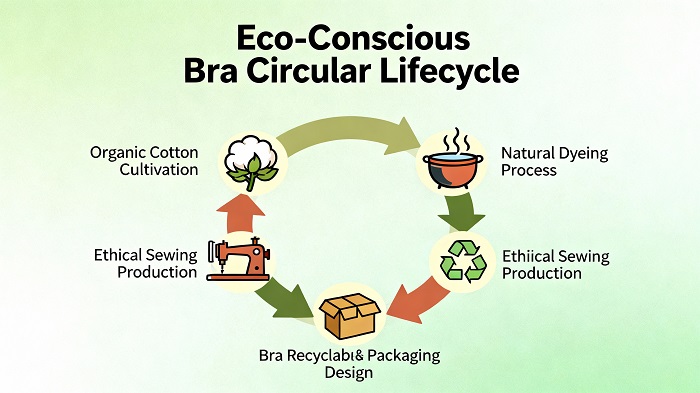 The starting point for sustainable lingerie is material choice. Conventional synthetic fabrics such as virgin polyester and non-certified nylon are derived from fossil fuels, shed microplastics and often rely on harsh chemical treatments. In contrast, eco friendly fabrics aim to minimise resource use, pollution and long-term environmental burden.
Organic cotton is a mainstay, grown without synthetic pesticides or fertilisers and often using more responsible water management. For lingerie, it offers softness, breathability and hypoallergenic properties, making it especially appealing for sensitive skin. Brands pair organic cotton with small amounts of elastane or natural rubber to achieve the required stretch and recovery in bras and briefs.
Regenerated cellulosic fibres such as TENCEL Lyocell and modal, produced from sustainably managed wood pulp, are increasingly popular in eco conscious lingerie. These fibres deliver a silky handfeel, excellent moisture management and strong fibres-to-fabrics traceability. When produced in closed-loop systems, solvents are recovered and reused, significantly reducing chemical discharge.
Recycled polyamide and polyester, derived from post-consumer waste or industrial offcuts, offer another route to lower-impact stretch fabrics. While they do not eliminate microplastic shedding, they reduce dependence on virgin resources and help to close material loops. In many sustainable apparel trends, these recycled synthetics are combined with organic or cellulosic yarns to balance performance and sustainability.
Low-impact dyeing and finishing for sensitive skin and ecosystems
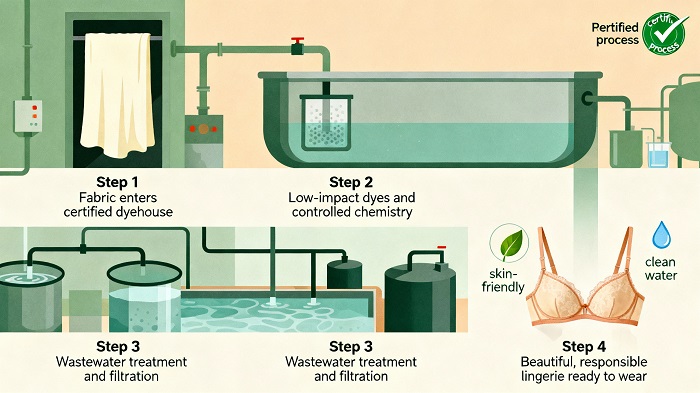 Beyond the yarn itself, colour and finishing processes can make or break the sustainability profile of lingerie. Conventional dyeing is water- and energy-intensive, often involving hazardous chemicals that can harm workers and waterways if not properly managed.
Low impact dyeing techniques address these challenges in several ways. Brands increasingly seek OEKO-TEX, GOTS or Bluesign-certified processes, which restrict harmful substances and mandate cleaner effluent treatment. Reactive and fibre-reactive dyes are selected for higher fixation rates, meaning more pigment binds to the fibre and less washes out into wastewater.
Some eco conscious lingerie labels experiment with natural or plant-based dyes, using ingredients such as madder root, indigo, turmeric or walnut husks. While these can create nuanced, earthy palettes and compelling storytelling, they also require expert control to ensure colourfastness, especially on stretch fabrics.
Finishing chemicals are also under scrutiny. Softeners, stain repellents and anti-microbial treatments may contain per- and polyfluoroalkyl substances (PFAS) or other problematic compounds. In response, responsible brands are simplifying finish recipes, favouring mechanical softness, enzyme washes and PFAS-free alternatives. For consumers, this translates into pieces that are gentler on skin as well as on rivers and seas.
Ethical supply chains and the human side of green fashion
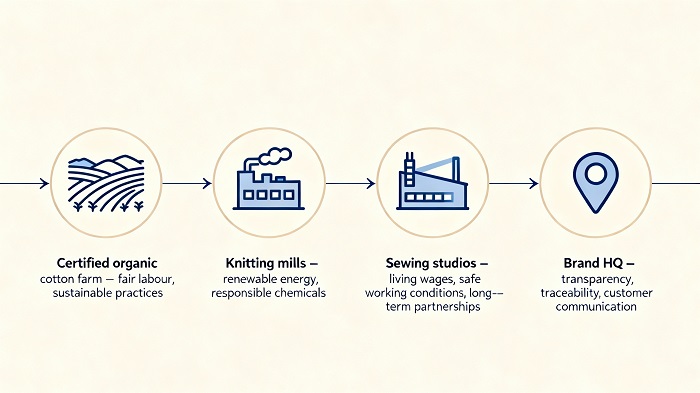 True green fashion extends beyond materials to the people who cultivate, spin, knit, sew and package garments. Lingerie production can be labour-intensive and technically demanding, particularly for wired bras and intricate lace constructions. This makes ethical working conditions and fair pay critical components of eco conscious lingerie.
Transparent brands provide clear information about their manufacturing partners, often naming factories, locations and social compliance certifications. Some choose to work with smaller family-owned ateliers or women-led cooperatives, investing in long-term partnerships rather than chasing the lowest cost.
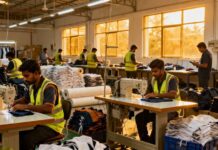
An ethical supply chain also considers issues such as reasonable working hours, legal contracts, freedom of association and safe, well-ventilated workspaces. Audits and third-party certifications offer one layer of assurance, but an increasing number of brands are supplementing them with direct relationships, regular visits and capacity-building programmes.
Packaging, shipping and returns are part of this system as well. Recycled and recyclable mailing materials, compostable bags and consolidated shipments help reduce overall footprint. A truly eco-conscious approach recognises that sustainability is systemic, not just a matter of choosing a “green” fabric.
Design that respects both bodies and the planet
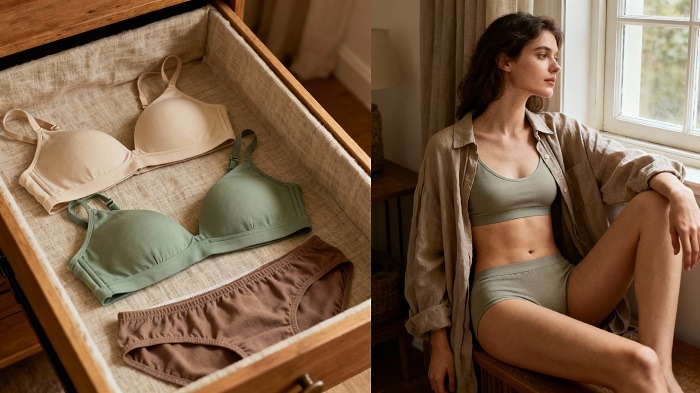 Lingerie design plays a quiet yet decisive role in sustainability. Pieces that fit beautifully, wash well and feel timeless are far more likely to be worn for years rather than months. In this sense, thoughtful pattern-making, durable construction and classic silhouettes are environmental strategies.
Eco-focused designers prioritise adjustability – multi-hook closures, adjustable straps and flexible underbands – to accommodate natural changes in body shape over time. They streamline trims and components, limiting unnecessary hardware that complicates recycling at end of life. Instead of chasing fast fashion trends, they develop core ranges of bras, briefs and bralettes that anchor a wardrobe.
Comfort is central. When a soft bralette or well-cut brief becomes a daily favourite, it automatically displaces lower-quality items and reduces overbuying. This is why sustainable lingerie often emphasises gentle support, breathable eco friendly fabrics and irritation-free finishes. The goal is to make pieces that consumers reach for intuitively, not just because they are “green” but because they feel genuinely better to wear.
Colour and lace are approached with similar restraint. Rather than frequent novelty colours, brands may focus on a curated palette that mixes versatile nudes (for many skin tones) with a handful of seasonal shades. Lace, when used, is carefully sourced – for example, from mills that incorporate recycled yarns or run on renewable energy – and applied in ways that do not compromise garment longevity.
Consumer expectations and the rise of informed choice
 The success of eco conscious lingerie green fashion is closely tied to consumers who ask informed questions. Online, shoppers increasingly look for product pages that list fibre composition, certification logos and care instructions. They pay attention to whether a “sustainable” capsule is a small marketing-driven side project or part of a company-wide shift.
Price sensitivity remains, but there is growing recognition that paying slightly more for a bra that lasts longer, fits better and aligns with personal ethics can be a worthwhile trade-off. Clear communication around cost drivers – from organic farming to living wages and low-impact dyehouses – helps demystify why some sustainable lingerie carries a premium.
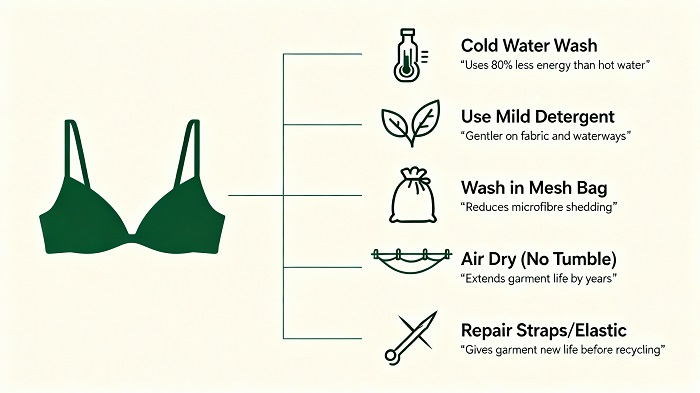
Education also extends to garment care. Brand content now frequently includes guidance on washing at lower temperatures, air-drying instead of tumble-drying, and repairing or repurposing older pieces. These messages situate lingerie within broader sustainable apparel trends, encouraging a mindset of stewardship rather than disposability.
Looking forward: circularity and innovation in sustainable lingerie
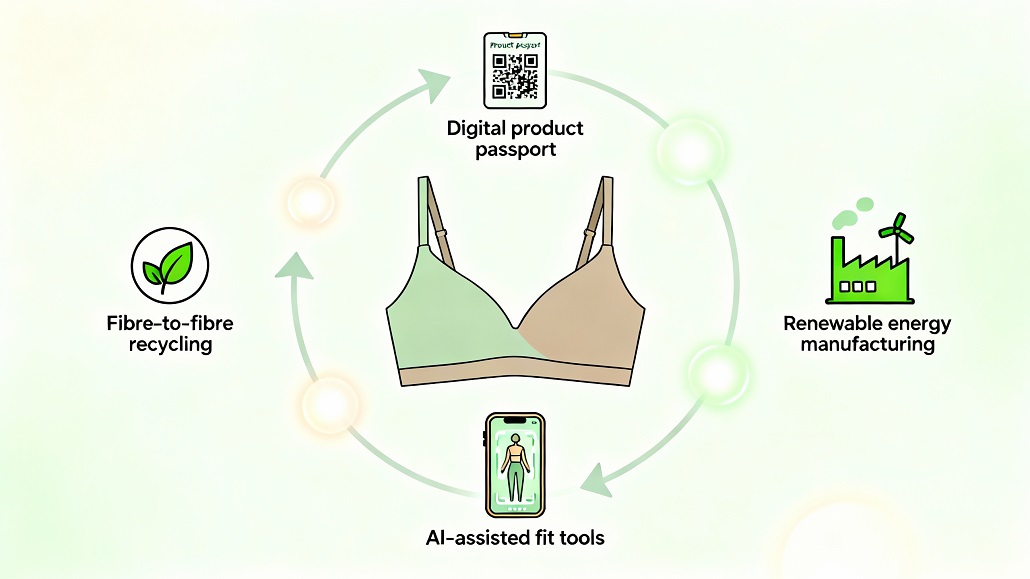 The future of eco conscious lingerie is likely to be defined by circularity and data-driven design. Fibre-to-fibre recycling technologies are advancing, raising the prospect of bras and briefs that can be disassembled and transformed into new yarns at scale. To support this, brands may simplify material mixes, favouring mono-material wings or cups where possible.
Digital product passports and QR-coded labels could soon give customers instant access to information on fibre origin, factory locations, certifications and carbon footprint. Such tools promise a new level of transparency for green fashion, moving sustainability claims from marketing copy into verifiable data.
At the same time, fit technology – from 3D body scanning to AI-assisted size recommendations – will help reduce returns and overproduction, both major sustainability pain points in intimates. When combined with durable eco friendly fabrics and timeless design, these tools can extend the life of each garment and lighten its environmental load.
Ultimately, eco conscious lingerie green fashion is not a trend but an evolving standard. As more brands adopt responsible materials, low impact dyeing, and genuinely ethical supply chain practices, consumers will come to expect these as the norm rather than a premium option. For the industry, the challenge is to keep raising the bar while preserving what lingerie has always been about at its best: comfort, confidence and a quiet sense of joy in what is worn closest to the skin.