


























The European Union is advancing its commitment to sustainability through the launch of the ALADIN project, an initiative designed to revolutionize circular textile production. Coordinated by the German Institutes of Textile and Fiber Research Denkendorf (DITF), this project brings together ten partners from six European nations to establish a digital network for circular garments. Funded with five million euros under the European Union’s Horizon Europe research and innovation program, the project officially commenced in May 2026.
Regional Innovation and Digital Infrastructure
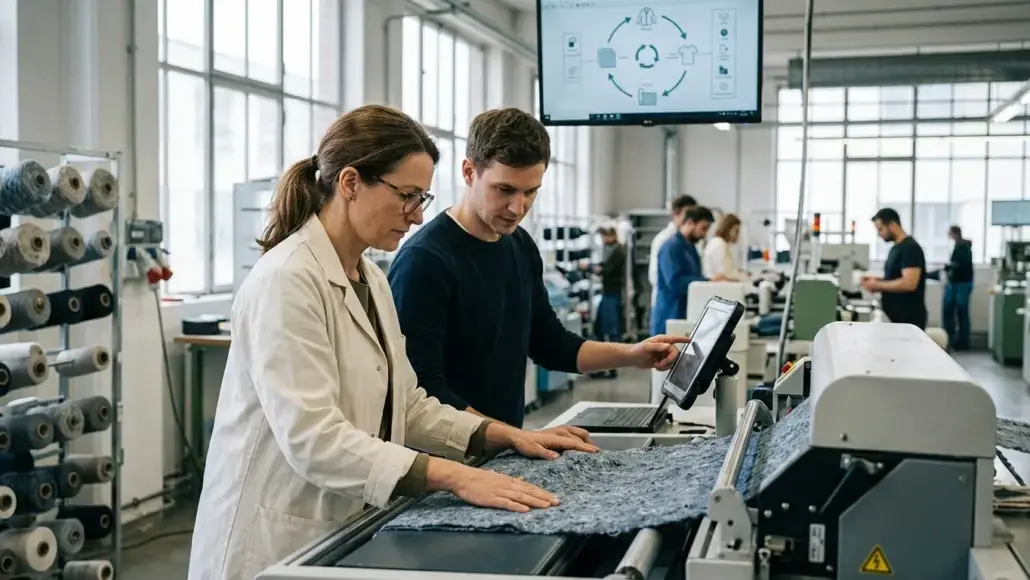
The primary objective of ALADIN, which stands for Advanced LocAl and Digital Innovation Network for Circular Garments, is to develop viable business models for textile manufacturing that prioritize sustainable materials. By utilizing a network of micro factories across Europe, the project seeks to reduce waste and bolster regional value creation. These micro factories will facilitate on-demand production, ensuring that manufacturing aligns closely with customer specifications while minimizing environmental impact.
A core component of this initiative is the development of a high-performance digital infrastructure to support B2B and B2B2C relationships. This includes the creation of a Digital Product Passport module and an AI-supported eco-design assistant. The Digital Product Passport is intended to provide transparency regarding the lifecycle of products, helping designers make more sustainable choices. Furthermore, the project focuses on four strategic pillars: a digital service platform for small and medium-sized enterprises (SMEs), regional cooperation to promote local production, advanced recycling technologies, and the use of renewable raw materials.
Sustainable Materials and Use Cases
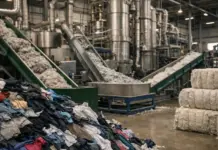
To validate the circular approach, the consortium is focusing on three specific use cases: a semi-automated T-shirt, a smart parka, and a versatile blazer dress. These items will be crafted using sustainable materials such as bio-based fibers and recycled textiles, which are processed in a way that makes them easier to recycle at the end of their life cycle. This localized production strategy aims to create new jobs and significantly increase the use of eco-friendly resources.
The EU-funded project aims to bring together industry, customers, policymakers, and academia to promote circular textile production. By spotlighting innovations in automation and digital services, ALADIN intends to serve as a model for similar networks. Through this textile innovation, the project partners from Germany, Romania, Belgium, France, Czechia, and Italy are working to establish a sustainable ecosystem that strengthens regional economies over the next four years.

