
























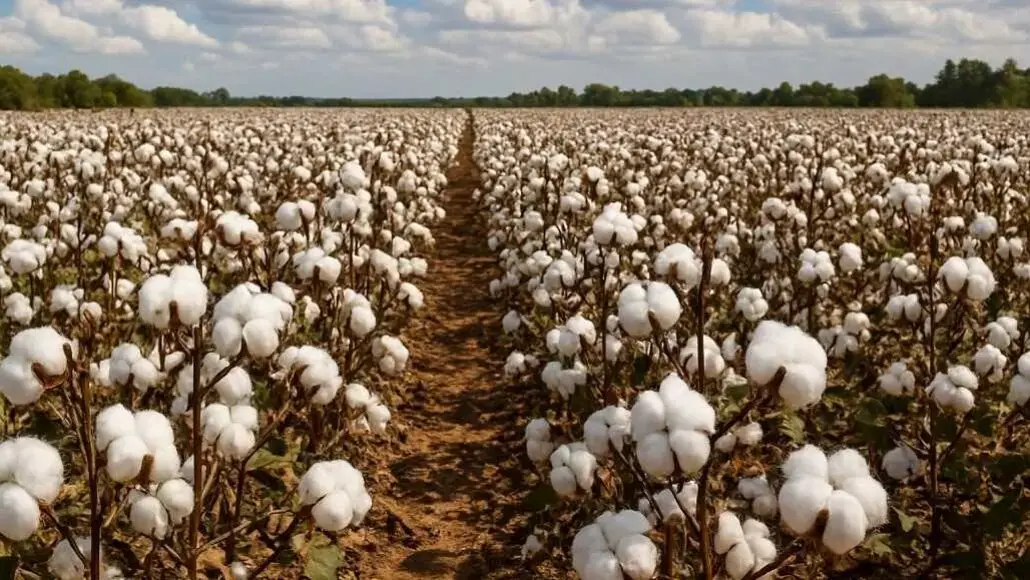
Europe has long been a continent that imports the vast majority of its cotton from overseas — from the fields of the United States, India, and West Africa. But a quiet revival is underway. Across southern Europe, a small but determined group of farmers and textile stakeholders are working to prove that cotton grown on European soil can not only survive in a competitive global market but genuinely hold its value — both commercially and in terms of sustainability credentials.
The question, however, is not simply whether European cotton can be grown. It already is. The real challenge is whether it can command the kind of premium pricing, consistent quality standards, and supply chain recognition needed to make it economically viable — and whether the broader fashion and textile industry is ready to take it seriously.
The State of Cotton Farming in Europe
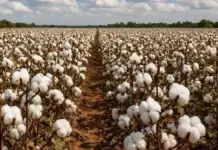
Cotton cultivation in Europe is far from a new concept. Greece remains the continent’s largest cotton producer, with tens of thousands of hectares under cultivation, predominantly in the Thessaly region. Spain, particularly in Andalusia, also maintains a cotton-growing tradition, though on a comparatively smaller scale. Together, these countries represent the bulk of European cotton output — yet their combined production is modest when measured against global heavyweights.
For years, European cotton has largely disappeared into global commodity markets, stripped of its regional identity and blended with cotton from elsewhere. Farmers received little premium for growing cotton locally, and the textile industry had scant incentive to seek out or pay more for cotton that was geographically closer to home. The supply chain simply was not structured to reward provenance.
That dynamic, however, is beginning to shift. Driven by a combination of increasing regulatory pressure, growing consumer interest in transparency, and the textile industry’s broader push toward traceable and lower-impact sourcing, European cotton is attracting renewed attention from brands and mills that were previously indifferent to its origins.
Why European Cotton Is Attracting Renewed Interest
Much of the renewed interest in European cotton is tied to the evolving sustainability agenda within the textile industry. Shorter supply chains, reduced transportation emissions, known labor standards, and access to European-regulated agricultural practices are all factors being cited by brands when evaluating sourcing alternatives.
European cotton farming operates under the European Union’s Common Agricultural Policy (CAP) framework, which includes environmental and quality standards that are not universally replicated in other major cotton-producing regions. For brands looking to demonstrate credible sustainability progress — especially under increasing scrutiny from regulators and consumers alike — being able to point to cotton grown under EU agricultural rules carries weight.
Traceability is another factor working in European cotton’s favor. As supply chain transparency becomes less of a voluntary virtue and more of a compliance requirement — particularly under incoming EU due diligence and product passport regulations — sourcing cotton from a region where documentation and verification are more straightforward becomes a practical advantage.
The Challenge of Holding Value
Despite these advantages, the challenge of turning regional identity and sustainability credentials into actual price premiums remains significant. Cotton, at its most fundamental, is a commodity — and commodity markets are largely indifferent to geography when cost is the primary driver.
For European cotton to truly hold its value, the industry would need to move away from treating it as an interchangeable raw material and toward recognizing it as a differentiated ingredient with distinct provenance and attributes. That shift requires cooperation across the entire value chain — from farmers and ginners through to spinners, fabric producers, brands, and ultimately consumers.
One of the persistent structural issues is volume. European cotton production, even at its most optimistic projections, cannot supply the full needs of even a modest-sized fashion brand. This limitation means that European cotton is unlikely to become a mainstream sourcing solution for large-scale retailers. Instead, its opportunity likely lies in niche, premium, or purpose-driven product lines where story, origin, and sustainability impact are central to the proposition.
Quality consistency is another variable. While European cotton farming benefits from regulatory oversight, the fiber quality — including staple length, micronaire, and strength — can vary by season, region, and farming practice. For mills that have built their operations around precise fiber specifications, inconsistency in incoming raw material is a meaningful operational challenge.
Voices From the Field and the Industry
Those working closest to European cotton — farmers, agricultural cooperatives, and a small number of pioneering spinners and brands — speak with measured optimism. There is genuine enthusiasm about what homegrown cotton can represent, but also a clear-eyed acknowledgment that the path from field to finished product is far more complicated than it might appear from a marketing perspective.
Farmers in regions like Thessaly describe the pressures of competing with heavily subsidized cotton from other parts of the world, while simultaneously managing the agronomic challenges of a crop that is water-intensive and labor-demanding. European cotton farming has adapted over the years — with improvements in irrigation efficiency and pest management — but it remains a crop that requires significant investment and carries meaningful risk.
On the industry side, the brands and mills that have already begun incorporating European cotton into their supply chains tend to emphasize the value of the story as much as the fiber itself. Being able to tell a customer that a garment contains cotton grown in Greece or Spain — and to back that claim with documented traceability — is seen as a differentiating asset in an increasingly crowded sustainable cotton marketplace.
The Competitive Landscape for Sustainable Cotton
European cotton does not exist in a vacuum. It competes — directly and indirectly — with a range of established and emerging sustainable cotton credentials. Better Cotton, organic cotton certified under GOTS or OCS, Fairtrade cotton, and regenerative cotton programs all occupy space in the market, and many of these programs can be applied to cotton grown in far larger volumes outside Europe.
The question of how European cotton positions itself within this broader sustainable cotton landscape is one that the sector has not yet fully resolved. Is it primarily a provenance story — about geography and the reduced footprint of shorter supply chains? Is it a quality story, rooted in the agronomic conditions of Mediterranean growing regions? Or is it a regulatory compliance story, built around the known standards of EU-governed agriculture?
Each of these angles has merit. But cohesion and clarity of messaging are still lacking. Without a unified and credible certification or identity mark that the broader industry and consumer base can quickly understand, European cotton risks being a compelling idea that struggles to translate into consistent commercial traction.
Infrastructure, Investment, and the Road Ahead
For homegrown cotton to genuinely hold its value over time, investment in processing infrastructure within Europe is considered essential. Currently, much of the cotton grown in southern Europe is exported for ginning, spinning, and further processing elsewhere — meaning the value-addition that could be captured domestically is instead generated abroad.
Building a more complete European cotton processing ecosystem is a long-term and capital-intensive undertaking. It requires not only investment in physical infrastructure but also the sustained commitment of brands willing to source from — and pay appropriately for — a European supply chain that is, at present, more expensive to operate than its overseas equivalents.
There are advocates within the industry who believe that the regulatory environment now forming around the EU textile sector will ultimately create the conditions that make European cotton more commercially attractive. As due diligence requirements, extended producer responsibility schemes, and sustainability disclosure mandates take hold, the cost of sourcing from less transparent supply chains could rise — effectively narrowing the cost gap between European and imported cotton.
Whether that calculation will prove correct — and whether it will happen quickly enough to sustain the farmers and small enterprises currently investing in European cotton’s future — remains to be seen. What is clear is that the conversation around sustainable cotton, supply chain resilience, and the true cost of sourcing is shifting in ways that may, over time, work in European cotton’s favor.
A Crop With Something to Prove
Homegrown cotton carries genuine promise. It grows in European soil, under European rules, and with the kind of documented provenance that an industry increasingly pressed for transparency is beginning to genuinely need. The sustainability case is real, the regulatory tailwinds are building, and a small but committed community of farmers and industry actors is working hard to make it viable.
But European cotton still has something to prove — commercially, structurally, and collectively. The fiber alone is not enough. What is needed is a coherent ecosystem: shared standards, stronger infrastructure, clearer identity, and the sustained will of the textile industry to prioritize provenance alongside price.
European cotton value will only hold if the industry chooses to recognize and reward it — and that choice, ultimately, rests not with farmers in Thessaly or Andalusia, but with the brands, mills, and retailers who decide what goes into the clothes they make and sell.