


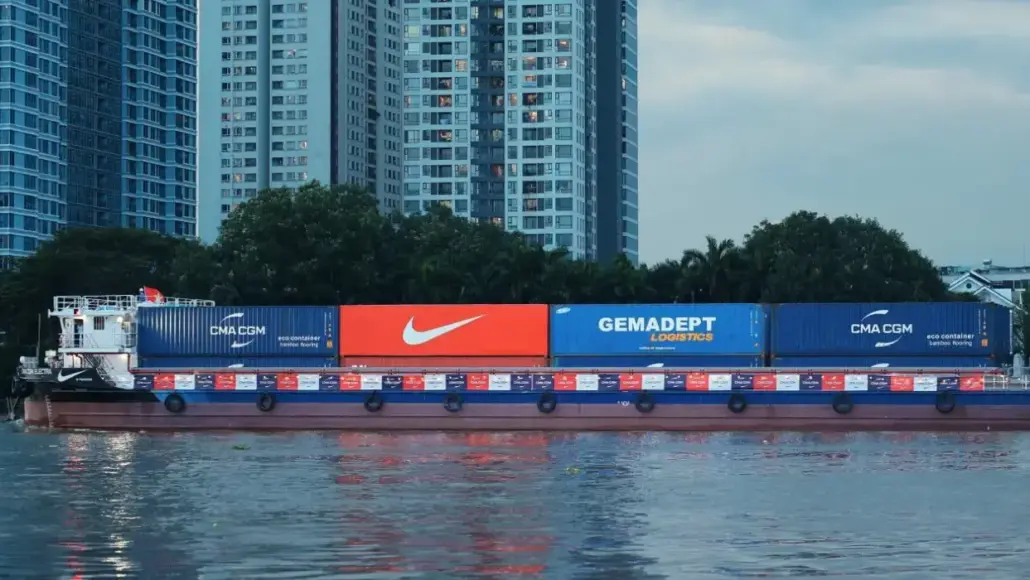
CMA CGM has officially introduced the CMA CGM Electra, Vietnam’s first fully electric container barge, now operating on the Saigon River in Ho Chi Minh City. The vessel forms a critical part of an integrated logistics solution designed to serve Nike’s supply chain decarbonisation ambitions while offering a cleaner alternative to conventional road-based container transport.
A 180km Route with a Green Purpose
The electric container barge operates on a 180-kilometre round trip route, connecting Nike’s inland drop-off point in Ho Chi Minh City to the Gemalink deep-sea terminal in Cai Mep — a facility operated by Gemadept. The route was specifically structured to replace traditional road transport for container movements between these two locations, with the barge projected to handle over 50,000 Twenty-Foot Equivalent Units (TEUs) annually.
By making this shift, the operation is estimated to avoid approximately 778 tonnes of CO₂ emissions each year — a figure that speaks directly to the environmental intent behind the project.
Powered by CATL Battery Technology and Solar Energy
The 100% electric barge is equipped with battery technology from CATL and is recharged exclusively using certified renewable electricity. That electricity is generated from a solar farm installed at the Gemalink terminal, ensuring the vessel’s energy source is as clean as its operations. The charging infrastructure at the site is capable of fully powering the vessel in approximately four hours.
This closed-loop energy model — where the barge draws power only from on-site renewable generation — reinforces the credibility of the supply chain decarbonisation claim at the heart of this initiative.
Nike’s Emissions Targets Drive the Partnership
Nike has set formal targets to reduce greenhouse gas emissions by 75% across its own operations and by 35% across its extended supply chain by 2030, using financial year 2020 as the baseline. The deployment of the electric container barge on the Vietnamese inland waterway corridor forms part of Nike’s broader strategy to meet those commitments.
Nike Chief Sustainability Officer Cimarron Nix stated: “Reducing emissions across a global supply chain takes more than any one company. It takes new ideas, strong partnerships and a willingness to rethink how we operate. This project with CMA CGM and Gemadept is a great example of how we can work together to turn innovation into practical solutions that reduce our impact while building a more resilient supply chain.”
The statement, released on 29 October, positions this electric container barge deployment as a direct response to Nike’s sustainability roadmap rather than a standalone initiative.
CMA CGM’s Design Vision and Long-Term Ambition
CMA CGM’s New Build and Research and Development teams designed the vessel in close collaboration with both Gemadept and Nike, with the stated aim of presenting this project as a replicable model for sustainable inland waterway freight. The design approach was deliberately built to allow adaptation across different geographies and varying customer requirements, suggesting broader rollout ambitions beyond Vietnam.
CMA CGM Assets and Operations Executive Vice President Christine Cabau said: “Decarbonising global supply chains requires moving beyond ambition to deliver concrete, scalable solutions. This fully electric barge is a powerful example of what can be achieved when shipping companies, customers and terminal operators combine their expertise and commitment. Together with Nike and Gemadept, we are demonstrating that innovative, lower-carbon inland transportation solutions are already within reach.”
CMA CGM’s Established Presence in Vietnam
CMA CGM has maintained operations in Vietnam since 2006. The company currently runs five offices across the country and operates 29 weekly mainline shipping services, making the Vietnamese market a well-established part of its regional network. The launch of the electric container barge further deepens that footprint while aligning with Vietnam’s own national transition toward renewable energy and more sustainable logistics infrastructure.
A Tripartite Model for Inland Waterway Decarbonisation
What sets this project apart is the structure of the collaboration itself. Rather than a unilateral move by any single company, the initiative brings together a global shipping carrier, a major international brand with declared emissions targets, and a port terminal operator — each contributing its own domain expertise. CMA CGM brings vessel design and logistics capability, Gemadept provides the terminal infrastructure and renewable energy generation, and Nike offers the commercial commitment and sustainability framework that gives the project its direction.
This tripartite approach to supply chain decarbonisation — where the electric container barge serves as the operational centrepiece — is what CMA CGM appears to be positioning as the transferable blueprint for similar projects elsewhere.