





















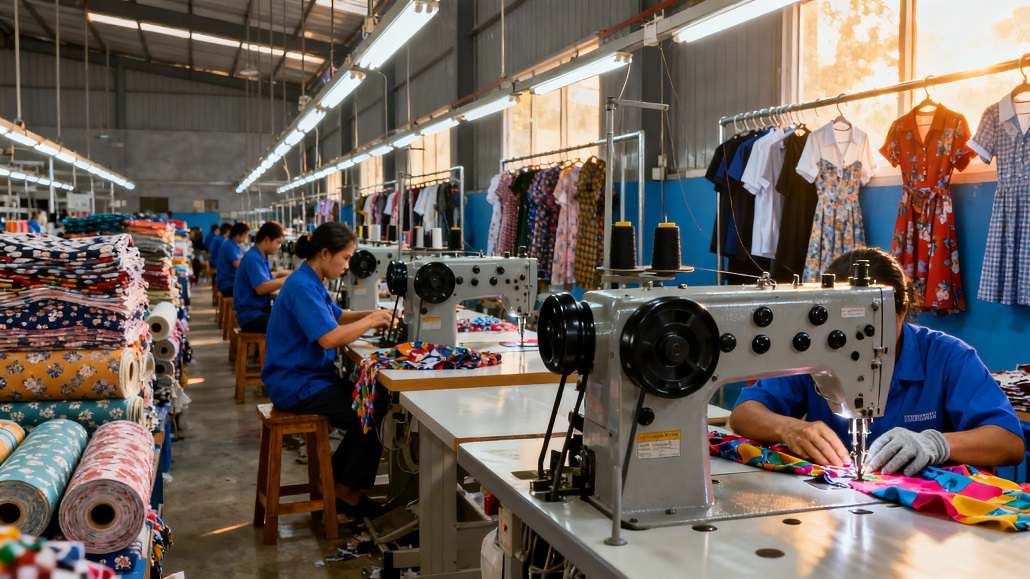
In light of growing uncertainties in global trade, particularly due to U.S.-imposed tariffs, foreign buyers are stepping in to support the Philippine apparel industry by mitigating the financial burden these tariffs impose.
Reports indicate that several international buyers, especially from the United States, are willing to absorb a substantial part of the additional costs. In some instances, they are covering these costs entirely, offering crucial aid to the Philippine garment sector in a fiercely competitive manufacturing landscape.
According to the Foreign Buyers Association of the Philippines (FOBAP), certain long-standing international partners have agreed to take on part or even all of the 19% tariff placed on Philippine garment exports to the U.S.
This initiative has been welcomed by industry stakeholders and follows a recent bilateral trade agreement between the Philippines and the United States.
On July 22, 2025, the two nations signed a trade deal that received both praise and criticism. Following a significant meeting at the White House between Philippine President Ferdinand Marcos Jr. and U.S. President Donald Trump, the agreement was revealed as a diplomatic and economic milestone.
While the deal eliminated tariffs on goods exported from the U.S. to the Philippines, exports from the Philippines—including garments—remain subject to a 19% tariff.
The Marcos administration has defended the agreement, asserting that it helps avert more severe tariff actions while keeping critical market access open to the United States—one of the top destinations for Philippine-made apparel.
Despite some backlash for not securing better tariff relief, industry insiders are focusing on the immediate response from buyers.
Robert Young, president of FOBAP, noted that buyers’ willingness to shoulder additional costs reflects the strength of long-term business relationships.
“Some of our major buyers have even volunteered to absorb up to 100% of the 19% tariff in the initial year. This showcases the importance of these partnerships,” Young stated in a media interview.
This support is particularly vital given the cost challenges faced by the Philippine apparel industry. Estimates suggest that garments made in the Philippines typically carry a price tag that is 10% to 15% higher than similar products from regional competitors like Vietnam, Bangladesh, and Sri Lanka. The added tariff only exacerbates this pricing gap, presenting a serious threat to the industry’s competitiveness.
Young emphasized that these voluntary commitments from buyers are critical for sustaining export orders. “Without this solidarity, the Philippine apparel industry would be in a much tougher position,” he remarked.
By helping to alleviate the tariff burden, foreign buyers ensure that Philippine suppliers can remain viable partners within their global supply chains. While the long-term ramifications of the trade deal with the U.S. are still unclear, the immediate response from buyers has provided necessary support for the Philippine apparel industry, demonstrating that collaborative approaches can effectively mitigate challenges in the face of trade barriers.