































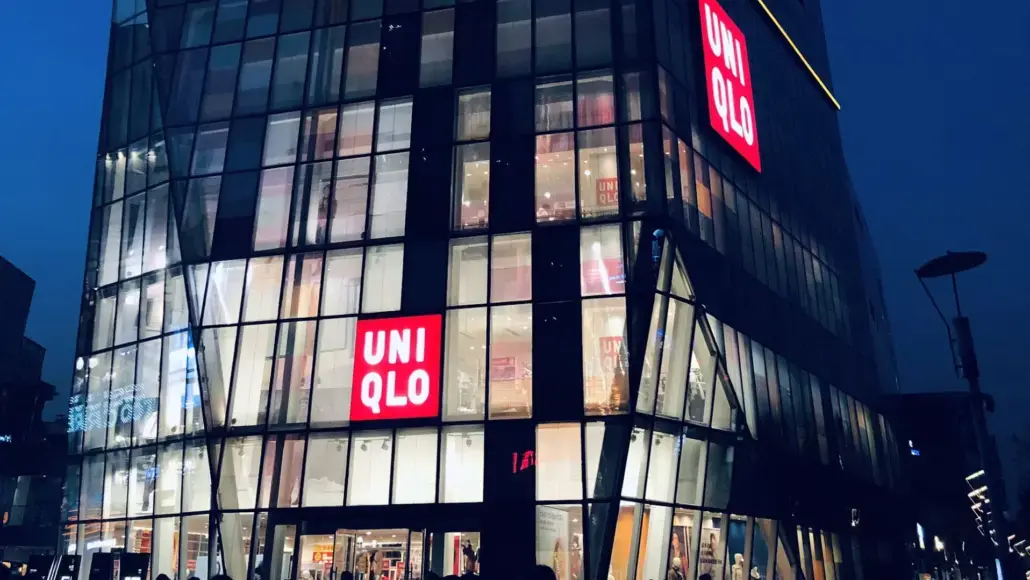
Fast Retailing, the Japanese company behind the Uniqlo and GU clothing brands, is closer than ever to overtaking H&M as the world’s second-largest apparel retailer, following another year of record-breaking financial results.
For the fiscal year ending in August, Fast Retailing’s sales climbed nearly 17 percent to just under 4 trillion yen — approximately $25.3 billion — while net profit surged 25 percent to a record 542.5 billion yen. H&M, which currently holds the second position in the global apparel industry behind Inditex’s Zara, reported weaker sales for its own fiscal year ending in November, raising the real possibility that Fast Retailing could leapfrog the Swedish retailer. Exchange-rate fluctuations, however, may still influence the final industry rankings.
“Fast Retailing is finally going to overtake H&M,” said Takahiro Kazahaya, a senior analyst at UBS Securities Japan.
Uniqlo’s Overseas Business Powers the Growth
The primary engine behind these Fast Retailing record sales was Uniqlo’s international operations. Overseas sales rose 26 percent, while overseas profit climbed 44 percent during the same period.
“We’re seeing a global boom,” said Tadashi Yanai, Chairman and CEO of Fast Retailing, at an October 8 press conference.
This past year, Uniqlo opened flagship stores in Seoul and Chicago as part of its ongoing strategy to strengthen its presence in key global cities and boost online sales. The brand’s appeal in Western markets has been supported by a notable shift in consumer behaviour.
“In Europe and the U.S., consumers who previously bought more expensive clothing are increasingly looking for reasonably priced alternatives,” said Kuni Kanamori, a senior analyst at SMBC Nikko Securities. “Uniqlo’s simple products, commitment to quality, and balance between value and price are meeting that demand.”
The Gap With Inditex and the Road Ahead
Even as Fast Retailing narrows its distance from H&M, the global apparel industry’s undisputed leader, Inditex — the Spanish owner of Zara — remains well ahead. Inditex posted sales of approximately 7.1 trillion yen in its fiscal year ending in January, compared with Fast Retailing’s 3.96 trillion yen for the year ending in August.
Yanai has publicly stated his long-term ambition of reaching the top position in global apparel for many years. “We’ve reached the point where our long-held goal of 10 trillion yen is coming into view,” he said.
Kazahaya sees the competitive landscape evolving into a two-player race at the very top. “We are entering an era led by two giants: Inditex, which quickly captures trends and sells high-quality, affordable clothing, and Fast Retailing, which specialises in highly functional apparel with basic designs,” he said.
Room to Grow in Key Markets
Fast Retailing maintains that there remains considerable room for international expansion. While Uniqlo commands roughly 12 percent of the apparel market in Japan, its share in Europe and North America stands at only around 0.5 percent — a figure the company sees as a significant opportunity rather than a limitation.
Questions Around the GU Brand
As Fast Retailing sets its sights on closing the gap with Inditex, some analysts have pointed to GU, the group’s lower-priced label, as a potential challenge to navigate.
Although GU posted higher sales and profit for the fiscal year ending in August, its operating profit slipped into negative territory during the June-to-August quarter. Takahiro Saito, president of consulting firm Demand Works and author of “Uniqlo vs Zara,” noted that GU’s global identity remains less defined compared with Uniqlo’s well-established brand recognition.
“With its previous lineup, it was difficult to differentiate its products from local competitors overseas in terms of design and price,” Saito said.
GU underwent a major brand overhaul this year, but Saito expressed concern that its higher-priced items are becoming increasingly prominent. “If that ends up hurting domestic sales, that will defeat the purpose,” he said.
Fast Retailing Forecasts Another Record Year
Despite the complexities around GU, Fast Retailing is projecting continued record-breaking performance. The company forecasts sales of 4.45 trillion yen and net profit of 560 billion yen for the fiscal year ending August 2027.
“From here, sales will grow by about 500 billion yen every year,” Yanai said. “A company with 500 billion yen in sales would be a giant in the apparel industry, and we’re talking about creating one of those every year through growth. The world has that kind of potential, and I believe our products will be accepted globally.”
With Fast Retailing record sales continuing to climb and Uniqlo accelerating its international footprint, the group is clearly positioning itself for a sustained rise in the global apparel rankings — with the No. 2 spot now within reach and an eye firmly set on the top.

