



























HÀ NỘI — The Vietnam textile and garment industry has demonstrated considerable resilience, reporting export revenue of over US$10.6 billion in the first quarter of 2026. This figure represents a nearly 3 per cent increase year-on-year, a notable achievement amidst prevailing uncertainties in the international market. The sector’s robust performance was particularly evident in March, which saw a significant 36 per cent surge in textile and garment export turnover when compared to February.
Sector Performance Breakdown and Key Drivers
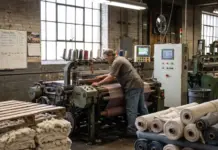
Within the overall export figures, garments continued to be the dominant segment, contributing US$8.18 billion to the total. Other significant contributors included fibre, with nearly US$1.1 billion, fabric at US$719 million, and textile accessories, which generated US$382 million.
Vũ Đức Giang, chairman of the Vietnam Textile and Garment Association (VITAS), commented on the sector’s performance, acknowledging a slight decline in the initial two months of 2026. He attributed this dip to seasonal factors and pressures arising from trade instability. However, the marked recovery observed in March underscores the inherent strength and swift adaptability of domestic businesses.
Vinatex Exemplifies Sector’s Resilience
The textile and garment corporation Vinatex emerged as a compelling example of this successful adaptation. Vinatex’s financial statement for the first quarter of 2026 provided clear evidence of effective management strategies navigating the current economic climate. The company achieved net revenue of nearly VNĐ4.5 trillion, marking a 5.1 per cent increase, while its pre-tax profit experienced a substantial 31 per cent growth, reaching VNĐ355 billion.
This positive divergence between revenue and profit for Vinatex was largely propelled by the core performance of its yarn and garment segments. The garment segment benefited from a steady flow of orders and favourable pricing established in late 2025. Simultaneously, the yarn segment witnessed a strong resurgence in selling prices. These favourable outcomes were a direct result of businesses proactively responding to global fluctuations in cotton and fibre prices, influenced by geopolitical shifts in the Middle East. Furthermore, the industry effectively capitalized on demand from the Chinese market, as China’s domestic textile industry faced challenges to its cost advantages.
A noteworthy development is the United States’ imposition of a new 10 per cent global tariff, which has replaced previous, higher tariff rates. This policy adjustment has inadvertently created a competitive advantage for the Vietnamese textile industry.
Challenges and Future Imperatives for Vietnam Textile Exports
Despite these encouraging results, a significant challenge persists: the localization rate within the textile industry currently hovers around 51–52 per cent. The substantial reliance on imported raw materials continues to impede businesses from fully leveraging tariff preferences offered by international trade agreements, such as CPTPP and EVFTA.
Compounding these issues is the increasing pressure from international regulations concerning supply chains and sustainable development. Trương Văn Cẩm, vice president and general secretary of VITAS, emphasized that requirements for supply chain auditing, fibre traceability, and ESG reporting are no longer optional but have become essential. He stressed the need for businesses to adopt a more proactive and systematic approach in preparing to meet the stringent standards of major global markets.
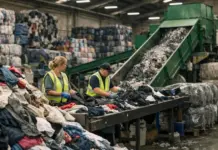
To support the ambitious export target of US$49 billion for 2026, VITAS recommends a comprehensive suite of solutions for businesses. These include market diversification, increased investment in technology and artificial intelligence, and a decisive transition towards a green and circular economy, all deemed critical for sustained success.
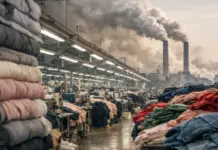
Addressing concerns about environmental pollution in the textile dyeing industry, Giang affirmed that current wastewater treatment technologies are capable of systematic control. This, he believes, will help alleviate psychological barriers and foster the development of the domestic textile dyeing industry. Such progress is vital for enhancing the localization rate and cultivating a robust Vietnamese textile brand on the international stage. Vietnamese textile and garment products are currently exported to 138 markets, with the United States remaining the primary destination.

