



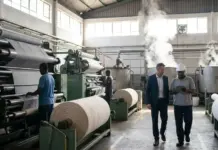
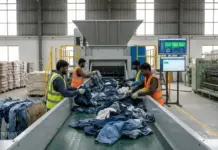





















Management at Misr El Amria Spinning and Weaving Company, a major entity in the nation’s textile sector, initiated a lockout of hundreds of employees on August 9. This action follows an ongoing industrial movement that began on July 28, where workers protested over the non-fulfillment of promised wage adjustments. While management cited “routine maintenance, inventory, and reviews” as the reason for the factory closure, the workforce has challenged these claims, viewing the move as an attempt to conclude the strike.
Specific Demands and the Misr El Amria Lockout
The current Egyptian labor dispute centers on the calculation of a 12 percent special allowance established under Law No. 75 of 2026. The staff at Misr El Amria is requesting that this allowance be applied to their insured wages rather than their basic salary, noting that the basic salary is significantly lower. In addition to these wage calculations, employees are seeking written documentation regarding payment schedules and a raise in the monthly cost-of-living allowance from 600 Egyptian pounds to 1,300 Egyptian pounds. This requested increase is intended to align their compensation with standards recently set at other textile firms.
Historical Context of Textile Sector Unrest
Since 2025, employees have engaged in various work stoppages related to risk allowances and salary deductions. In previous instances, industrial action was paused following management pledges that the workforce claims were never fulfilled. The recent Misr El Amria lockout has been accompanied by the suspension of company-provided transport and a visible presence of security forces and police around the facility. In response, workers have initiated formal complaints with local labor authorities.
Broader Patterns for Egyptian Textile Workers
This situation is part of a wider trend of textile sector unrest across the country. At the Samannoud Textile and Rugs Company, staff recently protested the suspension of health insurance services, which occurred after the company failed to remit required contributions. Similarly, in 2024, thousands of women at the Mahalla al Kubra plant engaged in a strike after being excluded from national minimum wage updates. These events highlight the persistent challenges facing Egyptian textile workers in both state-owned and private enterprises.
The Economic Importance of the Textile Industry
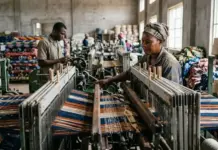
The textile and cotton sectors are fundamental to the national economy, involving roughly 1.5 million manufacturing employees and accounting for 27 percent of the total manufacturing output. Despite the sector’s high productivity and its status as a primary exporter to Western markets, many laborers in state-owned spinning and weaving facilities operate with aging machinery and face stagnating income levels.
Impact of Economic Volatility on the Egypt Textile Industry Strike
Economic pressures have intensified since 2022, with the national currency losing approximately 82 percent of its value. This devaluation, coupled with high inflation, has significantly reduced the purchasing power of the average worker. Regional factors have also played a role; for instance, revenues from the Suez Canal dropped from over 10 billion dollars in 2023 to under 4 billion dollars in 2024, impacting the broader financial landscape.
Labor Mobilization and Security Responses
The Egyptian labor dispute has seen an increase in activity as workers attempt to navigate a rising cost of living. Reports indicate that while hundreds of labor protests occurred throughout 2025, many ended without meeting worker demands. Security measures have frequently been employed to manage these mobilizations, leading to instances of detentions and intimidation. This environment of textile sector unrest continues to define the relationship between industrial labor and state authorities as the industry faces ongoing fiscal and social challenges.