



























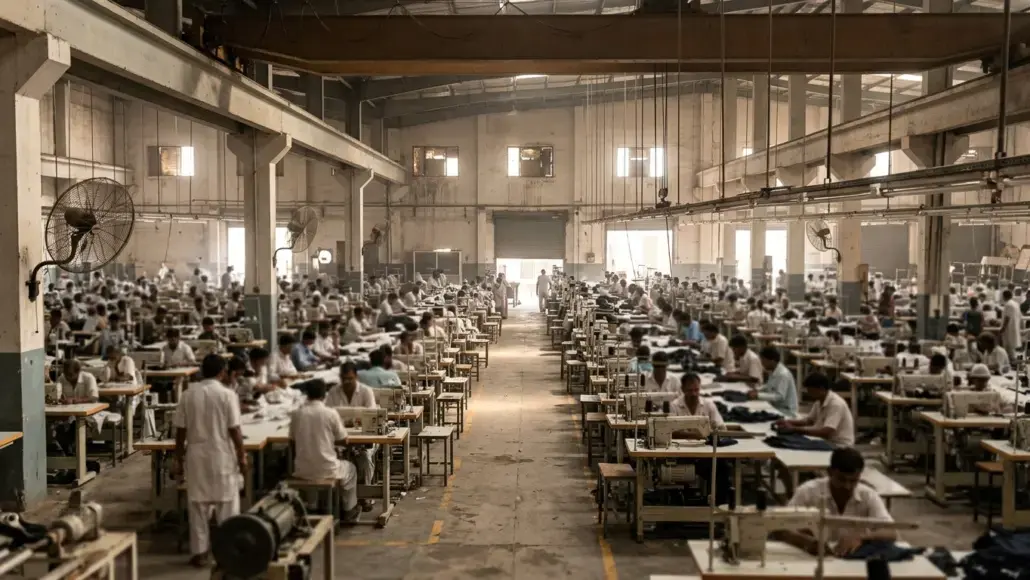
The Social and Labor Convergence Program’s 2025 Impact Report paints a clear picture of a growing mismatch between climate risk and preparedness on factory floors: most manufacturing sites assessed are still operating without formal plans to manage climate impacts, even as indoor heat reaches levels that can threaten worker safety. The report suggests factory climate adaptation is lagging behind the realities of heat exposure in global supply chains.
Drawing on 10,700 assessments conducted in 2025—covering around 7.5 million workers worldwide—SLCP found that 69% of facilities have not put a climate adaptation strategy in place. At the same time, 16% reported average indoor temperatures above 31°C, a level SLCP describes as “dangerously close” to, or beyond, recognised safe limits for many workplace conditions.
The report, released as SLCP marks its 10th year, argues that labour conditions did not materially improve compared with prior reporting cycles. It also notes that wider geopolitical developments have added strain across supply networks, complicating progress on working conditions even as new risks emerge.
Climate risk is now a worker wellbeing issue
In 2025, SLCP added climate-related data points to its Converged Assessment Framework (CAF), reflecting a shift in how the organisation—and increasingly regulators—frame climate hazards. The update is intended to support Human Rights Due Diligence expectations, recognising that heat, extreme weather and related disruptions are not only environmental issues, but direct threats to occupational health and safety.
Bigger sites and stronger regulation drive better readiness
The report highlights large gaps in preparedness depending on facility size and local policy. Larger factories are far more likely to have climate measures in place, while small and mid-sized sites are more often behind—an uneven pattern that could widen as regulations tighten and climate conditions intensify.
Vietnam is cited as an example of how regulation can change behaviour. Where indoor temperature monitoring is required for certain sectors, 96% of facilities recorded average indoor temperatures, and more than half said they have formal adaptation plans. Even there, however, risk remains acute: 32% of Vietnamese sites still reported average indoor temperatures above 31°C, showing that monitoring does not automatically translate into cooler, safer conditions.
Deeper supply chain coverage, persistent compliance gaps
Beyond climate findings, SLCP reported a 14% rise in Tier 2 participation, indicating expanding assessment coverage deeper into supply chains and into adjacent production categories. China remained the largest contributor by assessment volume, while India and Vietnam posted the fastest growth in facility participation.
Legal compliance remains a recurring challenge. SLCP data shows 91% of assessed facilities had at least one legal non-compliance. However, sites using the CAF for five years recorded roughly 20% fewer non-compliances, suggesting repeated measurement and benchmarking may help drive gradual improvements over time.
SLCP also said assessments were shared 2.7 times on average, which it argues can reduce duplicated audits and free up resources—potentially redirecting as much as $35 million toward workplace improvements rather than repeated compliance checks.
SLCP CEO Janet Mensink said the organisation is focused on ensuring data remains practical and decision-ready as risks evolve. “Looking to the next decade, SLCP remains committed to providing the credible, actionable data needed to navigate evolving global challenges, especially as climate change increasingly threatens safe working conditions. We will continue to prioritise driving decent working conditions in global supply chains, but we cannot solve these systemic issues alone. Collaboration is essential. Using the CAF to collect robust social and labour data is a critical piece of the puzzle, contributing to a collective global effort for meaningful change that directly impacts workers’ lives.”
CAF v2.0 planned
SLCP said it will introduce an updated framework—CAF v2.0—intended to align more closely with Human Rights Due Diligence rules. The new version is expected to refine data collection, improve guidance for facilities and third-party verifiers (including on climate metrics), and streamline assessment workflows. For brands and suppliers, that shift signals that factory climate adaptation is moving from optional best practice toward a core expectation in social compliance and worker protection.

