





























The UK circular fashion market continues to grow, but its contribution to the country’s overall fashion industry remains relatively small, with secondhand clothing accounting for nearly all sustainable fashion sales. According to a new report by ICEX Spain Export and Investment, the British market generated £1.372 billion ($1.839 billion) in sustainable fashion consumption during 2025, compared with the country’s total apparel and footwear market value of £61.019 billion ($81.802 billion).
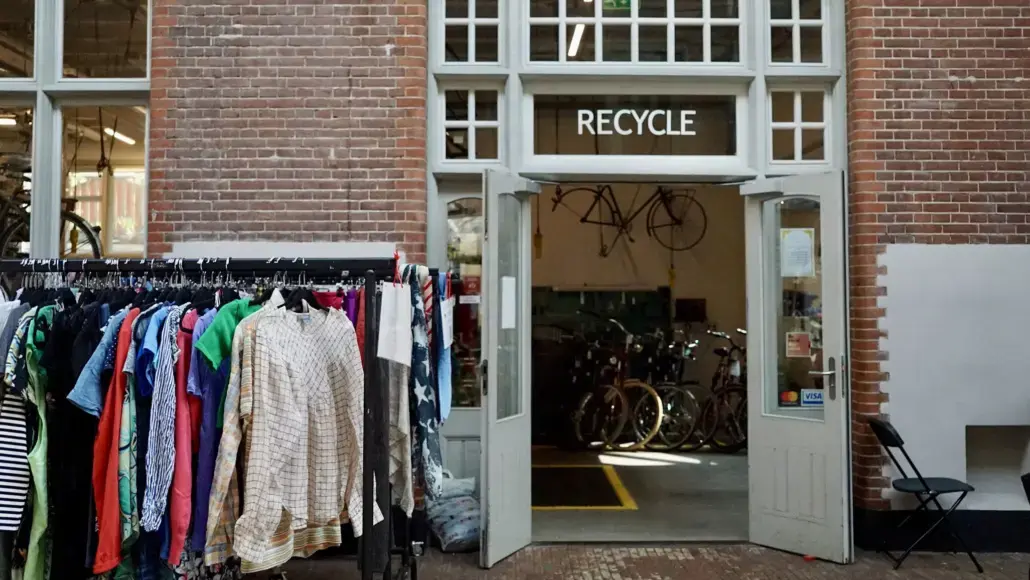
The report reveals that £1.279 billion of sustainable fashion spending came from secondhand apparel, while newly manufactured sustainable fashion represented just £93 million, highlighting the overwhelming dominance of the resale sector in the UK circular fashion market.
Secondhand Clothing Leads Sustainable Fashion Growth
Resale fashion has firmly established itself as the backbone of sustainable apparel consumption across the United Kingdom. According to the findings, secondhand products represent approximately 93% of the country’s sustainable fashion segment, with sales surging 49% in 2022, significantly outpacing the growth recorded by organic textile products.
The report concludes that “the main driver in this sector is the secondhand market,” while the supply of newly produced sustainable fashion continues to play only a marginal role.
UK Fashion Industry Maintains Steady Growth
Beyond sustainability, Britain’s broader fashion industry continues to expand steadily. The country’s apparel and footwear market increased by 1.6% between 2024 and 2025, reaching £61.019 billion. Clothing represented 82% of total sales, while footwear accounted for the remaining 18%.
Market forecasts indicate another 1.7% increase in 2026, pushing total industry sales to approximately £62.070 billion.
Over the past five years, footwear has outperformed apparel, recording an average annual growth rate of 7.3%, compared with 5.9% for the overall fashion sector.
Britain Remains Europe’s Largest Fashion Market
The report identifies the United Kingdom as Europe’s biggest fashion market, ahead of both Germany and France, while contributing more than 4% of global fashion sales.
Women’s clothing remains the largest category, accounting for 53.5% of apparel revenue. Men’s fashion contributes 27.2%, while children’s clothing represents 14.3% of the market.
Sportswear continues to strengthen its position as consumer demand shifts toward active lifestyles. Sports apparel and footwear now make up 17.6% of total fashion sales, compared with 12% ten years ago.
Consumer Behaviour Still Favours Fast Fashion
Despite growing public awareness around sustainability, purchasing habits continue to present challenges for the UK circular fashion market.
The report notes that “demand continues to be shaped by the gap between consumers’ stated values and their actual purchasing decisions.”
Although 46% of British consumers claim they avoid fast fashion, more than half admitted purchasing fast-fashion products during the past year.
Buying decisions remain largely driven by practical considerations. Comfort ranks as the most important factor for 74% of shoppers, followed by price (47%), practicality (45%), and quality (43%). Sustainable production influences purchasing decisions for only 14% of consumers.
Textile Waste and Environmental Impact Remain Significant
The report underlines the environmental challenges associated with the fashion industry, estimating that the sector contributes between 2% and 8% of global carbon emissions, generates 9% of ocean microplastic pollution, and consumes approximately 215 trillion litres of water annually.
Within the United Kingdom, post-consumer textile waste has reached 744,000 metric tonnes each year. Of this volume, 84% is incinerated, while 11% is disposed of in landfills, underscoring the need for stronger circular economy initiatives.
Sustainable Fashion Businesses Continue to Expand
The study also points to the rapid development of Britain’s sustainable fashion ecosystem. Nearly half of the country’s sustainable fashion businesses have been established within the past decade, while 81% operate as small and medium-sized enterprises employing fewer than 50 people.
Although online retail remains the dominant sales channel, many brands are increasingly expanding into department stores and physical retail locations, reflecting the sector’s growing maturity.
Major retailers including Primark, Marks & Spencer, ASOS, Next and Zara have also strengthened their circular business strategies through clothing repair services, resale platforms, garment collection schemes and dedicated sustainability initiatives.
UK Continues to Depend Heavily on Fashion Imports
The report also highlights Britain’s continued reliance on overseas suppliers. During 2025, the United Kingdom imported £20.290 billion worth of apparel, footwear and related components, while exports totalled just £3.216 billion.
China and Bangladesh remained the country’s largest sourcing partners, with Italy serving as the leading European supplier. Spain accounted for nearly 3% of the UK’s total fashion imports, maintaining a stable position within the British market.
The findings suggest that while the UK circular fashion market is gaining momentum through the rapid growth of secondhand clothing, sustainable new fashion production still occupies only a small portion of the industry. Consumer purchasing habits, environmental concerns and expanding retailer-led circular initiatives are expected to shape the next phase of the market’s evolution.

