

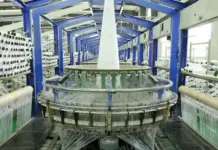


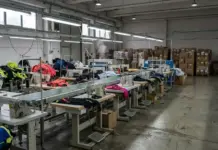
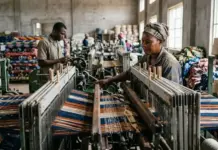
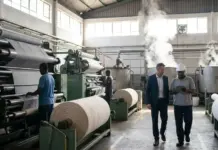
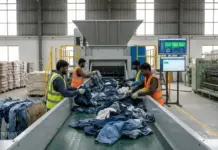




















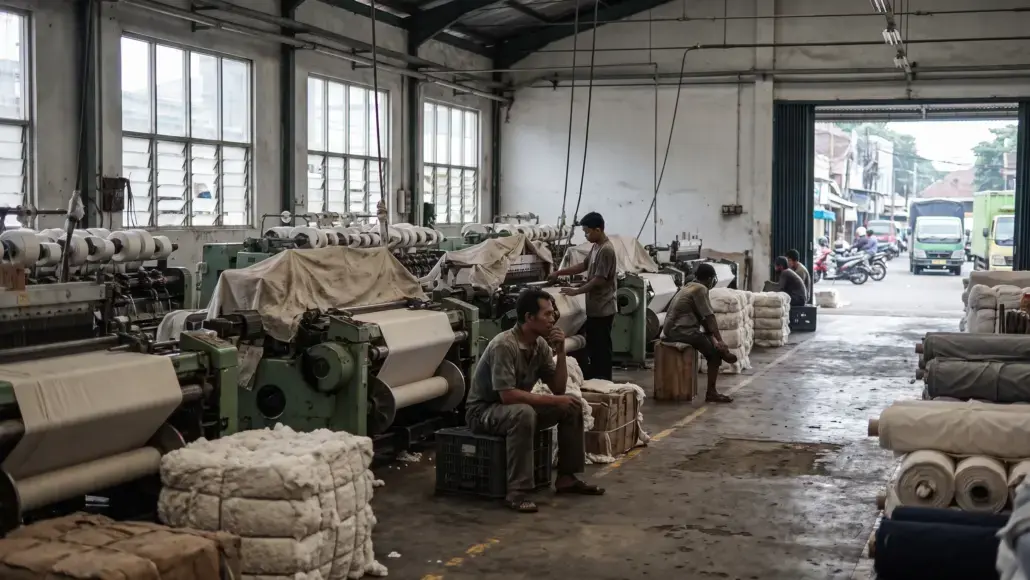
Indonesia’s textile industry is operating well below its potential, with upstream sector utilization sitting at only around 45% and the midstream sector at approximately 60%. Manufacturers across the country are grappling with relentless import competition and a lack of meaningful incentives to invest in modernizing their production equipment. The textile industry employs more than 3.8 million workers across textile and garment sectors, making its sustained health a matter of significant national economic concern.
Supply Chain Disruptions and the Dumping Problem
Redma Gita Wirawasta, chairman of the Indonesian Fiber and Filament Yarn Producers Association (APSyFI), described the textile industry as having a long and interconnected production chain — spanning upstream fiber and yarn production, midstream fabric manufacturing, and the downstream segment of finished garments. Strong integration across all three segments, he said, is essential to maintaining efficiency and overall competitiveness.
That integration, however, has been seriously disrupted. Redma pointed to an influx of imported products sold at what he described as unfairly low prices, a situation that has narrowed opportunities for domestic manufacturers to grow and discouraged fresh investment in the sector.
Redma told, “The main problem we face today is the disruption of industrial integration within the ecosystem because the government has allowed unfair competition by tolerating illegal imports and dumping,
The low capacity utilization has created what amounts to a vicious cycle for local manufacturers. Limited investment keeps production costs elevated, while higher costs make it harder for Indonesian products to compete on price against imports that domestic producers consider unreasonably cheap. Companies still relying on aging machinery face further efficiency losses, deepening the disadvantage.
Redma noted that import controls based on the government’s “technical consideration” mechanism have so far failed to deliver an effective solution. He argued that rather than pursuing incentive-based responses, the government should focus on establishing a healthy and fair domestic market environment — one that gives local manufacturers the certainty they need to scale up production.
“The flood of dumped and illegal imports is the core issue, yet the government seems more inclined to seek incentive-based solutions rather than addressing the root cause,” Redma said. He welcomed the government’s stated plans to strengthen the national textile industry’s competitiveness but stressed the need for consistent implementation, noting that boosting industrial competitiveness has long been part of the policy agenda without always translating into results on the ground.
Machinery Modernization Remains a Weak Link
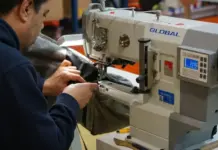
Beyond market pressures, textile manufacturers continue to face the challenge of outdated production equipment. The Industry Ministry had previously introduced a machinery restructuring program aimed at helping manufacturers upgrade their technology. However, Redma indicated that its impact has been minimal.
“The budget for the machinery restructuring program has been reduced significantly, so naturally it hasn’t had much impact,” he said.
Persistent pressure from low-priced imports has made business owners reluctant to commit capital to new machinery. “With the market flooded by imports like this, there is little enthusiasm among entrepreneurs to purchase new machines,” Redma added.
Stronger support for equipment upgrades, he said, would help manufacturers improve both efficiency and their ability to compete in an increasingly challenging market environment.
Government Acknowledges Strategic Importance
Industry Minister Agus Gumiwang Kartasasmita has acknowledged the textile and garment industry’s strategic role in the national economy, particularly given that it employs more than 3.8 million workers. Its scale, he said, makes strengthening the industry’s foundations a priority.
To support the sector, the government has introduced a range of measures including investment incentives, machinery restructuring programs, labor-intensive industry credit, financing through the Indonesian Export Financing Agency (LPEI), and stronger trade safeguards. The effectiveness of these initiatives, however, remains a point of debate within the industry.
Moving Up the Value Chain Toward Muslim Fashion
Mohammad Faisal, executive director of the Center of Reform on Economics (CORE), offered a forward-looking perspective, arguing that the textile industry needs to move beyond competing solely in mass-market segments dominated by countries with lower production costs.
Indonesia, he said, holds considerable advantages in specialized segments — particularly Muslim fashion — that have yet to be fully exploited.
“We should look beyond mass-market products and consider niche markets, including Muslim fashion. Indonesia still holds an advantage in that area,” Faisal said.
He pointed to tangible evidence of that advantage: tourists from neighboring countries, including Malaysia, regularly travel to Indonesia specifically to shop for Muslim clothing, especially in creative industry centers such as Jakarta and Bandung. “Many tourists regularly come to Indonesia in search of Muslim clothing. This demonstrates that we possess an advantage not shared by many other countries,” Faisal said.
He argued that this comparative strength should be channeled into a more aggressive export strategy, with producers targeting markets with large Muslim populations, particularly in the Middle East and North Africa. Such a strategy would require manufacturers to focus on differentiated products tailored to the design preferences, quality expectations, and cultural needs of those specific markets.
Faisal also noted that global demand for clothing and textile products is expected to grow alongside rising populations and economic development, giving the textile industry strong long-term prospects overall. Indonesia, however, must ensure it moves up the value chain rather than merely surviving at its current level. A deliberate shift from mass-market production toward specialized segments such as Muslim fashion could meaningfully strengthen Indonesia’s standing in the global textile supply chain.
Indonesian Textile Exports Reach $4.85 Billion
Despite the pressures faced at home, Indonesia’s textile industry retains considerable export potential. Textile and garment exports reached $4.85 billion in the first half of 2026, according to figures cited by Minister Agus.
He said the numbers demonstrate that Indonesian textile products remain competitive in international markets, though the industry must continue to transform by improving innovation, efficiency, and sustainability practices.
Export opportunities are also expected to broaden under the Indonesia-European Union Comprehensive Economic Partnership Agreement (IEU-CEPA), which is anticipated to open greater access for Indonesian textile products to the European market. Agus cautioned, however, that domestic manufacturers must be prepared to comply with increasingly demanding international standards, particularly those related to product quality and sustainability.
“The national textile industry must boost productivity, strengthen innovation, and meet various international standards to compete with other textile-producing nations,” Agus said.
Redma echoed that concern, stressing that expanded market access must be matched by genuine improvements in the industry’s readiness to compete at the international level. Beyond strengthening domestic supply-chain integration, manufacturers must also meet increasingly stringent global sustainability requirements, including a transition toward greater use of environmentally friendly energy sources.
“The IEU-CEPA is not yet in effect; hopefully, it will come into force next year. However, questions remain regarding our readiness, as we still face integration issues and continue to rely on fossil fuel energy sources,” Redma said.
The capacity utilization crisis, the import pressure issue, and the machinery modernization gap all point to challenges that the textile industry and policymakers will need to address in a coordinated and sustained manner if the sector is to realize both its domestic potential and its export ambitions.