



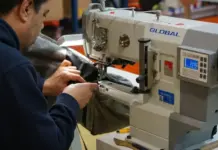

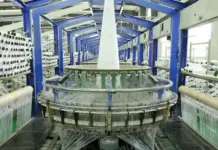


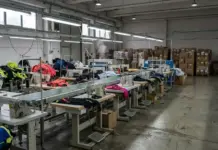
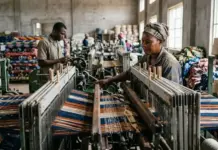
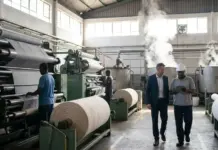
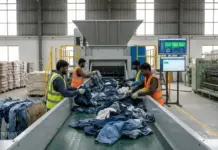




















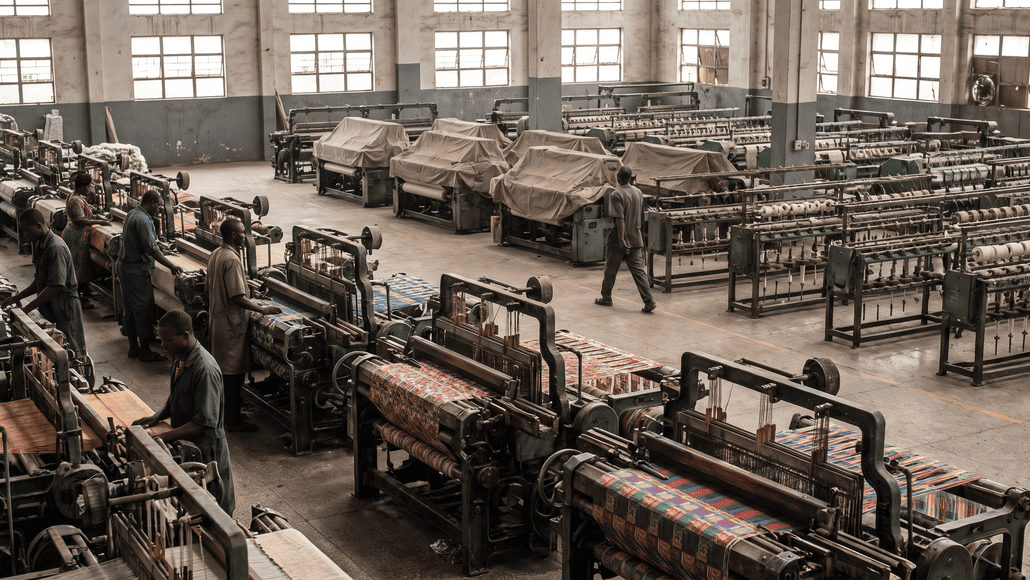
Nigeria’s textile, apparel, and footwear manufacturers operated at only 53.05 percent of their installed capacity in 2025, leaving nearly half of their productive potential sitting idle. The figures, drawn from the First Quarterly Central Bank of Nigeria bulletin, paint a sobering picture of one of the country’s once-thriving industrial sectors and have reignited a sharp policy debate over whether banning textile imports is the right medicine for a deeply structural problem.
Capacity Numbers Tell a Story of Persistent Underperformance
The Nigeria textile industry’s capacity utilisation did edge up marginally, from 50.72 percent in 2024 to 53.05 percent in 2025. But the improvement is modest and the sector stayed below the 55 percent mark throughout the entire year. Breaking it down by quarter, utilisation came in at 52.07 percent in the first quarter, climbed to 54.99 percent in the second, slipped back to 52.01 percent in the third, and recovered slightly to 53.12 percent in the fourth quarter.
Put simply, textile manufacturers left roughly 47 percent of their installed production capacity unused in 2025, even as the government made renewed pledges to rebuild the sector and calls grew louder for stronger protection against imported textiles.
Tracing the longer trajectory makes the picture even clearer. Nigeria textile capacity utilisation averaged just 38.81 percent in 2020 during the height of COVID-19 disruptions. It recovered to 41.84 percent in 2021 and 51.48 percent in 2022, before hovering around 50.74 percent in 2023, 50.72 percent in 2024, and 53.05 percent in 2025. While utilisation has climbed since the pandemic low, the industry remains far from the levels required to support a robust manufacturing ecosystem. Many factories continue to battle high operating costs, ageing machinery, and limited access to credit.
The Senate’s Push for a Total Import Ban
Against this backdrop of chronically low capacity utilisation, the Nigerian Senate has been pushing for a total ban on textile imports, arguing that shutting out foreign products would open space for domestic manufacturers to grow, generate jobs, revive cotton farming, and reduce the country’s dependence on imports.
The argument has intuitive appeal given Nigeria’s history as a textile powerhouse. At its peak, the country had around 167 textile mills employing more than 500,000 people, with cities like Kaduna and Kano built partly on the strength of their garment industries.
Why Experts Are Urging Caution
However, specialists working on industrial development and economic policy are raising serious concerns about moving to an import ban before the underlying structural problems in the sector are fixed.
Adesoji Adesugba, an investment promotion and economic development expert and former managing director of the Nigerian Export Processing Zones Authority, acknowledged that reviving the textile industry is the right priority but argued firmly against an immediate import prohibition.
The Senate is right that our textile industry must be revived. But an immediate import ban would hand the market to smugglers and repeat thirty years of costly failure. There is a better way,” Adesugba said.
His core concern is that Nigeria’s remaining textile mills do not currently have the capacity to meet domestic demand. Imposing a ban before that gap is filled would simply shift the supply source, not eliminate it.
“A ban, in other words, does not protect Nigerian factories. It protects the smuggler’s margin. It turns ordinary traders into criminals, denies the treasury its revenue, and enriches our neighbours’ ports,” he said.
Adesugba also pointed out that the consequences would spread well beyond factory gates, affecting tailors, designers, garment makers, and consumers who depend on affordable and readily available fabric.
Three Decades of Interventions With Limited Returns
The concern is made more credible by Nigeria’s own policy history. Over the past three decades, the government has tried multiple interventions in the textile sector, including the Textile Development Fund, a N100 billion Cotton, Textile and Garment Fund, foreign exchange restrictions on textile imports introduced in 2019, and border closure measures. None of these managed to deliver a sustained revival of textile manufacturers Nigeria.
Adesugba argued that this track record should push policymakers to look beyond import restrictions as the primary tool.
“Cotton, power, machinery, finance, borders, and policy inconsistency. A ban cures not one of them. It treats the fever and ignores the infection,” he said.
Energy Costs and Finance Are Choking Manufacturers
Majeed Dahiru, a political affairs analyst, echoed the call for a far broader industrial policy response. He pointed to high energy costs and expensive capital as the main reasons Nigeria textile industry manufacturers have struggled to stay competitive against producers from countries such as China and India.
“It’s a good vision to go back to that era. But it will take a very serious, concise industrial policy that will see government itself making a heavy investment,” Dahiru said.
He argued that manufacturers need access to affordable electricity and financing at single-digit interest rates before they can realistically rebuild factories and scale up production.
Adesugba’s list of structural bottlenecks aligns closely. He identified the collapse of local cotton production, high energy costs, obsolete machinery, expensive financing, porous borders, and inconsistent government policies as the compounding factors holding the sector back.
The Path Forward as Proposed by Experts
Rather than an immediate ban, Adesugba proposed a phased industrial revival. The priorities he outlined include rebuilding the cotton value chain, improving electricity supply to manufacturing facilities, providing affordable long-term financing, and modernising production equipment. He also called for the development of integrated textile industrial parks, where manufacturers could share infrastructure and reduce operating costs.
Protection Must Come With Investment
Babajide Kolade-Otitoju, a media analyst, agreed that local manufacturers need stronger protection but stressed that protectionism alone is not enough.
“Given our concern for consuming imported stuff, if we really want to help the local industries to survive, we have to protect the local industries. Protectionism is practised everywhere in the world,” he said.
He argued that countries with competitive textile industries did not expose their manufacturers to unrestricted foreign competition from the outset but instead supported them deliberately until they reached scale and became viable. He recalled the scale of what has been lost, noting that Nigeria once had approximately 167 textile mills employing over 500,000 workers, making the sector a cornerstone of economic life in the country’s north.
The data on Nigeria textile capacity and the expert assessments converge on one central conclusion: raising capacity utilisation from its current 53.05 percent to levels that can actually sustain the industry and replace imports will require coordinated action on cotton supply, energy, finance, and policy stability, not simply closing the border to foreign goods.

