
























Fashion has a supply chain decarbonization problem — and treating it purely as a sustainability issue is precisely why meaningful progress has stalled. The core of the challenge sits upstream, where supplier activities generate approximately 80% of the industry’s total emissions. Climate pressures are already disrupting material yields, straining production capacity, and driving up costs across the value chain. Yet the fundamental barrier to addressing these Scope 3 emissions is not a lack of science or ambition. It is a problem of incentives and capital.
Until the fashion industry begins treating supply chain decarbonization as an investment decision — rather than a voluntary commitment — the progress required will remain out of reach. This reality positions the Chief Financial Officer as a central figure in the industry’s climate response. These are among the key findings and frameworks outlined in the white paper Accelerating Fashion Decarbonization, co-published by EY and H&M Group, with insights contributed by HSBC and the Apparel Impact Institute (Aii).
Consumer Pressure and Climate Disruption Are Converging
In fashion, consumers hold significant influence — and climate awareness is increasingly shaping their purchasing behavior. Two-thirds, or 66%, of European Gen Z and Millennial shoppers now say they consider environmental impact when updating their wardrobe. Globally, 36% of high-spending, highly engaged luxury buyers — representing a core growth segment for the industry — rank sustainability as a top purchasing consideration.
At the same time, downstream climate disruption is no longer a distant risk. Agricultural supply chains, on which fashion brands depend heavily for raw materials, are being destabilized by floods, droughts, and other climate-related events.
The Science Behind the Disruption
Recent research projects that changing weather patterns are likely to see yields for key crops — including cotton, hemp, flax, and jute — fall by as much as 8% between now and 2050. These projections are already materializing in production regions. In Mississippi’s cotton fields, for example, a 1°C increase in maximum temperature between 1970 and 2020 resulted in a 6.1% drop in production.
Climate risks extend beyond agricultural fields. Extreme heat and flooding pose serious threats to manufacturing operations and transport logistics. For major manufacturing hubs in South and Southeast Asia — both the primary source of fashion’s Scope 3 emissions and among the most climate-vulnerable regions globally — the economic consequences could be severe without meaningful fashion decarbonization.
To clarify: Scope 1 emissions are direct emissions from owned or controlled sources. Scope 2 emissions are indirect emissions from purchased energy. Scope 3 emissions encompass all indirect emissions occurring across the value chain of a reporting company, both upstream and downstream.
Industry Commitments Are Not Translating Into Results
Large fashion brands have not been passive. Nearly all of them have developed public commitments to reduce or offset their carbon footprint. Leading brands have gone further, setting additional targets around low-carbon materials and reducing embodied energy throughout a product’s lifecycle.
Despite these efforts, progress toward meaningful supply chain decarbonization remains slow — and may even be reversing. Aii, a nonprofit that works with stakeholders across the apparel and textile industry to reduce carbon emissions, identified in its most recent review a “stark rise” of 7.5% in the sector’s total emissions between 2022 and 2023. This increase was driven largely by a rise in virgin polyester use and overall growth in sales volume.
Why 80% of the Problem Lies Beyond Brand Operations
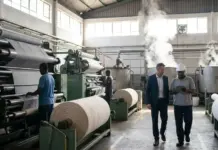
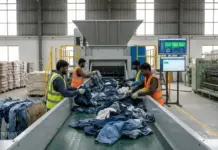
Brand owners may be the public face of the fashion industry, but emissions from their own direct operations are comparatively modest — representing less than 5% of their total footprint. The vast majority, around 80%, originates in the production of raw materials and manufacturing, both of which occur well before a finished garment reaches a brand’s distribution network.
For fashion brands to genuinely mitigate climate risk and strengthen long-term operational resilience, they must first succeed in mobilizing their suppliers to act. How to do this effectively, however, remains far from straightforward.
Structural Barriers Make Supplier Mobilization Difficult
The fashion supply chain is highly fragmented. Suppliers typically sell to multiple buyers while simultaneously sourcing from their own network of sub-suppliers. This structure limits the leverage any single brand can exert over individual suppliers. It also restricts a brand’s ability to pinpoint where its most significant climate impacts occur — and therefore where to prioritize fashion decarbonization efforts.
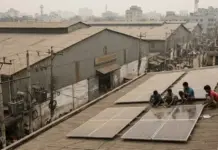
Compounding this is what is known as the “free-rider dilemma.” Because one brand typically accounts for only a share of any given factory’s production, other buyers can benefit from emission reductions that a separate brand helped finance. This dynamic makes it considerably harder to secure CFO approval for mitigation investments — such as financing rooftop solar panels or energy-efficient machinery for a supplier — when the returns on that investment are shared across competitors.
Taken together, these factors make building a robust internal business case for supply chain decarbonization genuinely difficult.
The Case for CFO Leadership
Forward-looking finance leaders are beginning to recognize that the cost of inaction is itself a business risk. Aii research indicates that fashion climate risk has the potential to affect brand bottom lines by as much as 34% by 2030, rising to 67% by 2040. In an environment of growing system-level risks, short-term profitability is increasingly understood through a more balanced lens — one that accounts for how climate resilience contributes to long-term enterprise value.
H&M’s Approach: From Aspiration to Investment Framework
Fashion retailer H&M offers a concrete example of how this logic can be applied in practice, through collaboration on robust data, aligned key performance indicators, and investment roadmaps that articulate a clear business case.
To navigate the challenge of supply chain fragmentation, H&M partnered with Aii to leverage the organization’s extensive relationships with brands and suppliers across the industry. Together, they streamlined the data collection process by establishing common standards for data reporting and carbon benchmarking.
Building Financial Accountability Into Sustainability Goals
H&M’s next step, informed by collaborative insights from Aii and HSBC, focused on aligning its traditional financial KPIs more directly with its target sustainability outcomes. Separately, H&M developed internal programs — including the Green Fashion Initiative — to establish tailored return-on-investment goals for its various supplier-related fashion decarbonization measures, consistent with recognized sustainability standards.
With these frameworks in place, H&M was able to construct a detailed investment roadmap, with each distinct intervention quantified by its relative cost, expressed in US dollars per ton of carbon dioxide equivalent reduced. This cost-to-returns information provided the foundational inputs required for budget planning and business case evaluation.
From Compliance Cost to Enterprise Value
This evaluation model incorporated unit measurements for carbon intensity, enabling shorter-term performance tracking and improving comparability across projects. Building the business case on cost per ton and each intervention’s contribution as a share of the overall target played a decisive role in recasting supply chain decarbonization from a compliance cost to a potential source of long-term enterprise value.
Over time, the value becomes tangible — through lower volatility, more predictable costs, and greater supply chain resilience. What registers as a cost in the near term increasingly functions as a financial hedge against future earnings erosion, transforming climate exposure into a manageable financial variable rather than an uncontrolled risk.
The Financing Gap: Scaling Remains the Critical Obstacle
One major obstacle persists: securing the right type of financing at the scale necessary to drive material impact. Conventional climate finance is typically designed for larger-scale projects — industrial wind farms or solar parks, for instance — rather than the micro biomass plants or mini energy storage systems that individual textile mills or garment factories might require. The free-rider problem also calls for joint financing of shared supply chains, which conventional funding structures are not designed to accommodate.
Blended Finance as a Practical Solution
To resolve these challenges, leading companies are turning to “blended finance” approaches, a model that brings together capital from public, private, and philanthropic sources — an approach already established in the international development sector. In the fashion industry, HSBC has helped facilitate a comparable model: first, by connecting financial institutions, insurers, manufacturers, and multiple brands to identify common capital expenditure needs in real time; and second, by bringing in multilateral development banks to provide a risk-reduction function.
Innovative Grant Mechanisms Closing the Deployment Gap
As efforts to reduce Scope 3 emissions gain momentum, other financing innovations are emerging. One example is the Deployment Gap Grant, co-created by Aii, which provides suppliers with partial grants for fashion decarbonization projects that can be repaid over four to six years. This mechanism avoids two common bottlenecks: the slow payback periods associated with rebates and the tight repayment windows typical of conventional commercial loans.
Collective Action as the Path Forward
Fashion brands are far from alone in facing long-term enterprise value risks from supply-side climate exposure. Nor are their suppliers unique in struggling to finance the low-carbon equipment and climate-smart systems that would reduce their carbon footprint.
The fashion industry’s emerging experience — built on active collaboration, disciplined financial management, and flexible funding structures — offers a practical demonstration of how individual effort can be converted into collective impact at scale. As brands, suppliers, and financiers gather across global forums in the months ahead to advance fashion decarbonization, there is a clear imperative to align on shared data standards, scalable financing mechanisms, and clear investment frameworks.
Only through that alignment can fashion’s climate ambitions move from aspiration to execution — and from cost center to a driver of durable enterprise value.