






























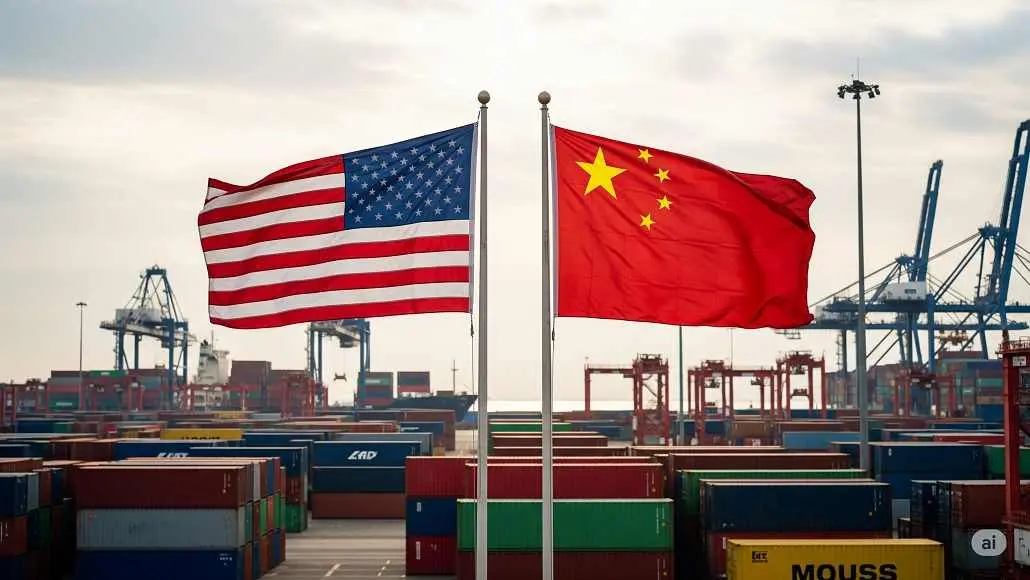
The White House on Sunday released provisional lists of products that could benefit from tariff reductions under a potential arrangement with Beijing, covering an estimated $30 billion worth of trade flowing in each direction. However, the announcement came without specific rates or a defined timetable – and notably, clothing was not included.
The two countries are set to “examine” these lists, which have been valued on the basis of 2024 trade flows, with the aim of pursuing reciprocal reductions “in accordance with their domestic laws and procedures,” as outlined in the White House framework document. It is important to note that no tariffs have actually been changed at this stage.
What Products Are on the Table
Under the proposed framework, the United States could reduce its tariffs on 77 categories of Chinese goods. These include fireworks, small domestic appliances such as microwaves, toasters, and coffee makers, Christmas lights, child car seats, non-connected toys, sports balls, and household linens – the latter being the only textile-adjacent category to make the provisional list.
For its part, China could reduce its tariffs on more than 1,600 categories of American goods, spanning a broad range of sectors. Among the items listed are beef, pork, poultry, seafood, dairy products, wheat, maize, coal, whisky, cosmetics, timber, and medical equipment.
Why This Matters – and Doesn’t – for the Fashion Sector
With clothing absent from the US-China tariff cuts discussion, the fashion industry is unlikely to see any direct benefit from this diplomatic development. China has historically been the United States’ largest supplier of textiles and clothing, but has since slipped to second place following a 27.2% decline in imports recorded across the first seven months of 2026 compared with the same period in 2025.
That said, if the broader reciprocal tariff reductions were to improve consumer purchasing power in the United States, the US fashion industry – one of the sectors hit hardest by inflation-driven trade-offs linked to protectionist measures – could see some indirect relief.
The Diplomatic Context
The announcement follows Chinese President Xi Jinping’s state visit to Washington. In the early hours of Saturday, the White House reported a consensus on “recommendations” for more favourable customs treatment of what were described as “non-sensitive” goods. Beijing confirmed on Saturday that an “arrangement” for reciprocal tariff reductions had been agreed upon, following a direct request from both leaders to move toward implementation.
Washington additionally reported a Chinese commitment to import at least 10 million tonnes of US coal per year during 2027 and 2028. Notably, this particular commitment does not appear in Beijing’s own statement on the matter. Discussions on rare earths – a central point of contention between the two sides – are still ongoing, according to the White House.
US Trade Representative Jamieson Greer, speaking to CNBC on Friday, had indicated that further details would be available by Monday. “We want a set of goods that we can trade with the Chinese on more favourable terms,” Greer stated.
The Trade Truce Timeline
Washington and Beijing had reached a fragile trade truce back in October 2025, following a period of punitive tariffs imposed by both sides on one another. That truce, which had been scheduled to expire on November 10, was extended on Wednesday through to January 10, 2027 – providing additional runway for the current round of US-China trade policy negotiations.
Jamieson Greer is scheduled to host G20 preparatory meetings on trade in Milwaukee, Wisconsin, on September 30 and October 1.

