


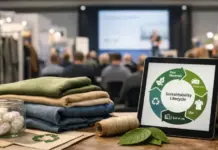






























MUNICH, Germany — Textile and apparel businesses are being encouraged to strengthen the evidence behind their environmental claims as European Union regulations place greater emphasis on product transparency and lifecycle accountability.
The issue was highlighted during the opening keynote at Performance Days in Munich, where consultants urged industry stakeholders to prepare for evolving requirements covering ecodesign, digital product passports, environmental claims and end-of-life management.
The changing regulatory landscape means textile green claims will increasingly need to be supported by verifiable product-level information rather than sustainability labels alone. Companies will need to improve how they collect, connect and maintain data across different stages of a product’s lifecycle.
Under the EU’s Ecodesign for Sustainable Products Regulation, textiles are among the product categories expected to face dedicated ecodesign and digital product passport requirements. These measures aim to improve access to reliable product information and strengthen transparency throughout supply chains. European Commission guidance indicates that textile-specific requirements are still being developed, with adoption of the relevant delegated act planned for the fourth quarter of 2027.
For textile manufacturers, suppliers and apparel brands, preparing reliable records and establishing connected data systems will be increasingly important. Stronger documentation can help businesses substantiate textile green claims, respond to regulatory expectations and demonstrate environmental performance more transparently.