







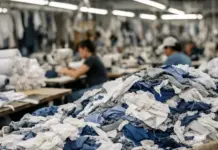
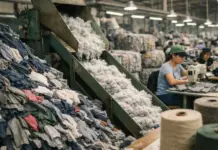




















Europe’s textile mergers and acquisitions activity has remained notably active through the third quarter of the year, even as the continent’s manufacturing output continues to face downward pressure. According to data tracked by MP Corporate Finance, a total of 58 transactions have been recorded year to date — a figure that underscores the sustained deal-making appetite within the European textile industry, even under difficult production conditions.
Cross-Border Activity and Buyer Breakdown
In the first half of the year, cross-border transactions accounted for a significant share of total Europe textile M&A activity. Strategic buyers led the acquisition landscape, followed by private equity-backed acquirers and financial sponsors. This distribution reflects a competitive deal environment where both corporate and financial players are actively pursuing textile mergers acquisitions opportunities across the region.
EURATEX, the European textile and apparel confederation, has reported that EU textile output declined in the preceding year and continued its downward trajectory on a year-on-year basis in the second quarter. This combination of falling production and rising deal volumes points to a consolidating European textile industry where ownership transitions are becoming increasingly common even as factories run below optimal capacity.
What This Means for Mill Owners and Asian Acquirers
For mill owners operating in the European textile industry, industry observers suggest that reviewing succession plans and strategic options at an early stage may help preserve flexibility. A well-planned sale process, initiated proactively rather than reactively, is generally considered to offer more strategic latitude for owners considering an exit.
For Asian acquirers interested in textile mergers acquisitions within Europe, investment-screening requirements must be factored into deal timelines. The EU Foreign Investment Screening Regulation — Regulation (EU) governing cross-border investments — is set to apply from January 2026, adding a regulatory layer that non-EU buyers will need to account for carefully. National-level investment screening mechanisms across individual EU member states also remain in effect and must be considered alongside the EU-level framework.
Supply Chain and Sourcing Considerations
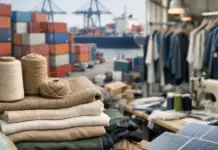
Buyers sourcing knitting machinery, filtration media and synthetic filaments from within the European textile industry are advised to assess the financial health of their suppliers as well as continuity plans that may be in place amid insolvency proceedings or shifts in ownership. The current wave of Europe textile M&A activity means supply chain relationships can change with limited notice, making due diligence on supplier stability particularly important.
In the defence and protective-wear segment, Arclin has announced plans to expand Nomex capacity at its facility in Asturias, Spain, with commissioning expected in early 2026. It is important to note that this is a site-specific project at the Asturias location and does not represent a broader increase in European aramid capacity overall.
Regulatory and Policy Dimensions
Beyond deal structures themselves, investors and policymakers tracking cross-border textile manufacturing Europe activity are also advised to monitor investment-screening decisions as they emerge. Additionally, the deadlines tied to textile extended producer responsibility regulations — which operate under a separate regulatory framework distinct from investment screening — are expected to carry increasing significance for players across the textile mergers acquisitions landscape.
Europe textile M&A, while active, continues to evolve within a framework shaped by both manufacturing weakness and tightening regulatory oversight, making informed and timely decision-making essential for all parties involved in the European textile industry.

