





























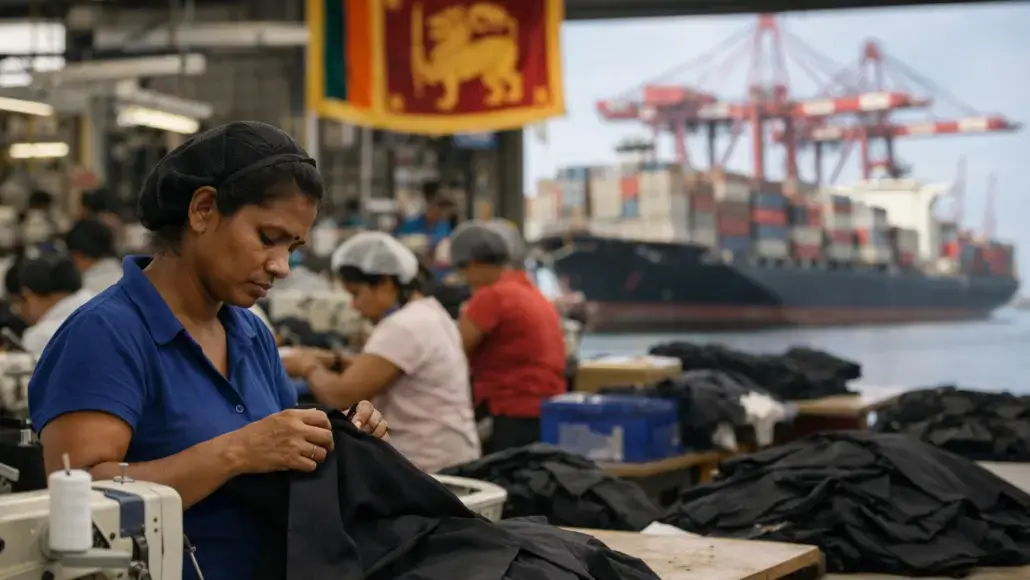
Sri Lanka’s apparel export sector returned to monthly growth in September 2026, offering a degree of optimism for an industry that has faced sustained pressure throughout the year. Total apparel exports for the month reached $416.99 million, representing a 3.47% increase compared to September 2025. While the uptick is being viewed as an encouraging development, industry representatives have been clear that it does not yet signal a full recovery.
US and EU Drive Monthly Gains
The Joint Apparel Association Forum (JAAF), the body that represents Sri Lanka’s apparel industry, confirmed that shipments to the United States climbed 7.17% during the month, reaching $172.03 million. Exports to the European Union, excluding the United Kingdom, rose 6.5% to $132.46 million. JAAF described this growth in Sri Lanka’s two largest export markets as an “encouraging sign,” while noting that a sustained turnaround had not yet been established.
Performance across other destinations, however, remained uneven. Exports to the United Kingdom fell 5.92% to $47.33 million during September, and shipments to other global regions declined by 3.89% to $65.17 million in the same period.
Nine-Month Cumulative Data Reflects Persistent Pressure
Despite the monthly improvement, the broader picture for Sri Lanka apparel exports through the first nine months of 2026 continues to reflect industry-wide challenges. From January to September 2026, total apparel exports were valued at $3.59 billion — a decline of 5.52%, equivalent to approximately $210 million, when measured against the same period in 2025.
Cumulative data across all major markets show year-on-year contractions. The United Kingdom recorded the steepest fall at 10.85%, followed by declines in the EU and other markets at 5.44% and 5.43% respectively. The US market saw a comparatively smaller contraction at 3.69% over the same nine-month period.
Shifting Global Trade Dynamics Add Competitive Pressure
JAAF noted that evolving global trade dynamics are increasingly shaping the outlook for Sri Lanka apparel exports. According to US import data, Chinese apparel shipments to the United States dropped by approximately 34% in the first seven months of 2026. Industry observers in other apparel-exporting nations have noted that both China and India have redirected a greater share of their exports toward Europe following elevated tariffs in the US market, intensifying competition within the EU.
Data indicates that China’s share of apparel imports into the EU grew from 26.9% to 28.6% between January and April 2026. This increased competition, particularly in European markets, underscores the importance of Sri Lankan producers focusing on competitiveness, supply chain reliability, and market diversification as part of their longer-term strategy.
Industry Calls for Stable Energy and Policy Support
JAAF Secretary General Yohan Lawrence commented on the September figures, stating that the growth recorded in the US and EU demonstrates that Sri Lankan manufacturers are capable of competing when demand conditions are favorable. He acknowledged, however, that the industry remains more than five percent behind where it stood at the same point the previous year.
Lawrence emphasized that what the industry requires now is steady, competitively priced energy and a supportive policy environment to ensure that the momentum seen in September extends beyond a single month. His remarks reflect the broader concern within the JAAF that one month of positive data, while welcome, is insufficient on its own to confirm that global apparel trade conditions are turning in Sri Lanka’s favor.
The September figures for Sri Lanka apparel exports offer a measured but cautious signal for an industry navigating significant headwinds, from shifting trade flows and intensifying global apparel market competition to domestic structural needs that continue to require attention.