































Rwanda Garment Industry Expansion Plans Unveiled

Note* - All images used are for editorial and illustrative purposes only and may not originate from the original news provider or associated company.

Subscribe

- Never miss a story with notifications

- Browse free from up to 5 devices at once

- Gain full access to our premium content

Media Packs

Expand Your Reach With Our Customized Solutions Empowering Your Campaigns To Maximize Your Reach & Drive Real Results!
โ€“ Access The Media Pack Now!
โ€“ Book a Conference Call
โ€“ Leave Message for us to Get Back

Related stories

UAE Unveils National Naseej Initiative to Champion Circular Textile Economy

Abdulla bin Touq Al Marri, the UAEโ€™s Minister of...

Hyosung TNC Accelerates Sustainable Textile Future with Integrated Bio-Spandex Platform

Hyosung TNC, a global leader in providing comprehensive sustainable...

Chinese Company Commits $360 Million to Bolster Kazakhstan’s Cotton Sector

A significant development is poised to transform Kazakhstan's agricultural...
AI Summary

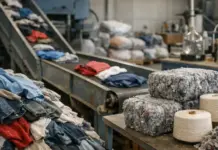
Rwandan Prime Minister Edouard Ngirente recently addressed Parliament, revealing the government’s plans to significantly enhance the contribution of the nationโ€™s garment industry to local consumers. Currently, garment factories in Rwanda cater to only 5% of the population.

Ngirente detailed the governmentโ€™s strategy aimed at expanding industrial production and exports to promote sustainable economic growth as part of the National Strategy for Transformation (NST2), which will be implemented from 2024-2025 through 2028-2029.

The objective is to provide all Rwandans with affordable, locally-made clothing, and the government is making substantial investments in domestic garment factories as part of theย Rwanda Garment Industry Expansion, as reported by a local media outlet.

In light of the ban on second-hand clothing, the government is actively promoting private sector investment in the textile and garment industry.

Additionally, efforts are underway to establish a stable market for locally-produced apparel, including public school uniforms, he emphasized.

Ngirente stated that this initiative could result in savings of between Rwf17 billion and Rwf20 billion for the country.

Parliament members posed several questions, including how the government intends to lower production costs to make locally-manufactured clothing more affordable, as well as whether there would be sufficient local raw materials to meet demand.

Ngirente assured that fabric production would be increased, acknowledging the current dependence on imported fabrics for the textile sector. He mentioned that a new project to enhance domestic fabric production would be launched soon as part of theย Rwanda Garment Industry Expansionย initiative.

A pivotal strategy for reducing the cost of locally-produced garments involves leveraging economies of scale, he added.

Never miss a textile headline

The textile industry moves fast โ€“ stay on top of it with our must-read briefings.

  • The top textile stories, straight to your inbox
  • The biggest news, features, interviews, and analysis
  • Dedicated coverage of the key developments driving global textile trade

Latest stories

Related stories

UAE Unveils National Naseej Initiative to Champion Circular Textile Economy

Abdulla bin Touq Al Marri, the UAEโ€™s Minister of...

Hyosung TNC Accelerates Sustainable Textile Future with Integrated Bio-Spandex Platform

Hyosung TNC, a global leader in providing comprehensive sustainable...

Chinese Company Commits $360 Million to Bolster Kazakhstan’s Cotton Sector

A significant development is poised to transform Kazakhstan's agricultural...

Subscribe

- Never miss a story with notifications

- Gain full access to our premium content

- Browse free from up to 5 devices at once

Media Packs

Expand Your Reach With Our Customized Solutions Empowering Your Campaigns To Maximize Your Reach & Drive Real Results!

โ€“ Access The Media Pack Now!
โ€“ Book a Conference Call
โ€“ Leave Message for us to Get Back