































Frasers Group’s acquisition of Harvey Nichols has given the struggling British luxury department store a new owner, but reviving its fortunes will require more than a change in ownership.
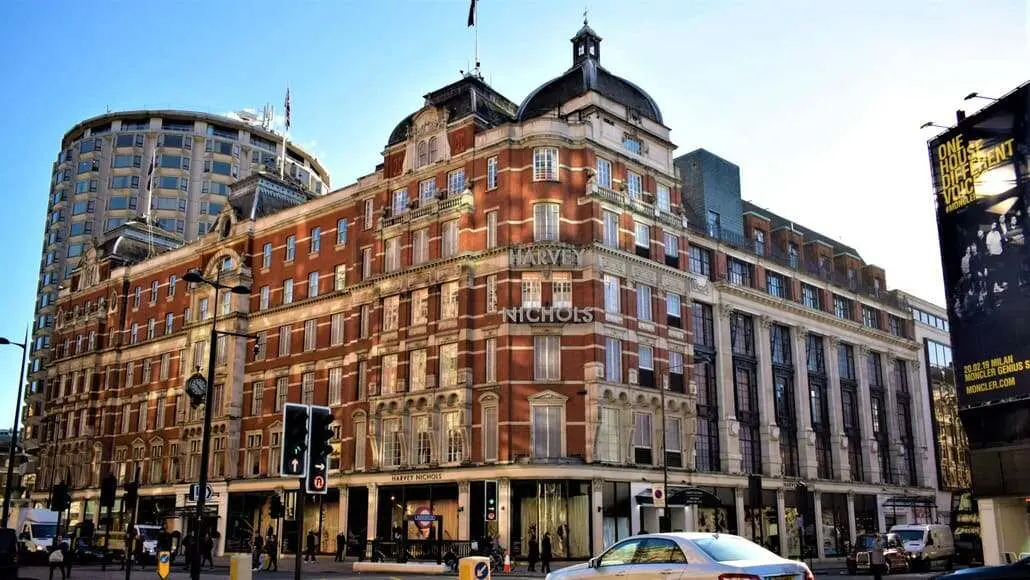
The retailer, which entered administration before being acquired by Frasers on August 13, has faced several years of financial and trading difficulties. The deal gives Frasers control of six UK stores, including the Knightsbridge flagship, alongside its online business, inventory and more than 1,000 employees. International franchise arrangements are also included, while the future of the Dublin operation remains under discussion.
For Frasers, the acquisition fits its broader push into premium and luxury retail. The group already operates brands and businesses including FLANNELS and The Webster, giving it an established platform from which to expand its presence at the upper end of the market.
However, the challenge is substantial. Harvey Nichols has struggled to maintain profitability and relevance while competing against stronger luxury department stores and specialist retailers. Its difficulties have also coincided with changes in consumer behaviour, the growth of online luxury shopping and pressure on discretionary spending.
Harvey Nichols needs a stronger identity
One of the biggest questions facing the new owner is what Harvey Nichols should stand for in an increasingly competitive luxury market.
The retailer was once recognised for its distinctive fashion edit, emerging designers and ability to create excitement around new brands. That differentiation has weakened over time as many of the labels available through Harvey Nichols have become directly accessible through their own stores and digital channels.
A successful Harvey Nichols turnaround will therefore depend on giving consumers a compelling reason to visit its stores rather than simply offering a collection of luxury brands under one roof.
The Knightsbridge flagship provides an important foundation. Its location, heritage and international recognition give Frasers an asset capable of functioning as a destination for affluent domestic and international shoppers.
The regional estate presents a more complicated proposition. Frasers has already indicated that the acquisition will involve a review of the store portfolio, organisational structure, operating model and cost base. This means the Harvey Nichols turnaround could involve a smaller and more focused retail network rather than an attempt to preserve every existing location.
Department stores need experiences, not just products
The wider UK department-store market demonstrates that physical retail can still attract customers when stores offer something distinctive.
Harrods has benefited from its position at the ultra-luxury end of the market, supported by affluent international shoppers and London’s status as a global destination. Fenwick, meanwhile, has shown that a more differentiated proposition, including collaborations and a distinctive brand mix, can help a mid-premium department store regain momentum.
For Harvey Nichols, the lesson is that simply increasing the number of products or brands may not be enough.
The retailer could instead place greater emphasis on exclusive collections, emerging designers, limited-edition collaborations, cultural events and premium services. Personal styling, hospitality and experiential retail could complement the merchandise proposition, but the underlying product selection would still need to provide a strong reason for customers to engage with the brand.
Digital transformation will be crucial
Harvey Nichols also needs to strengthen its digital proposition as luxury shopping continues to move across physical and online channels.
The retailer’s website has temporarily gone offline following the change in ownership while the business completes its transition. Physical stores remain open, with orders placed after the August 13 acquisition subject to the new ownership’s standard returns arrangements.
The eventual digital strategy could become an important component of the turnaround. Rather than treating ecommerce as a standalone sales channel, Frasers could use digital platforms to connect online discovery with store experiences, exclusive launches, personalised services and customer loyalty initiatives.
This would also fit with Frasers’ broader strategy of building stronger relationships with premium and luxury consumers across its portfolio.
Frasers faces difficult restructuring decisions
The acquisition does not represent a simple financial rescue. Frasers itself has acknowledged that substantial restructuring and integration will be necessary before Harvey Nichols can become commercially sustainable. The review is expected to cover stores, staffing structures, operating systems and the company’s cost base.
That creates a delicate balance for the new owner. Cutting costs too aggressively could weaken the brand and damage the customer experience, while maintaining an oversized estate could prevent the business from returning to sustainable profitability.
The acquisition also comes with lessons from Frasers’ previous experience with distressed retail assets. Its acquisition of Matches in 2023 ended with the online luxury retailer entering administration only months later, leaving suppliers with significant unpaid claims.
Maintaining confidence among luxury brands and suppliers will therefore be an important part of the Harvey Nichols strategy.
A smaller but stronger Harvey Nichols?
Frasers’ approach is likely to focus on identifying which parts of Harvey Nichols still possess genuine strategic value.
The Knightsbridge flagship is the clearest candidate for long-term investment. The store’s heritage and location give it the potential to become a stronger luxury destination, particularly if its merchandise mix and customer experience are revitalised.
Other locations may face tougher decisions. Frasers has experience of reducing store networks when it believes individual sites cannot support a sustainable business model. Consequently, the future Harvey Nichols estate could look considerably different from the one inherited by Frasers.
The company has also positioned the acquisition within its wider luxury strategy, alongside FLANNELS, The Webster and other premium interests. The move gives Frasers additional relationships with major luxury houses including Gucci, Moncler, Burberry, Prada and Dior.
Can Frasers make the brand relevant again?
The opportunity for Frasers lies in combining Harvey Nichols’ heritage and luxury positioning with its own retail, operational and commercial expertise.
But restoring the retailer will require more than financial investment. Harvey Nichols needs a sharper identity, a compelling product proposition, stronger digital capabilities and stores that offer experiences customers cannot easily replicate elsewhere.
The Harvey Nichols turnaround could therefore become a test of whether a traditional department-store brand can regain relevance through focused curation rather than scale alone.
Frasers has already signalled that difficult decisions may be necessary, including potentially reducing the business in the short term to create a more sustainable operation.
If the group succeeds in combining Harvey Nichols’ heritage with a more distinctive product and experience strategy, the retailer could emerge as a smaller but stronger luxury player. If it fails to restore differentiation, however, the acquisition risks becoming another example of how difficult it is to revive a legacy department-store model in today’s fragmented luxury market.

