
























Germany, long regarded as one of Europe’s more environmentally conscious economies, is increasingly struggling to close the loop on textile waste. Despite growing public awareness around sustainable fashion and circular economy principles, the country’s textile waste volumes continue to climb, exposing a widening gap between political ambition and ground-level reality.
The Scale of the Problem
Germans consume an estimated 14 kilograms of clothing and textiles per person every year — a figure that places significant pressure on collection and recycling infrastructure. At the same time, only a fraction of those textiles ever make it back into a productive material cycle. The remainder ends up incinerated or in landfills, lost to the economy and the environment alike.
Textile waste in Germany has been rising steadily, driven by fast fashion consumption patterns and the relatively short life cycles of modern garments. While collection systems exist, they are not designed or scaled to handle the complexity and volume of materials entering the waste stream today.
Collection Without Circularity
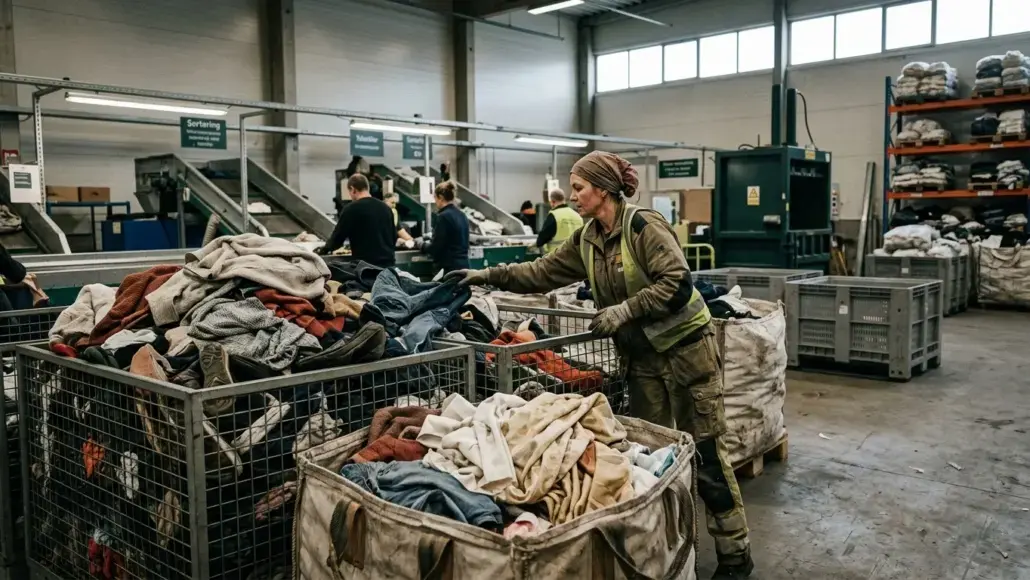
A key issue highlighted in industry discussions is that collecting textiles and achieving genuine circularity are two very different things. Germany has an established network of collection points and charity-run sorting operations, but a significant share of what is collected is either exported to third countries or downcycled into lower-value applications such as insulation material or industrial rags.
True textile-to-textile recycling — where old garments are broken down and reformed into new fibres and fabrics — remains limited in scale. The technical infrastructure for fibre-to-fibre recycling is still emerging, and investment in domestic processing capacity has not kept pace with the scale of the challenge.
Regulatory Pressure and the EU Backdrop
The pressure on Germany and other European Union member states is intensifying on the regulatory front. The EU’s extended producer responsibility (EPR) framework for textiles, set to roll out across member states, is expected to place greater financial and operational responsibility on brands and manufacturers for what happens to their products at end of life.
Germany has yet to fully transpose and implement the relevant EU directives into national law in a way that drives systemic change. Industry observers note that without clearly defined targets, robust EPR schemes, and enforceable standards for recycled content, the circularity gap will persist even as collection volumes grow.
The Sorting Bottleneck
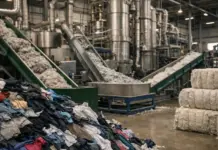
One of the most critical — and often overlooked — barriers to textile circularity is sorting. Before any recycling can take place, collected garments must be accurately sorted by fibre type, construction, and condition. This is an enormously labour-intensive process, and Germany, like most European countries, faces a shortage of both capacity and technology to do this at scale.
Automated sorting technologies using near-infrared spectroscopy and artificial intelligence are in development and early deployment across parts of Europe, but widespread adoption remains some years away. Until sorting is resolved, recyclers simply cannot receive a consistent, clean, and well-characterised feedstock — making large-scale textile-to-textile recycling commercially unviable for many operators.
The Fashion Industry’s Role
Brands operating in the German market — both domestic and international — have commitments on paper around sustainability and circular design. However, the design of most garments still makes recycling difficult. Blended fibres, decorative trims, coatings, and dyes all complicate the recycling process. Fashion waste, in many cases, is simply not recyclable with current available technology, regardless of how well it is collected.
There is growing recognition that circularity must begin at the design stage. Garments designed for durability, repairability, and eventual recyclability would ease the burden on the waste management system considerably. However, translating this principle into mainstream commercial practice across the fashion industry remains a work in progress.
Consumer Behaviour and Awareness
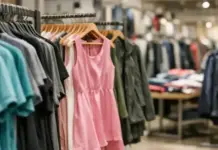
While German consumers are increasingly aware of sustainability issues in fashion, awareness has not uniformly translated into behaviour change. Fast fashion consumption continues to grow, and the average number of times a garment is worn before disposal has declined over recent years.
Textile waste at the household level is also shaped by convenience. When consumers do attempt to dispose of clothing responsibly, they often lack clear guidance on what is genuinely recyclable versus what will simply be downcycled or exported. Greater transparency from brands and retailers, as well as clearer public communication from municipal authorities, has been identified as necessary to improve outcomes.
What Needs to Change
The picture that emerges from Germany’s textile waste challenge is one where the pieces of a circular system exist in fragments but have not yet been assembled into a coherent whole. Collection is partial, sorting is insufficient, textile recycling infrastructure is underdeveloped, and regulatory incentives have not yet created the conditions for private investment to flow at the required scale.
Closing the circularity gap will require coordinated action across the value chain — from designers and brands to sorters, recyclers, policymakers, and consumers. Textile waste in Germany will not resolve itself through goodwill alone. It demands structural solutions backed by clear regulation, investment, and accountability.
The coming years, shaped significantly by EU-level policy shifts and the maturation of recycling technology, will determine whether Germany can genuinely move toward a circular textile economy — or whether rising fashion waste continues to outpace the systems meant to contain it.