

























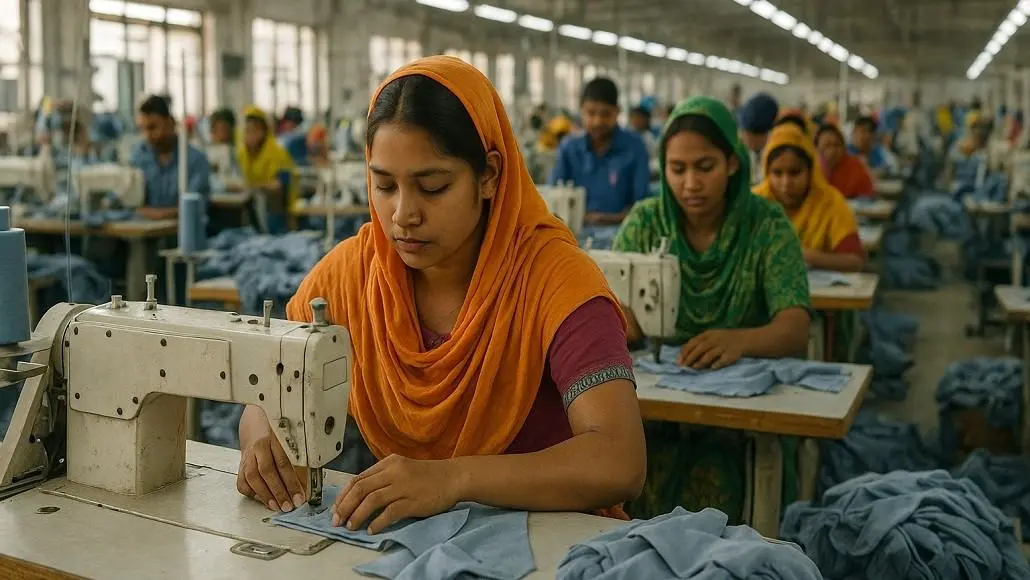
The landscape of the Bangladesh garment industry, long recognized for its role in female economic empowerment, is undergoing a significant demographic shift. According to recent data from the Bangladesh Garment Manufacturers and Exporters Association (BGMEA) and various research institutions, the proportion of female garment workers has seen a steady decrease over the last few decades. While women constituted approximately 80 per cent of the workforce between 1980 and 1994, that figure dropped to 70 per cent by 2005 and reached approximately 53 per cent in 2023. Studies by the Bangladesh Institute of Development Studies (BIDS) and BRAC University have corroborated this downward trend.
Technical Skills and RMG Sector Automation Challenges
A primary factor contributing to the female labor decline is the rapid implementation of RMG sector automation. New machinery requires specific technical skills that many female garment workers currently lack. A report from FSG in 2022 indicated that nearly one-third of women in the sector have incomplete primary education, compared to 18 per cent of their male counterparts. This educational gap limits their ability to operate advanced equipment such as flat lock, overlock, and button-hole machines, which are becoming standard in automated production lines.
Safety Concerns and Night Shift Restrictions
Beyond technical skills, safety considerations also influence hiring patterns. As factories move toward 24-hour operations, employers often prefer male workers for night shifts due to safety concerns regarding women traveling or working late hours. This preference further contributes to the overall female labor decline in the RMG sector, as women are less frequently trained or considered for roles that require round-the-clock availability.
Economic Pressures and Operational Instability
The Bangladesh garment industry is also facing external pressures that impact employment. Political uncertainty, banking challenges, and a decrease in international orders have led to factory closures. In some instances, these circumstances are utilized to reduce the number of female staff. Additionally, rising living costs near industrial hubs are prompting older women, particularly those with children, to leave their positions and return to rural areas, as sustaining a household on current wages becomes increasingly difficult.
Working Conditions and Garment Worker Rights
The physical and psychological environment of the workplace remains a critical factor for retention. Reports describe 12-hour workdays in cramped, poorly ventilated spaces, leading to recurring health issues like respiratory problems and skin allergies. Furthermore, garment worker rights are a central concern, as many employees lack health insurance. High levels of verbal abuse and harassment are also reported; an Icar report noted that 80 per cent of women workers have witnessed or experienced sexual violence or harassment in the workplace.
Moshrefa Mishu, president of the Garments Sramik Unity Forum, noted that while the industry has grown, the conditions for workers have not improved proportionally. She emphasized that women remain among the lowest-paid contributors despite being the historical backbone of the sector. The combination of technological shifts and harsh workplace realities continues to reshape the female labor in RMG sector participation rates.

