




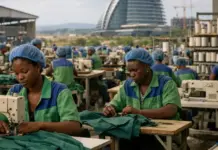
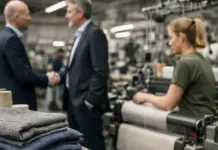
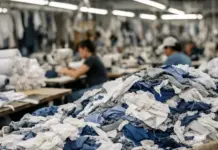
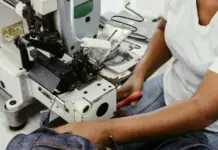


















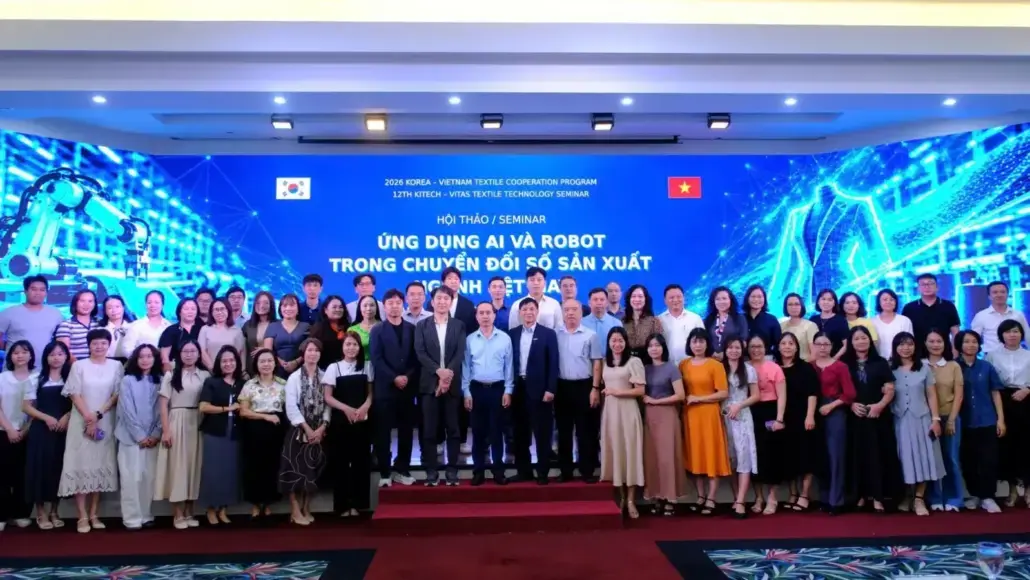
On October 29, 2026, the 12th International Conference on Textile Technology convened in Hanoi to address the integration of advanced technological systems within the manufacturing sector. Themed “Application of AI and Robotics in the Transformation of Textile Production,” the event served as a professional forum for exchanging industrial automation solutions and promoting the modernization of the Vietnam textile industry.
The conference was organized through a collaborative effort between the Vietnam Textile and Apparel Association (VITAS), the Korea Institute of Industrial Technology (KITECH), and the Industrial Development Support Center (IDC). Key attendees included Deputy Director of the Department of Industry Do Nam Binh, IDC Director Mai Van Ke, and VITAS Vice President Truong Van Cam, alongside various technology experts and research organizations.
Strategic Shift Toward High-Tech Production
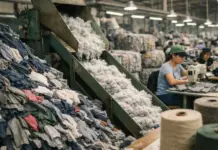
During his opening remarks, Deputy Director Do Nam Binh noted that textiles and garments remain a vital component of the national economy, contributing significantly to export turnover and job creation. However, he observed that the industry is navigating a period of intense international competition. Export markets are increasingly demanding more than just competitive pricing; there is a growing emphasis on green development, emission reduction, and traceability.
Binh stated that the traditional growth model, which relies heavily on low production costs and abundant labor, is reaching its limitations. To maintain a competitive edge, the sector must prioritize a textile technology transformation that emphasizes productivity, product quality, and high value-added manufacturing stages.
Practical Applications of AI and Robotics
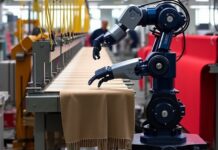
The conference highlighted that the implementation of AI and robotics should be viewed as a comprehensive textile production transformation rather than a simple replacement of manual tasks. Participants discussed how artificial intelligence can support businesses across multiple operational layers, including market demand forecasting, product design, material optimization, and quality control.
Robotic systems and industrial automation solutions are increasingly applicable in stages such as fabric laying, material transport, cutting, and packaging. However, experts emphasized that the selection of technology must align with the unique needs of the factory. The core metric of success is the actual effectiveness of the technology—measured by reduced error rates, material savings, and improved management capabilities—rather than the sheer volume of equipment installed.
For small and medium-sized enterprises within the Vietnam textile industry, speakers recommended a staged approach. Instead of immediate large-scale investment, businesses are encouraged to implement pilot models in specific processes to evaluate efficiency before scaling up.
Strengthening Vietnam Korea Cooperation
A significant portion of the forum focused on the importance of international partnerships to facilitate technology transfer. Vietnam Korea cooperation has become a cornerstone for accessing smart manufacturing systems. South Korea brings extensive experience in high-tech industrial applications, while Vietnam offers a robust manufacturing base and a growing demand for innovation.
The Department of Industry suggested that the two nations focus on three specific areas: identifying production stages that require immediate automation, strengthening links between research institutes to replicate successful pilot models, and prioritizing human resource training. This ensures that Vietnamese workers possess the skills necessary to operate and master new technologies effectively.
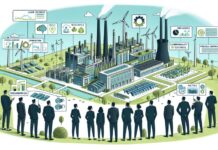
The 12th International Conference on Textile Technology concluded with thematic discussions on product lifecycle management and digital fashion design. By fostering this Vietnam Korea cooperation, the industry aims to achieve a successful textile technology transformation, ensuring that the textile production transformation leads to sustainable and smart manufacturing models.