





























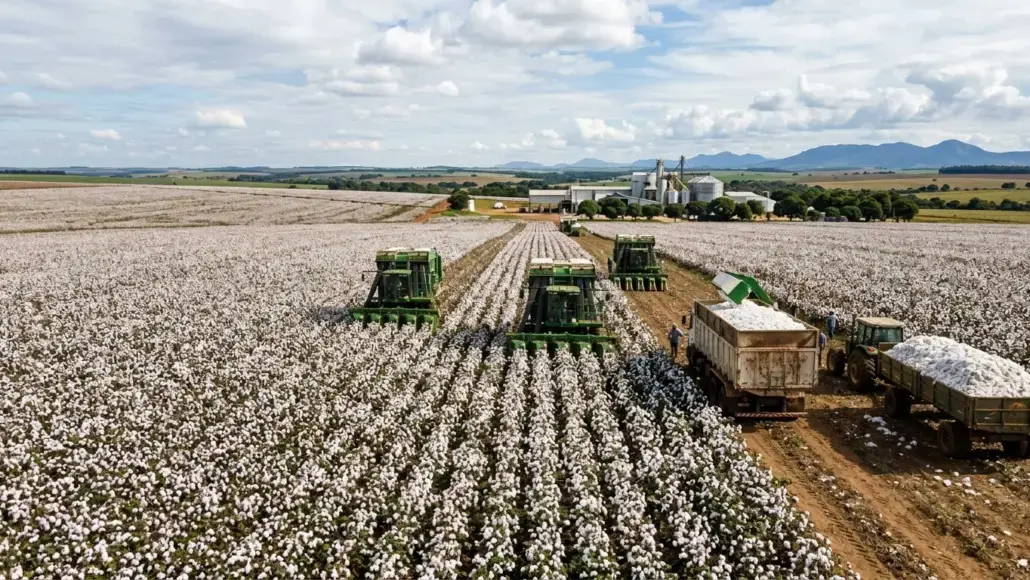
The cotton market trends in Brazil witnessed a significant upward movement in recent weeks, with the CEPEA/ESALQ Index (payment in eight days) registering a 3.31 percent increase between April 30 and May 29. The index closed at BRL 4.2793 per pound on May 29, marking its highest nominal level since June 16, 2025. Averaging BRL 4.2217 per pound in May, the index reflected a 5.6 percent rise from April, indicating robust conditions within the sector.
Robust Domestic Cotton Market Conditions
The sustained strength in cotton prices for Brazilian cotton was underpinned by several contributing factors. Sellers maintained a firm stance, strategically holding onto remaining cotton stocks from the current crop, which provided crucial support for domestic prices throughout May. Concurrently, buyers proceeded with caution, impacting overall trading activity. This hesitation stemmed from the textile industry facing ongoing challenges in effectively passing on increased raw material costs to their finished products. Producers, monitoring the development of the next crop and enjoying a comfortable financial position, were also reluctant to finalize new deals. Further bolstering the local market outlook, strong export performance absorbed available supplies, alleviating pressure on the domestic front. On average during May, domestic cotton prices in Brazil remained 5.4 percent above export parity levels, underscoring the country’s robust local market dynamics.
Revised Global Cotton Production Forecasts
Meanwhile, the International Cotton Advisory Committee (ICAC) issued a revised, lower market outlook for global cotton production for the 2026-27 season. The forecast now estimates global production at 25.79 million tonnes, representing a 0.47 percent decrease from its May projection and 2.21 percent below the previous season’s figures. The committee projects the global cotton planted area to be 30.1 million hectares, a 1 percent reduction compared to the previous crop, with average yields anticipated to decline to 856.6 kg per hectare.
Brazil’s Contribution to Global Decline
Specifically for Brazil, the ICAC forecast indicates a 6 percent decrease in Brazilian cotton planted area, reaching 2 million hectares in 2026-27. This reduction is expected to lead to a 10 percent decline in production, bringing the country’s output to 3.8 million tonnes. Despite these projected declines in global cotton production, the ICAC’s estimate for global cotton consumption stands at 25.278 million tonnes. While slightly higher than the previous month’s forecast, this figure remains below the expected global supply. The evolving cotton market trends highlight a complex interplay of regional strengths and broader supply adjustments impacting the textile industry worldwide.