




























The Nigeria textile industry recovery is gathering momentum as supportive government policies, increased private investment and rising demand for locally manufactured apparel encourage manufacturers to scale up production. While the sector is showing renewed strength, its progress continues to rely largely on domestic consumption rather than export growth.
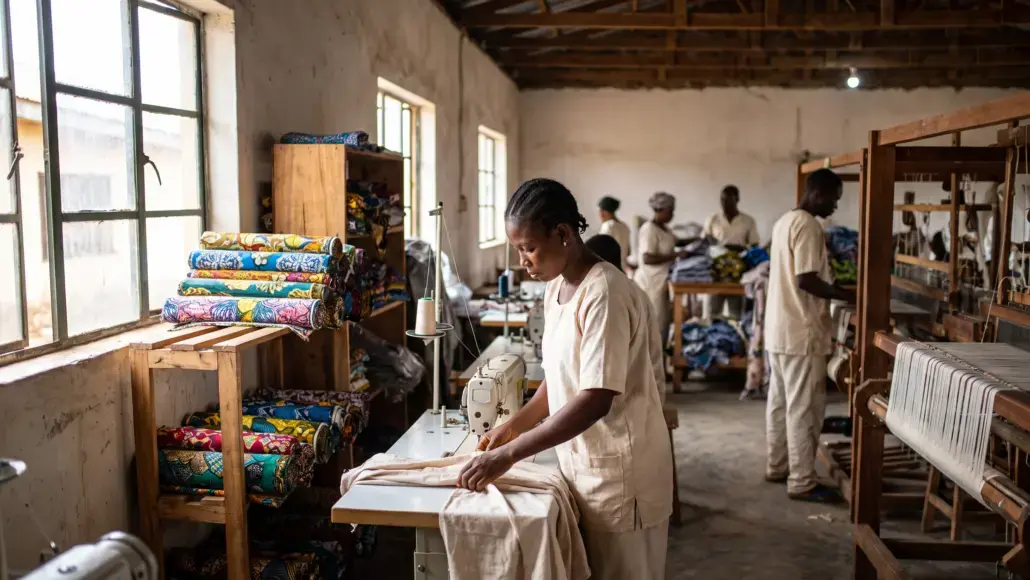
Industry representatives estimate that textile production expanded by approximately 45% in 2026, reflecting stronger activity across garment manufacturing and a growing network of small and medium-sized enterprises (SMEs). Local factories have stepped up output of T-shirts, jerseys, jackets, trousers and workwear as consumers increasingly favour Made-in-Nigeria clothing.
A major catalyst behind the Nigeria textile industry recovery is the Federal Government’s National Cotton, Textile and Garment Industrial Transformation Program (NCTG-ITP). The initiative is designed to rebuild the country’s integrated cotton-to-clothing value chain, reduce reliance on imported garments and stimulate employment through domestic manufacturing.
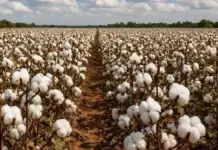
The programme has already delivered encouraging results through a six-month pilot project that produced 10,000 T-shirts using cotton grown within Nigeria. The initiative demonstrated that locally sourced raw materials can support competitive garment manufacturing when the entire supply chain operates efficiently.
Government purchasing policies are also strengthening demand for domestic producers. Under Executive Order 003, ministries, departments and public agencies are encouraged to procure Nigerian-made goods wherever possible. Several state governments have complemented this effort by introducing procurement policies that prioritise locally manufactured uniforms and apparel for public-sector employees, providing textile producers with more stable business opportunities.
Authorities view the revival of the textile sector as part of a broader strategy to reduce Nigeria’s dependence on imported apparel while expanding local industrial capacity. Industry leaders believe restoring the cotton, textile and garment ecosystem could generate more than 1.5 million jobs over the coming years, particularly benefiting women and young entrepreneurs.
Despite the positive momentum, significant obstacles continue to constrain long-term growth. Official figures indicate that textile imports increased during 2025, while textile exports declined considerably. Industry experts also point out that fewer than 20 textile mills remain operational today, compared with more than 180 mills several decades ago.
Manufacturers continue to grapple with high electricity costs, restricted access to financing, ageing production equipment and the influx of illegal imports. These structural issues continue to undermine competitiveness, suggesting that although garment production is improving, a full-scale industrial revival will require sustained reforms and investment.
For textile manufacturers across Africa, Nigeria’s experience illustrates that rebuilding industrial capacity depends on more than capital investment alone. Strong domestic demand, coordinated government policy, local sourcing and integrated value chains can revive manufacturing. The next milestone for the Nigeria textile industry recovery will be transforming domestic gains into stronger export performance under the African Continental Free Trade Area (AfCFTA).