


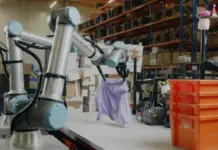






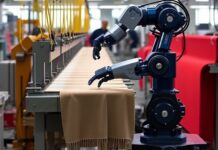
















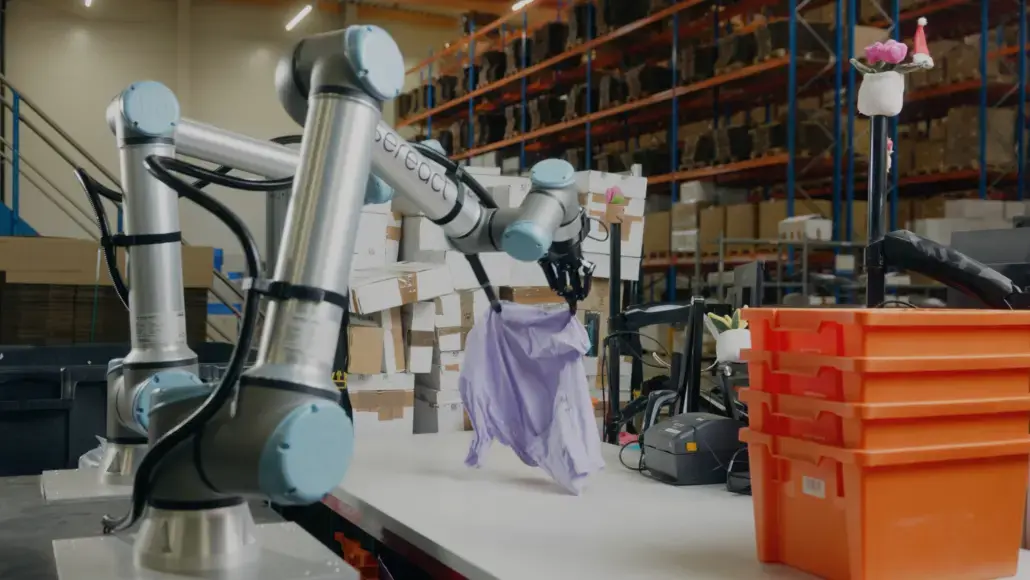
Zalando and CEVA Logistics have introduced AI-powered robots to handle returned fashion products at two European distribution facilities, marking another step towards automated e-commerce logistics. The systems, developed by German robotics firm Sereact, are operational at CEVA warehouses in Greven, Germany, and Świebodzin, Poland.
The dual-arm machines can recognise, pick and sort products without requiring item-specific training or predefined stock-keeping unit (SKU) data. This capability addresses a longstanding challenge in AI-powered fashion returns, where garments arrive in different conditions, packaging formats and combinations that make conventional automation difficult.
The deployment follows a Robotics-as-a-Service (RaaS) model, enabling warehouse personnel to concentrate on monitoring operations, managing exceptions and maintaining quality standards.
AI System Handles Unfamiliar Products
Sereact’s Cortex physical AI platform supports multiple robotic configurations, including single-arm picking systems, dual-arm return-handling units and humanoid robots. The platform draws on operational experience across its robotic systems to improve its ability to recognise and handle unfamiliar objects.
Chris Walton, SVP Contract Logistics at CEVA Logistics, said: “One of the toughest challenges is returns handling, due to its extreme operational nature and scale, unpredictable volumes, manual quality checks, seasonality, value decay, and a disproportionately high cost per unit.”
“Our Robotics-as-a-Service model classifies items faster, reduces manual touchpoints, and delivers consistent, predictable quality on a large scale. For our customers, this transforms returns from a cost driver into a controlled, high‑performance service.”
Zalando Expands Robotics Collaboration
Zalando participated as a strategic investor in Sereact’s Series B funding round in July 2026. The companies are also working together to expand intelligent automation throughout their European logistics networks.
Masood Choudhry, SVP Logistics at Zalando, said: “By solving the most complex challenges in modern fulfilment today, we are actively shaping the future of e-commerce logistics for fashion and lifestyle,”
Returns represent a substantial operational burden for online fashion retailers. Zalando reports that approximately 50% of its online sales are returned, making efficient processing essential to controlling logistics costs and maintaining product value.
By automating labour-intensive sorting tasks, AI-powered fashion returns technology could help retailers improve processing consistency, reduce manual intervention and manage fluctuating return volumes more effectively.