



























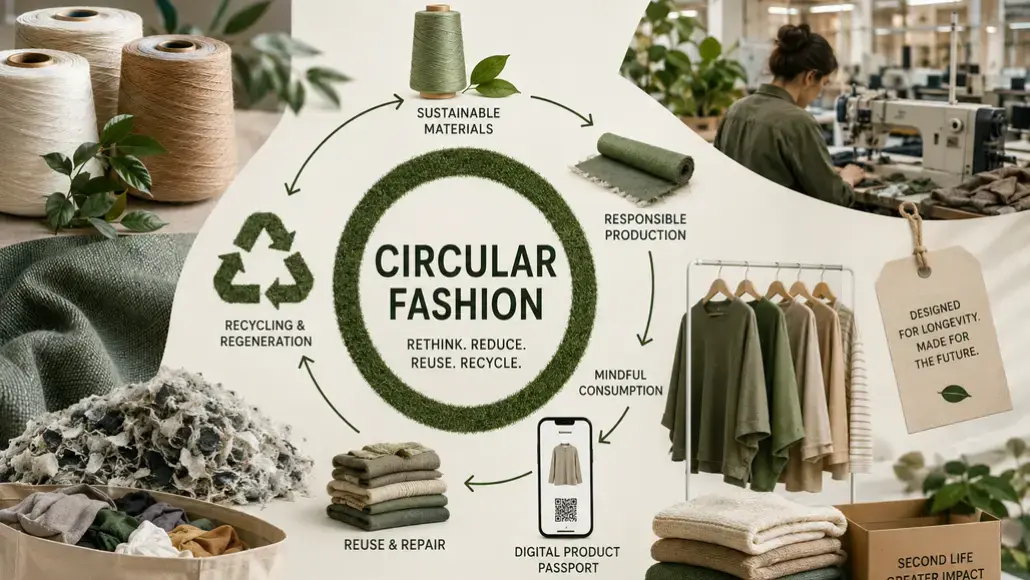
Walk through any major shopping district today or scroll the home page of a fashion marketplace, and sustainability messaging is everywhere. Garments are framed as “circular,” fibres are described as “recycled,” and climate language has become routine in product storytelling. Yet the commercial reality is more complicated. Many shoppers, still navigating stubborn cost-of-living pressure, continue to prioritise price and perceived value over paying extra for “greener” options. For textile and apparel businesses, this is the fashion sustainability paradox: sustainability is becoming non-negotiable across production and compliance, even as consumer willingness to fund it remains uneven.
Why B2B Suppliers are Feeling the Squeeze First
For B2B players across spinning, weaving, dyeing, finishing and manufacturing, the implication is immediate. Sustainability can no longer sit in a separate ESG lane or be treated as a brand-side communications project. It is hardening into a risk, resilience and market-access agenda shaped by regulation, resource volatility and capital markets. In practice, the fashion sustainability paradox is pushing suppliers to deliver lower-impact outputs at competitive prices, with proof attached, while demand remains highly sensitive to inflation and discounting.
Energy Volatility Turns Sustainability into Cost Management
The old growth playbook is losing reliability. For years, the sector leaned on scale, global sourcing optimisation and promotional cycles to maintain margins. That model is now under pressure from demand volatility, supply chain shocks and intensifying scrutiny over environmental impact. Add geopolitics and climate disruption, and sustainability stops being abstract. It begins to show up in lead times, input costs and continuity of supply.
Energy volatility is an obvious example: synthetic fibres are closely linked to oil markets, and logistics remains fuel-dependent. When crude rises sharply, polyester costs can follow, and transport expenses tend to move with it. The current U.S.–Iran conflict and its impact on oil markets is a live illustration of how quickly the cost base can shift for fibre producers, mills and brands—especially when shipping lanes, insurance pricing and fuel costs all react to heightened risk at the same time.
A Recent Reminder: The Logistics Shock That Repriced Fashion
Recent history offers another warning. During the pandemic-era logistics crunch, container availability tightened and freight costs surged, disrupting delivery schedules across apparel. Companies optimised purely for low cost, with little redundancy, struggled to replenish shelves and manage inventory. The sustainability transition echoes the same lesson: resilience carries a cost, but fragility can be far more expensive. In the fashion sustainability paradox, many of the investments required to reduce emissions or improve circularity are also the investments that stabilise operations against shocks.
Consumers Want Value, Not Lectures—And Often Not Premiums
Consumer demand, meanwhile, is splitting rather than moving in one direction. Higher-income segments can still support premium products, where sustainability is increasingly assumed as a baseline expectation. At the same time, value-focused consumers are gravitating toward discounts, resale platforms, and low-cost online fashion. Even among shoppers who say they care about sustainability, behaviour often depends on price points and convenience. This creates a difficult operating environment for suppliers: buyers want lower-impact materials, verified data, and more transparent production, but often still negotiate aggressively on price.
Where the ROI Comes From Now: Risk, Eligibility and Efficiency
This is where the business case changes. Sustainability investments must earn their return not through a guaranteed retail premium, but through operational efficiency, risk reduction and contract security. A practical example is recycled yarn and fabric adoption. Switching to recycled inputs can bring new costs—certification, traceability systems, additional testing, and sometimes tighter quality control. Yet the same shift can reduce exposure to virgin feedstock volatility and help secure long-term programmes with customers whose sourcing standards are tightening. The commercial value is not only in a hangtag claim; it is in keeping a mill or factory eligible for future tenders.
Europe’s Rulebook is Becoming the Real Demand Signal
Regulation is quickly becoming the most consistent demand signal. Europe, in particular, is moving toward rules that reduce greenwashing, curb waste, and raise requirements for durability, repairability and recyclability. Digital product documentation is also gaining traction, making traceability a practical capability rather than a brand differentiator. For exporters and their supply chains, “sellable” increasingly means “documentable.” Fibre composition clarity, chemical compliance, recycled content verification and credible end-of-life pathways are moving upstream into material selection, dye chemistry and process control.
Inventory and Waste Rules Will Push Smaller Runs and Faster Cycles
Waste policy also has structural implications. Measures that restrict the destruction of unsold goods change inventory economics, and that can push brands toward smaller runs, faster replenishment and demand-responsive manufacturing. For suppliers, that points to a competitive advantage for those who can deliver flexibility, shorter lead times and consistent quality at lower minimums. In other words, the operational response to the fashion sustainability paradox may look less like a marketing pivot and more like a manufacturing redesign.
Circularity is Growing – But Recycling Capacity Still Lags
Circularity is real, but the infrastructure is not consistently ready. Resale is scaling quickly in several markets and repair is returning as a service category, but textile-to-textile recycling remains constrained by feedstock quality, sorting infrastructure and economics. Mechanical recycling can face fibre quality loss, while chemical recycling is scaling slowly and requires heavy capital. In many regions, post-consumer collection is fragmented, and the most difficult waste streams are blended fabrics with heavy finishes and trims.
Designing for What Recycling Can Actually Handle
The near-term opportunity for textile manufacturers is to design for what recovery systems can realistically process. Simplifying blends where possible, reducing hard-to-remove trims, selecting dyes and finishes that do not block recycling pathways, and improving labelling and data quality can make products more circular-ready. These are unglamorous changes, but they are increasingly the decisions that determine preferred-supplier status as circularity moves from pilot programmes to procurement requirements.
The Financing Gap Threatens to Split Supply Chains
The investment challenge remains substantial. Decarbonisation often requires capex: renewable energy procurement, heat recovery, electrification, water and wastewater upgrades, chemistry substitution, and digital traceability. Returns are not always immediate, and smaller suppliers can struggle to finance upgrades without stronger buyer commitments or supportive policy tools. Yet the direction of travel is clear: sustainability is shifting toward a license-to-operate expectation, similar to how quality certifications became mandatory in global supply chains.
What Leading Suppliers Will Do Next
For B2B operators, the winning strategy is to build measurable capability rather than chase slogans. Lower energy intensity, diversified raw materials, tighter process control, credible traceability, and products designed for longer life and eventual recovery are becoming the new fundamentals. The sector’s next competitive cycle will be shaped by those who treat sustainability as operational discipline—because the fashion sustainability paradox is not a temporary contradiction. It is the new commercial reality for textile supply chains serving global brands under tightening rules and volatile input costs.

