































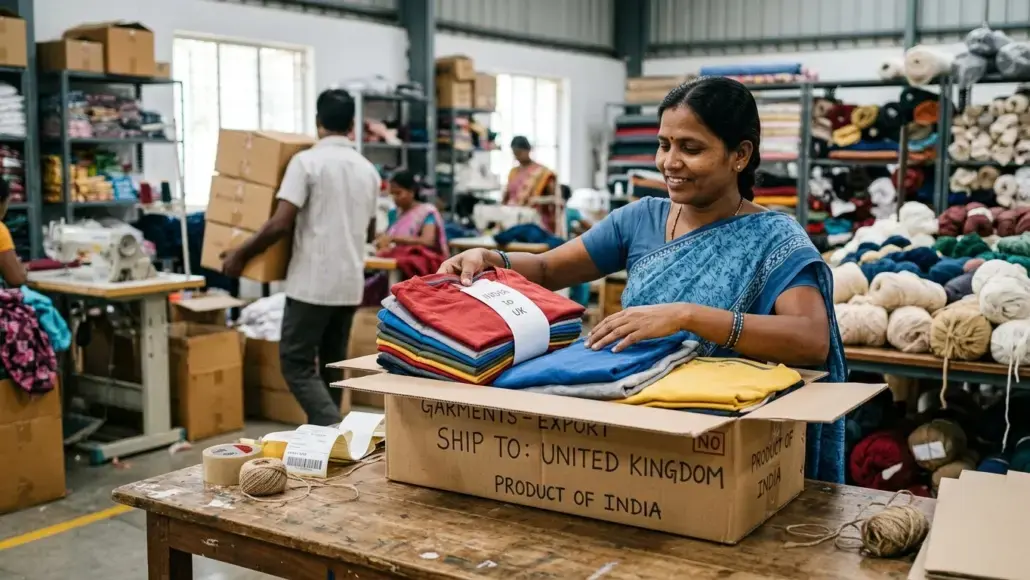
A comprehensive economic and trade agreement between India and the United Kingdom is set to take effect on July 15, marking a significant shift for the domestic garment sector. This arrangement facilitates zero duty exports for approximately 99% of Indian goods entering the British market. The $179-billion textiles and apparel sector is positioned as a primary beneficiary of this pact, which aims to enhance price competitiveness and expand international market reach. As the second-largest employer in the country, the industry stands to gain substantial new opportunities through this UK trade agreement.
The textile sector remains a cornerstone of the national economy, contributing 2% to the Gross Domestic Product and 11% of the manufacturing gross value added. Furthermore, it accounts for 8.63% of total outbound shipments, underscoring its vital role in the economic framework. Industry analysts suggest that the UK trade agreement impact will be a major milestone, potentially accelerating the progress toward the target of $100 billion in Indian textile exports by 2030. By securing a stronger foothold in one of the world’s primary fashion hubs, the industry expects to see sustained apparel industry growth.
Enhanced Market Sentiment and Competitive Positioning
Representatives from major export associations indicate that the pact has significantly bolstered confidence among both manufacturers and international buyers. With the implementation of zero duty exports, the domestic industry is expected to achieve a level playing field, particularly in comparison to other South Asian nations that have historically benefited from tariff advantages. Industry leaders believe the next two decades will represent a period of dominance for Indian textile manufacturing, as firms strengthen their operations across all production fronts to meet rising demand.
Strategic Shift Toward Man-Made Fibers
There is an increasing emphasis on diversifying beyond traditional cotton into man-made fibers (MMF). Government initiatives have focused on promoting MMF by removing specific quality control orders, which has already begun attracting foreign direct investment from major hubs in Korea, Taiwan, and China. This shift is intended to modernize textile manufacturing and ensure that the supply chain can cater to the evolving preferences of global fashion brands that are currently diversifying their sourcing strategies.
Broader Economic Implications for the Value Chain
The removal of tariffs is expected to increase demand not only for ready-made garments but also for home textiles and value-added apparel. Leadership figures within the apparel sector suggest that the UK trade agreement impact will be measured by the industry’s ability to move up the value chain. By transitioning from a cost-competitive base to a preferred supplier of high-value products, the sector can secure long-term apparel industry growth. This transition is crucial for maintaining a competitive edge in the global retail landscape.
Impact on Small and Medium Enterprises
The benefits of the trade deal are expected to extend deep into the domestic supplier ecosystem, particularly affecting micro, small, and medium enterprises (MSMEs). Increased orders for export-oriented manufacturers will likely create a multiplier effect, benefiting fabric processors, dyeing units, and ancillary industries such as packaging and logistics. This could lead to improved capacity utilization and the adoption of advanced technologies across various production clusters.
However, experts caution that the agreement should be viewed as an enabling framework rather than a guaranteed driver of success. To fully capitalize on Indian textile exports, firms must focus on sustainability compliance, traceability, and quality certifications. Modern global buyers prioritize environmental performance and supply chain transparency alongside price. By meeting these international standards, the industry will be better positioned to access other premium global markets, using the UK trade agreement as a catalyst for comprehensive industrial upgrading.

