




























Following years of regulatory setbacks and failed listing attempts, Shein has finally secured its stock market debut in Hong Kong — and now the fast-fashion giant is wasting little time in plotting its next move. Armed with $15 billion in cash as disclosed in its prospectus, along with an additional $1.74 billion raised through its IPO, the company is firmly entering an acquisition-driven phase aimed at recovering from a notable slowdown in sales growth.
Shein’s fast-fashion deals strategy is not just about buying brands — it is about transforming the company from a single-label retailer into a broader platform business that can house acquired brands and plug them into its high-speed supply chain and expansive global customer base.
The Everlane Acquisition: A Strategic First Step
Shein confirmed in its prospectus its intention to acquire U.S. lifestyle brand Everlane for $80 million. According to a source familiar with the matter who spoke to Reuters, the Everlane deal is being treated as a “dry run” for a wider acquisition strategy — one that will target brands across different price ranges to attract a broader spectrum of consumers.
The move signals Shein’s ambition to become a multi-brand platform, not unlike the role it has played through its existing “Xcelerator” programme, which provides partner brands access to Shein’s manufacturing network, warehousing, logistics infrastructure, and global sales channels.
Shein has already walked this path before. The company acquired British fast-fashion retailer Missguided in 2023, and a spokesperson for Shein cited this as a reference point for its platform aspirations: “We see significant potential to build on the track record we have established with successful brands such as Missguided.”
Share Price Decline Reflects Investor Caution
Despite the ambition, Shein’s post-listing performance tells a more cautious story. Shares closed on the first Friday of trading at 38.14 Hong Kong dollars (approximately $4.86), representing a decline of more than 20% from the IPO offer price.
Building a meaningful brand portfolio takes years, while Shein’s revenues are already feeling pressure in the near term — particularly from U.S. President Donald Trump’s decision to remove “de minimis” duty-free access for small parcels, a policy that directly impacts Shein’s cross-border shipment model.
Shein’s sales growth slowed sharply to 1.1% in the first quarter of 2026, down from 8% annual growth recorded in 2025.
Everlane’s Brand Identity Poses Reputational Challenges
When reports of the Everlane acquisition first surfaced in May, they triggered a significant backlash on social media from Everlane’s loyal customer base. The reaction was rooted in a fundamental tension: Everlane has built its identity around sustainability, ethical sourcing, and transparency — values that sit in stark contrast to perceptions of Shein’s business model.
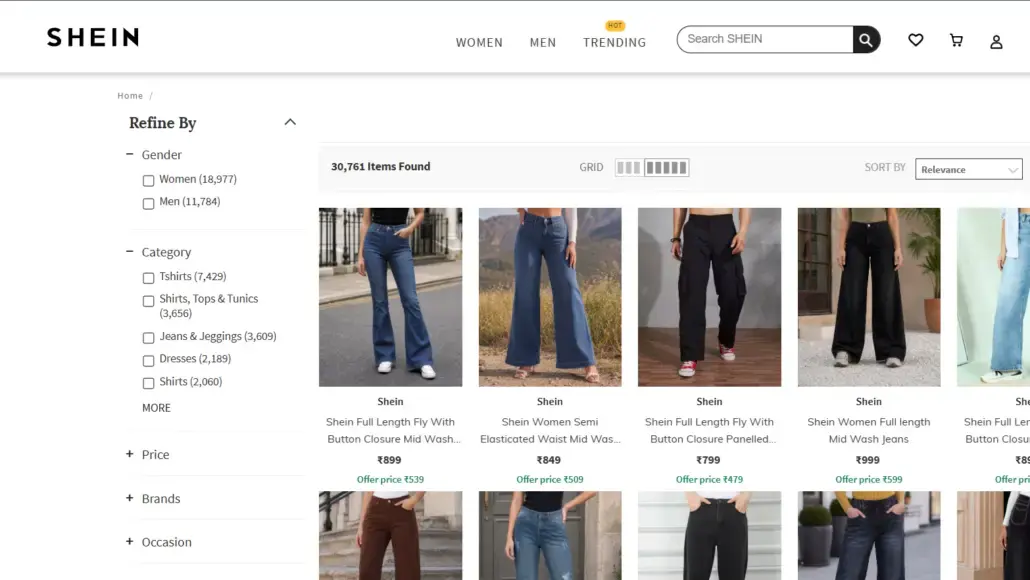
Everlane’s brand messaging, which includes slogans such as “Radical Transparency” and “Clean Luxury,” is backed by the use of primarily organic materials and the public disclosure of which factory produces each item. Shein’s garments, by contrast, are largely made from polyester, and its website does not specify in which country — let alone which factory — each item is manufactured.
In a letter reviewed by Reuters, Everlane CEO Alfred Chang reassured employees that the brand would remain independent and stay true to its sustainability commitments. He also suggested the acquisition would allow Everlane to strengthen its competitive positioning and expand its global reach. In response to Reuters’ queries, Everlane confirmed that its leadership team and brand standards remain unchanged.
Despite the friction, industry analysts see merit in the pairing. Michael Gunther, Senior Vice President of Research and Market Intelligence at Consumer Edge, observed that Everlane’s customer base skews toward higher-income shoppers compared to Shein’s core U.S. audience — meaning the acquisition, if handled carefully, could open Shein to an entirely new consumer segment.
Supply Chain Efficiency as a Platform Selling Point
A central element of Shein’s pitch to potential acquisition targets is its proprietary supply chain technology. Shein’s software system monitors real-time demand signals and alerts factories when a product is gaining traction, prompting increased production. Equally, it flags underperforming styles for discontinuation — a mechanism the company credits for keeping inventory levels extremely lean.
The results, at least within Shein’s existing partner ecosystem, have been notable. According to its prospectus, one brand enrolled in the “Xcelerator” programme saw its sales grow approximately 15 times in its second year, improved its operating margin by more than 30 percentage points, and reduced inventory turnover days by roughly two-thirds.
Acquisitions Alone Will Not Solve the Core Business Challenge
While Shein’s service revenue — generated through its marketplace and platform offerings — is growing at a faster pace than sales from its own product lines, it remains a considerably smaller portion of overall revenues. This distinction matters as the company looks to acquisitions as a growth engine.
The Everlane deal, positioned as a dry run for Shein’s acquisition ambitions, will be closely watched — not only for the commercial outcome, but for whether Shein can manage the reputational and cultural complexities that come with owning brands built on values that differ sharply from its own. The success of its fast-fashion deals strategy will ultimately depend on whether supply chain efficiency can translate into brand value — and whether the market is willing to wait long enough to find out.