

























Kenya’s textile and apparel industry has gained valuable breathing room following the extension of the African Growth and Opportunity Act (AGOA) through December 2028. The additional period gives exporters and manufacturers more time to plan investments, strengthen production capabilities and maintain access to the US market under preferential trade terms.
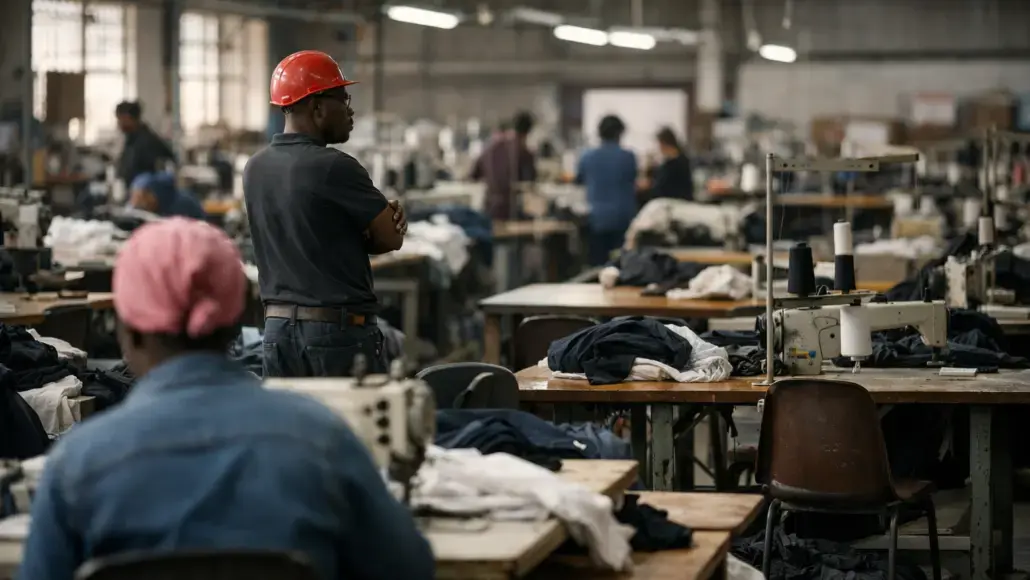
The significance of AGOA for Kenya extends well beyond apparel shipments. Over the years, the programme has helped establish garments as an important source of export earnings while supporting substantial employment and encouraging the development of an export-focused manufacturing ecosystem.
Kenya’s apparel trade with the US has expanded considerably. Estimates indicate that exports under AGOA were worth approximately KSh60.6 billion ($466.6 million) in 2024, representing a 19.2 per cent increase over the previous year. Employment across AGOA-accredited companies also recorded strong growth, demonstrating how closely the sector’s industrial development is linked to access to the US market.
For manufacturers and investors, the extension therefore provides an opportunity to plan beyond short-term market cycles. Investment decisions involving factories, equipment, workforce development and supply-chain partnerships require a degree of predictability, making the additional AGOA period particularly important.
Investment, Trade and Industry Cabinet Secretary Lee Kinyanjui described the extension as providing “much-needed certainty” for exporters, manufacturers and investors.
Apparel remains a strength — but also a concentration risk
Kenya’s success in apparel demonstrates the potential of preferential trade arrangements to stimulate manufacturing and employment. At the same time, the sector’s dominance within AGOA-related exports exposes a structural weakness in the country’s export strategy.
A heavy reliance on garments means that changes in US consumer demand, international competition, production costs and pricing can have an outsized effect on Kenya’s export performance. Shifts in US trade policy could create another layer of uncertainty.
This makes export diversification an increasingly important part of Kenya AGOA export growth. Expanding into additional product categories could help reduce the impact of volatility in the apparel business while allowing Kenyan companies to access new opportunities in the US.
“Beyond apparel, Kenya must use this extended window to diversify its export basket and expand both the range and value of products entering the US market,” Kinyanjui reportedly said recently, even as he highlighted value-added agricultural products, leather and leather goods, pharmaceuticals, and manufactured products as key sectors with potential to drive increased Kenyan exports to the US.
The message is significant: diversification does not mean reducing the importance of garments. Instead, Kenya is looking to use the experience gained through apparel exports as a foundation for developing other internationally competitive industries.
Moving apparel up the value chain
The next phase for Kenya’s textile and apparel industry will require more than maintaining existing export volumes. Industry competitiveness will increasingly depend on productivity, product sophistication, supply-chain depth and the ability to retain a larger share of value within the country.
Moving towards higher-value garments and specialised textile products could provide one route. Improvements in manufacturing efficiency, technology adoption and workforce capabilities could further strengthen the sector’s position in the US market.
There is also an opportunity to develop stronger domestic supply networks. Greater availability of locally sourced inputs and supporting manufacturing services could reduce external dependencies while increasing the economic value generated within Kenya.
Such improvements would give the apparel sector greater resilience while supporting the broader industrialisation agenda.
Replicating the apparel model
The wider policy challenge is to translate Kenya’s apparel experience into growth across other manufacturing and export categories. Garments have demonstrated that Kenyan producers can build international customer relationships, establish production capacity and compete in a major consumer market when supported by favourable trade conditions.
The government now appears keen to apply those lessons elsewhere.
Agricultural products with greater levels of processing, leather and leather-based products, pharmaceuticals and other manufactured goods could offer avenues for expanding the country’s export base. Developing these areas would require investment in production capacity, quality standards, logistics, skills and market development.
The approach could also make Kenya’s manufacturing sector less dependent on a narrow group of export products. A broader industrial base would provide multiple sources of foreign exchange and employment while creating opportunities for domestic companies to participate in international value chains.
AGOA extension creates a strategic window
The extension of AGOA should therefore be viewed as more than a continuation of existing market access. For Kenya, the additional period can serve as a strategic window to strengthen what is already working while building new export capabilities.
The textile and apparel sector remains central to this effort. Protecting its competitiveness, encouraging higher-value production and strengthening supporting supply chains can help preserve the gains made under AGOA.
At the same time, investment and policy attention must extend beyond clothing. Kenya’s longer-term objective is to create a manufacturing ecosystem capable of competing across multiple product categories and international markets.
Kinyanjui’s description of AGOA as a ‘catalyst for Kenya’s industrialisation, value addition, investment and job creation’ points to the broader ambition behind the strategy. Apparel has shown that Kenya can compete in the US market and the government’s latest position signals a push to replicate that success across other sectors.
For the textile and apparel industry, the priority is therefore twofold: consolidate its position in the US market while helping create the capabilities needed for the next generation of Kenyan exports. That balance could prove critical to achieving sustainable Kenya AGOA export growth before the extended trade window closes in 2028.