

























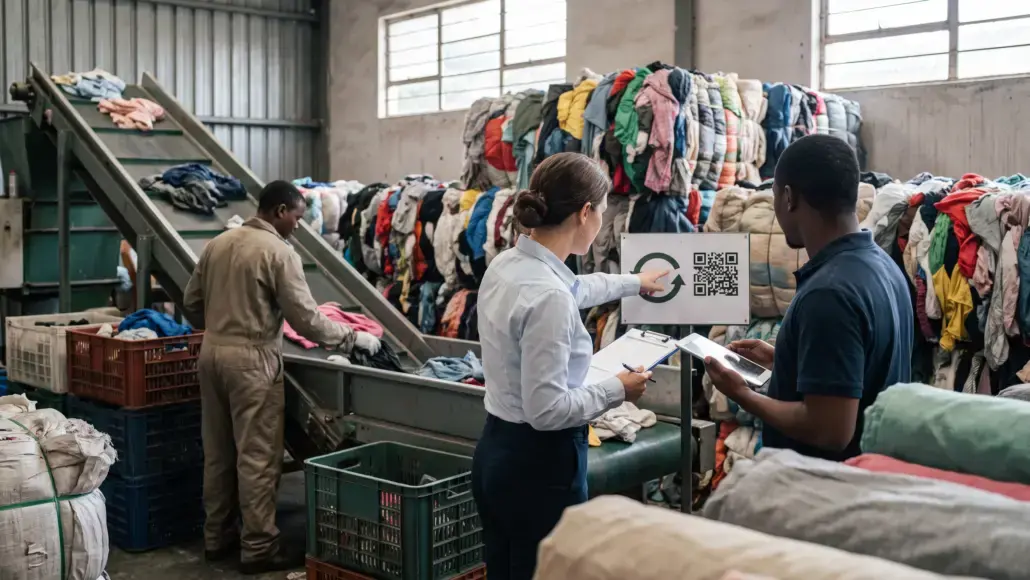
The European Union is turning textile circularity from a sustainability ambition into a market-access requirement, and the consequences will extend far beyond European retailers and consumers. Apparel manufacturers, textile mills, fibre producers, recyclers, logistics providers and sourcing companies across Asia, Africa and other production hubs are likely to feel the effects as the EU introduces a combination of product-design rules, digital traceability requirements, extended producer responsibility (EPR), restrictions on unsold-goods destruction and tighter controls on waste shipments.
The policy direction was established through the EU Strategy for Sustainable and Circular Textiles, adopted in 2022. The strategy targets a textile industry in which products sold in the EU are more durable, repairable and recyclable, contain a greater share of recycled fibres, avoid hazardous substances and carry greater producer responsibility across their life cycle.
For a global industry built around fragmented production networks, the significance is considerable. The EU is not simply regulating what happens inside Europe; it is increasingly influencing how products are designed, sourced, documented and manufactured before they ever reach European borders.
From sustainability strategy to binding market rules
A central pillar is the Ecodesign for Sustainable Products Regulation (ESPR), which entered into force in July 2024. It establishes a framework for setting mandatory ecodesign requirements and introduces the concept of the Digital Product Passport (DPP). The regulation also creates a framework to prevent the destruction of unsold consumer products.
Textile apparel has now been identified as a priority product group under the EU’s 2025–2030 ESPR Working Plan. The European Commission currently plans to adopt the textile-specific delegated act in the fourth quarter of 2027, after which detailed requirements and implementation measures will follow.
This timeline gives the industry some preparation time, but it also means companies cannot wait until the final rules are published. Product-development cycles, supplier qualification and investments in traceability systems can take years.
The impact is likely to spread through the entire value chain because EU buyers will need evidence from upstream suppliers to demonstrate compliance.
Digital Product Passports will change supplier data requirements
One of the biggest changes will be the Digital Product Passport. The EU’s emerging framework is designed to make product information accessible across the life cycle, potentially including product identification, fibre composition, origin, relevant economic operators, sustainability information, repair and maintenance information, reuse and recycling information and compliance documentation.
For global textile manufacturers, this turns traceability into a commercial capability rather than simply a reporting exercise.
A garment supplier may increasingly need to provide verified information on the fibres it purchases, the origin of materials, processing stages, recycled content, production facilities and other product-level information. That information must then travel through multiple tiers of the supply chain.
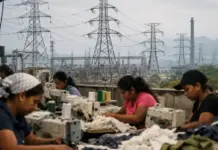
The challenge is significant because apparel supply chains remain highly fragmented. McKinsey notes that more than 60% of global apparel production is conducted by small and medium-sized suppliers, many of which face funding and capability constraints when responding to multiple sustainability requirements.
As a result, the next competitive divide may be between suppliers that can provide reliable, structured sustainability data and those that cannot.
EPR shifts the economics of textile production
The EU has also moved forward with mandatory textile EPR through the revised Waste Framework Directive, adopted as Directive (EU) 2025/1892. The legislation requires Member States to establish EPR schemes covering textile, textile-related and footwear products, with producers financing collection, sorting, preparation for reuse, recycling and other treatment costs. Member States are required to establish these schemes by 17 April 2028.
Importantly, financial contributions can be eco-modulated according to product characteristics linked to durability, circularity and waste prevention. Member States may also differentiate contributions based on practices associated with ultra-fast and fast fashion.
This can ultimately influence global sourcing decisions.
If poorly designed products generate higher end-of-life costs, brands will have greater incentives to source garments that last longer, use recyclable materials and avoid construction features that make fibre recovery difficult. Suppliers able to manufacture circular products efficiently could therefore gain business, while suppliers dependent on low-cost, low-value production may face pressure.
Unsold inventory is becoming a supply-chain issue
The EU is also targeting a major source of textile waste: products that are never sold or used.
In February 2026, the European Commission adopted measures under the ESPR to support the prohibition on destruction of unsold apparel, clothing accessories and footwear. For large companies, the ban takes effect on 19 July 2026; medium-sized companies are expected to follow from 2030. Companies must also disclose information about unsold consumer products discarded as waste.
This could change purchasing and inventory strategies across the international supply chain.
Brands may become more cautious about over-ordering, while suppliers could see greater demand for flexible production, smaller runs and shorter lead times. Better forecasting, postponement strategies and more agile manufacturing could become increasingly valuable as companies seek to reduce surplus stock and returns.
The regulation could therefore accelerate the shift away from the traditional model of producing large volumes at the lowest possible unit cost.
The waste trade is also being reshaped
The EU’s circularity push does not end at product sale. It increasingly addresses what happens after textiles become waste.
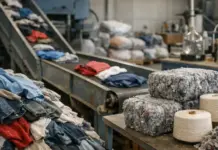
The European Environment Agency estimates that EU countries generated around 6.94 million tonnes of textile waste in 2022, while only about 15% of household textile waste was separately collected. The EEA also reports that around 1.4 million tonnes of used textiles were exported from the EU in 2025, with Africa and Asia accounting for most destinations.
This trade is complex: exported textiles can be reused, recycled, re-exported, landfilled or otherwise disposed of. The EU is therefore tightening rules intended to prevent textile waste from being falsely classified as reusable material.
The revised waste-shipment framework introduces significantly stricter controls, with new rules for exports of non-hazardous waste to non-OECD countries applying from 21 May 2027.
For global recyclers and used-clothing markets, this could redirect material flows. Countries and companies that have built businesses around sorting or processing European textile waste may face higher documentation and environmental-management requirements.
At the same time, the pressure could stimulate investment in European sorting and textile-to-textile recycling capacity, reducing Europe’s dependence on overseas waste-processing routes.
Raw materials and Tier 2 suppliers move into the spotlight
Perhaps the most important long-term effect will be upstream.
Circularity cannot be achieved simply by changing a garment label. It requires changes in fibre selection, yarns, fabric construction, dyeing, finishing, trims and garment assembly. The biggest sustainability impacts frequently occur before a garment reaches the sewing factory.
McKinsey estimates that Tier 2 production, including fabric production and treatment, typically accounts for 45% to 70% of a fashion brand’s Scope 3 emissions.
This means brands are likely to place increasing pressure on spinning mills, dyeing units, finishing plants and material suppliers—not just garment factories.
The result could be greater vertical integration, stronger supplier partnerships and more regional material ecosystems. McKinsey’s research also indicates that apparel companies are already moving toward deeper, longer-term relationships with suppliers as they seek sustainability, resilience and efficiency simultaneously.
Compliance may become a sourcing differentiator
The global impact of EU textile circularity rules is therefore likely to extend well beyond compliance departments.
Suppliers able to demonstrate traceability, recycled-content capability, reliable environmental data and circular product design may become preferred partners for European brands. Those lacking digital systems or investment capital could gradually lose access to higher-value export orders.
This presents a particular challenge for smaller producers. Creating traceability across multiple tiers, segregating recycled materials, documenting production data and integrating digital systems all require investment.
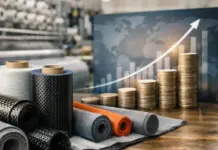
However, the same requirements could create new commercial opportunities. Demand may rise for recycled fibres, chemical recycling, mechanical recycling, repair services, resale platforms, digital traceability providers, material testing and supply-chain data management.
A more regional and interconnected supply chain
The ultimate result may not be the end of global sourcing, but its transformation.
The EU is effectively pushing the industry toward supply chains that are more traceable, resource-efficient and circular. The winning model may combine global manufacturing with stronger regional recycling networks, closer supplier relationships and better digital visibility.
The European Commission’s own data underline how early the circularity transition remains: only 13% of the most popular clothing items analysed across five European online markets in February 2026 contained at least 20% recycled content.
That low starting point indicates both the scale of the challenge and the potential size of the emerging market.
For textile and apparel companies worldwide, the strategic question is therefore changing. Compliance is no longer simply about ensuring that a finished garment passes a European requirement. It is about redesigning the supply chain so that sustainability information, responsible materials and end-of-life considerations are built into the product from the beginning.
The European market is creating that pressure through regulation. The consequences, however, will be felt across the global textile economy.