





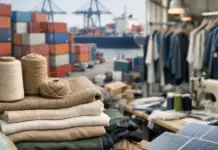


















Indonesia’s apparel industry has had a notably forward-looking year. After a prolonged period of headwinds — driven largely by an influx of competitively priced Chinese goods — the country’s textile and garment sector is now registering genuine momentum, backed by government directives, rising exports, new factory openings, and a growing emphasis on circularity and sustainability.
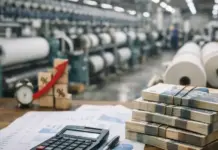
The Indonesia apparel industry employs approximately 4 million people. Annual exports from the sector are valued at around $12 billion, comprising $3.1 billion in textile exports and $8.7 billion in apparel exports. The sector grew 6.36 percent year over year in the second quarter of 2026, up from 4.35 percent a year earlier — a tangible sign that business conditions have improved considerably.
Government Backing and a Push to Revitalise the Sector
President Prabowo Subianto has taken an active role in shaping the industry’s near-term trajectory. His administration is exploring the establishment of a new state-owned enterprise while also engaging Danantara, a sovereign wealth fund, to channel investments into the sector.
Coordinating Minister for Economic Affairs Airlangga Hartarto has been equally vocal. “There is still room for expansion,” he said earlier this year, adding that the government aims to “rebirth the industry in the midstream.” He noted that fabric production, yarn manufacturing, printing, dyeing, and finishing have been “somewhat disconnected,” and that factory utilisation within the textile segment remains at around 75 percent — leaving meaningful room for productive growth.
A new labor protection law passed by parliament on October 6 adds another variable to the picture. While it signals a strengthening of worker rights, some in the industry have flagged concerns about its potential impact on operational costs and competitiveness.
Investment on the Rise
Investment into the apparel manufacturing growth story is gaining pace. During the first half of 2026, investment in the apparel sector reached 4.63 trillion Indonesian rupiah (approximately $264 million), compared to 4.14 trillion rupiah (around $236 million) during the same period in 2025. Central Java and West Java have been the primary destinations for new garment factory activity.
What Industry Players Are Saying
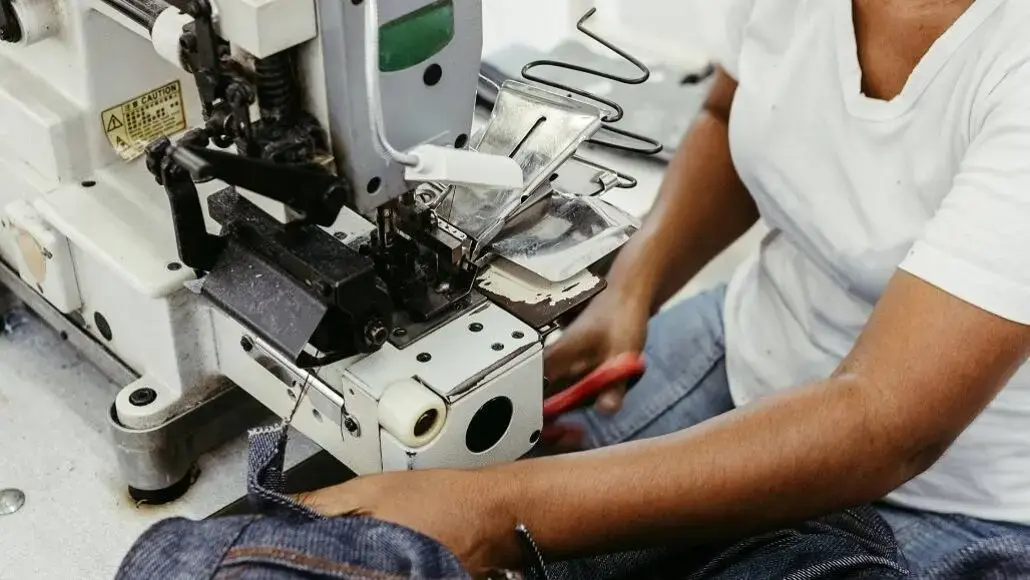
The Busana Apparel Group, one of Indonesia’s largest export-oriented garment manufacturers and supply chain solutions providers, operates dozens of manufacturing facilities globally and produces over 55 million pieces of woven and knit apparel annually for leading global brands across categories including denim, active sportswear, casual wear, and formal wear. With annual turnover exceeding $500 million, the group is a significant barometer for the sector.
“For our company, 2026 has been a stronger year, and we are expanding production capacity at several of our facilities,” a spokesperson for the group said. “We are generally optimistic about 2027, as we see room for further growth in the U.S., European and other markets.”
The spokesperson also noted that investments within Busana have been rising, particularly in automation, equipment upgrades across production processes, and a digital shop-floor control system offering real-time visibility of production — changes that have helped shorten lead times and deliver more consistent quality.
The group acknowledged the competitive pressure from neighbouring sourcing countries, particularly Bangladesh and Vietnam, which often benefit from lower wage structures or more modernised infrastructure.
Circular Fashion Partnership Indonesia: Two Years of Progress
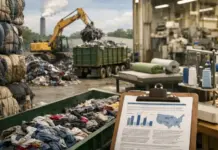
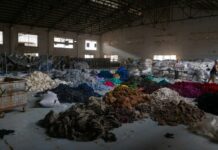
Alongside the Indonesia apparel industry’s economic recovery, a separate but equally significant effort has been underway on the sustainability and circularity front. The Circular Fashion Partnership (CFP) Indonesia, a two-year initiative, is concluding this month after working to improve textile waste management and develop a more traceable recycling supply chain across the country.
The program was led by the Global Fashion Agenda (GFA) in collaboration with Rantai Tekstil Lestari (RTL) Indonesia, with implementation support from Reverse Resources, Closed Loop Fashion, and the Circular Economy Foundation. It was funded by the H&M Foundation and private-sector contributions, and engaged seven international brands while assessing 29 companies.
“Since its launch in October 2024, CFP Indonesia has engaged seven international brands, assessed 29 companies, enabled more than 4,300 tons of post-industrial textile waste to become digitally traceable,” said Basrie Kamba, chairman of Rantai Tekstil Lestari (RTL).
RTL is a not-for-profit alliance established in 2020 by nine organisations spanning Indonesia’s textile, garment, and fashion value chain — from raw material producers and manufacturers to global brands — alongside two environmental non-profit organisations.
Key Findings from the Programme
The program produced a range of practical outcomes. Among the most notable: more than 70 percent of participating companies improved their waste storage areas, helping prevent contamination and preserve the quality and value of recyclable materials. Improvements included clearer signage, waste separation by category, and better protocols for both temporary and final storage.
At the start of the project, 64 percent of the 29 assessed companies believed their textile waste was being disposed of through preferred methods such as reuse, recycling, upcycling, or downcycling. However, only 24 percent of these companies were able to validate the final disposal method actually used for their textile waste — a gap that underscores the need for greater transparency in the sustainable textile supply chain.
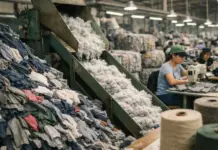
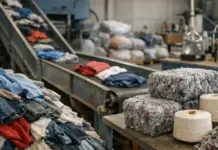
The Busana Apparel Group spokesperson explained that their work within CFP Indonesia focused primarily on post-industrial or pre-consumer textile waste. “Its composition is known at the point of production, so offcuts can be separated by fiber type and color where they are generated,” the spokesperson said. Among the companies assessed by Closed Loop Fashion, most now separate waste by type and color at source, allowing each stream to go to the highest-value recycling route available.
“Much of this material is still downcycled, though into higher-value products than before,” the spokesperson noted, while also highlighting that more recycling partners with better technology and stronger quality performance have been identified, reducing the share of waste directed to landfill or energy recovery.
The Scale of Opportunity in Textile Recycling Indonesia
Reverse Resources has estimated that 874 kilotons of recyclable textile waste are generated every year in Indonesia, making it a significant opportunity for the development of a local textile recycling Indonesia ecosystem. The GFA noted that Indonesia’s large volumes of feedstock material, combined with a highly developed vertical supply chain, make it an attractive location for investments in textile-to-textile recycling. Indonesia’s policy environment is also seen as providing a supportive framework for promoting circular apparel manufacturing.
Stakeholders Gather to Map the Path Forward
The Circular Fashion Partnership brought together stakeholders in Jakarta earlier this month to review results and discuss next steps. Nizhar Marizi, Director of Environment at the Ministry of National Development Planning, spoke at the event about the pentahelix approach — a model that brings together government, academia, media, industry, and communities to accelerate the circular economy, strengthen stakeholder and business capacity, and improve data integration.
Christina Iskov, Director of Impact at the Global Fashion Agenda, reflected on the programme’s outcomes. “Over the past two years, our work through the GFA-initiated Circular Fashion Partnership Indonesia has shown that circularity becomes practical when it works for manufacturers’ bottom lines,” she said. “Turning post-industrial textile waste into a traceable, valuable resource depends on reliable connections between the facilities that generate it and the recyclers who need it. With manufacturers under real economic pressure, that collaboration matters more than ever.”
She also pointed to the proposed Multi-Stakeholder Platform as a key mechanism for sustaining progress: “Locally led initiatives such as the proposed Multi-Stakeholder Platform will be key to keeping those connections strong and ensuring that progress continues beyond the program.”
Kamba was equally forward-looking. “This is not the end. We have some homework to do with the banks, the government, and the private sector. This has never been done at the ground level. Indonesia is more than ready to be a part of the fashion industry,” he said. “The world has changed. If Indonesian manufacturers want to play a huge role, this is the time to start.”
Looking Toward 2030: Industry 4.0 and Top-Five Ambitions
Under Indonesia’s Industry 4.0 framework, the government has set an overarching objective to position the country among the world’s top five textile and garment producers by 2030, while also targeting the creation of 500,000 new textile and apparel jobs within the same timeframe.
To achieve this, a targeted investment framework of 100 trillion rupiah (approximately $6.4 billion) has been outlined to develop integrated supply chain ecosystems across Central and West Java. The plan also addresses Indonesia’s trade deficit, with raw fabric imports alone estimated at $4.56 billion. By 2030, the focus includes expanding domestic polyester production and building sustainable fabric capabilities to reach a target of 1.3 million tons of eco-friendly domestic clothing fibers — a direct investment in the Indonesia apparel industry’s long-term self-sufficiency.
Priorities for Scaling Progress
For companies that participated in the CFP Indonesia study, the findings have served as a point of inspiration for future planning. The Busana Apparel Group spokesperson outlined three main priorities going forward: scaling sustainable practices from partner companies to the industry as a whole; improving visibility and traceability across the textile waste supply chain through a digital platform so that recyclers and investors can assess available volumes; and adopting more advanced sorting and recycling technology, particularly for blended fabrics.
“Much still needs to be done,” the spokesperson acknowledged.
The Indonesia apparel industry stands at a juncture defined by real investment, rising exports, a government committed to structural renewal, and a sustainability agenda that is moving from aspiration to operational practice. Whether the ambitions articulated by Hartarto and others will fully materialise remains a question the industry continues to work through — but the ground-level efforts now underway are setting a foundation for what comes next.