








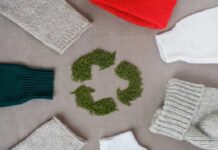








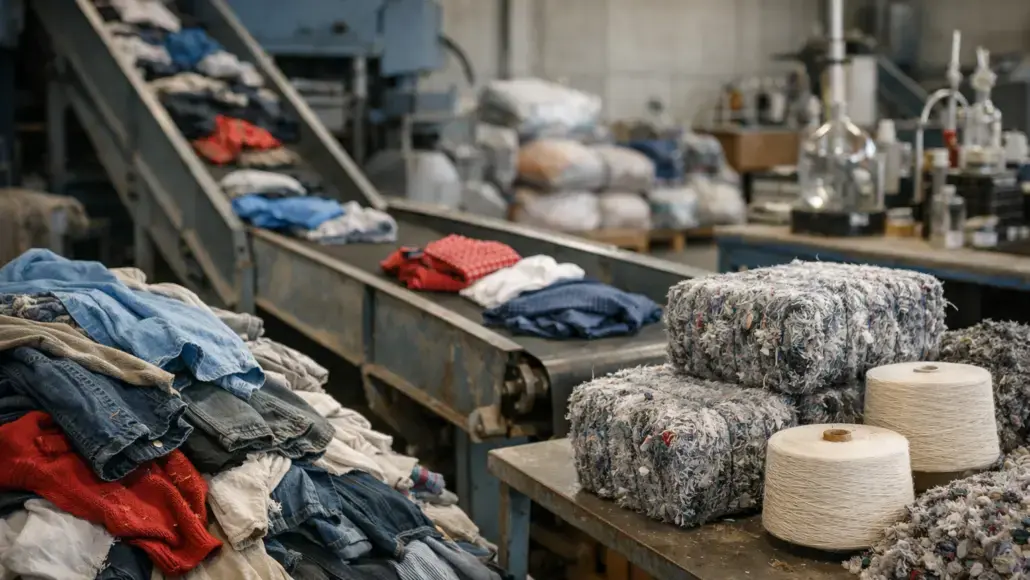
Better collection will only deliver circular textiles if discarded garments consistently reach the right destination. The latest research on sorting, spinning and chemical separation is beginning to show how Europe can build reliable connections between recovered clothing and the products and markets that can use it.
A Used Garment Contains Several Kinds of Value
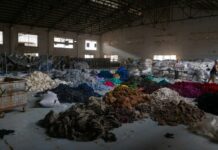
A worn shirt is not simply waste. It may still be wearable, its fibres may still be spinnable, or its polymers may be suitable for chemical recovery. The sorting decision made at the point of collection determines which of those possibilities survives. Shredding a garment that could have been resold destroys one kind of value; directing a difficult blended fabric to an unsuitable recycler can undermine another.
The challenge is to connect those decisions across an industry whose products combine fibres, dyes, finishes, seams and fasteners in ways that complicate separation. Textile circularity will depend on matching recovered material to a realistic next use, with enough consistency for manufacturers to buy it repeatedly.
Recycled Fibre Does Not Always Mean Recycled Clothing
Textile Exchange’s 2025 Materials Market Report estimated global fibre production at approximately 132 million tonnes in 2024. Recycled fibres represented 7.6% of that market, yet fibres originating from pre-consumer and post-consumer recycled textiles accounted for less than 1% of total production.
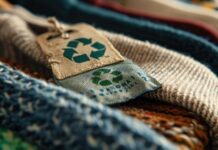
The distinction matters. Recycled feedstock can come from another product category entirely, not from discarded garments. A recycled content label therefore answers a different question from whether a clothing system can recover its own products at end of life. Moving material into textiles may be useful, but a circular textile industry also needs practical routes out of textiles after use.
For a brand buying recycled yarn, the relevant specification includes origin, composition and performance. For a recycler, the corresponding task is to supply predictable, consistent batches rather than an undifferentiated mass of unwanted clothing. Establishing that relationship is considerably more demanding than demonstrating that one carefully selected garment can be processed in a laboratory setting.
Preserving a Garment Can Preserve the Most Value
A 2024 European assessment combined life cycle and socioeconomic analysis of selected textile waste management routes. Preparing items for reuse performed best across environmental and socioeconomic comparisons. Mechanical recycling was generally the next preferred option for environmental impact categories, though it faced economic competition from incineration under the assumed market conditions. Substitution rates and yields of desirable outputs were identified as particularly important uncertainties.
Substitution represents the connection between a recovered product and the production it avoids. A second-hand purchase that genuinely replaces a new garment has a different consequence from an additional purchase that leaves new clothing demand unchanged. Similarly, recycled fibre that replaces virgin fibre delivers a different benefit from material that cannot find a buyer.
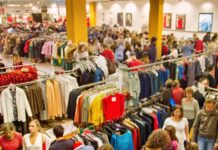
This makes resale quality an industrial concern, not merely a logistical one. Assessing condition, cleaning, photographing and matching garments to buyers all require time and resource. A collection system needs revenue from items people will actually wear again, while also finding responsible destinations for everything else. Simply increasing the weight collected does not automatically improve that balance.
A Small Blend Component Can Change the Recycling Route
Near infrared imaging identifies materials through their interaction with light, offering a practical route to automated fibre sorting. A study appearing in a January 2026 journal issue examined natural, synthetic and blended textiles, including cotton containing small amounts of elastane. It found that detecting those minor components remained difficult and that treatments, environmental conditions and overall composition all affected spectral interpretation. Combining multiple spectroscopic methods helped researchers make better sense of the signals involved.
The difficulty carries real consequences. A small stretch fibre fraction may influence which recycling process can accept an otherwise cotton-rich garment. A sorting model that identifies the dominant fibre correctly is not necessarily accurate enough to certify the material for a sensitive downstream process.
Sorting specifications should therefore be developed in collaboration with the recycler that receives the output. The useful question is whether the system can separate batches within that process’s tolerance, including garments that are dark, heavily worn or chemically finished. Laboratory classification provides a starting point, but the operating challenge includes presentation on a conveyor, folded and multilayered construction, and the cost of rejecting uncertain items.
Mechanical Recycling Can Improve Through Better Spinning
Mechanical opening separates fabric into fibres but can shorten them in the process, which complicates yarn production. Industrial-scale trials reported in May 2026 tested mechanically recycled cotton blended with virgin cotton through different preparation and spinning routes. Optimised combing enabled high-quality ring-spun yarn containing 50% recycled cotton. Compared with a 25% recycled cotton carded yarn, the 50% recycled combed yarn had approximately half the measured neps and thick places — two forms of yarn irregularity that affect performance.
This result reframes the development question for textile recycling. The recycled fraction alone does not determine yarn quality; preparation and spinning settings affect which fibres reach the final product and how evenly they are incorporated. Better process control can expand the range of applications available to recovered cotton.
However, combing removes unsuitable short fibres, and a stronger yarn result needs to be considered alongside the material lost during preparation and the destination of that residue. The commercially meaningful outcome is a reliable quantity of yarn meeting a customer’s specification, rather than the highest recycled percentage achievable in isolation.
Chemical Separation Can Recover Different Kinds of Value
A 2025 study separated cotton and polyester in polycotton fabric using acid hydrolysis followed by polyester glycolysis. Laboratory treatment produced a 75% molar glucose yield from the cotton fraction, while the polyester subsequently yielded a chemical building block at 78% isolated yield and above 98% purity. Experiments were later extended to a 230-litre pilot reactor.
In a trial using 26.1 kilograms of mixed post-consumer textiles, some garments were not completely hydrolysed, illustrating the practical difficulty of treating tightly packed, variable material at scale. Importantly, this is not a demonstration of recovering intact cotton fibres. The cotton became sugars, while the polyester entered a route towards chemical building blocks. Both may retain economic value, but their next applications and processing requirements differ considerably.
That distinction helps manufacturers evaluate potential partnerships more clearly. A spinning mill seeking recovered staple fibres needs one kind of output; a chemical producer seeking purified feedstock needs another. Describing both simply as textile recycling can obscure the infrastructure required to connect a process with a suitable buyer. Pilot operation is especially valuable when it reveals where laboratory assumptions about access, mixing or separation stop holding under real conditions.
Colour Is Part of the Material System
Research published in November 2025 demonstrated the extraction, purification and reuse of dyes from polyester textiles. The team selected solvents using predictions of dye and polymer solubility, separated recovered dye mixtures and demonstrated successful redyeing. Characterisation indicated that the polyester substrate’s properties were preserved through the tested process. The work also explored a flow-through arrangement containing textile material.
Recovering colourants introduces a different ambition from simply removing colour. It seeks useful outputs from both the polymer and the chemicals that gave the original product much of its commercial value. Whether those outputs can be sold consistently will depend on their identity, purity and the requirements of the next dyeing operation.
The work was partly supported by Patagonia, which supplied textiles, and several authors disclosed a patent application. The experiments establish a route worth developing further, while plant economics and reliable treatment of changing dye mixtures remain separate questions. A process can succeed chemically before it becomes a practical service for a sorting or recycling business.
Demonstration Must Connect the Processing Stages
The European tExtended project’s May 2025 technical update reported preparation of four fibre opening lines and three spinning lines for demonstration trials. It also described practical problems encountered in thermomechanical recycling, including impurities, unsuitable fibre characteristics and the need for drying before melting. Laboratory multifilament yarns had been produced, while work on separation and pilot performance continued at the time of reporting. These were development results, not proof that the project’s full system objectives had already been achieved.
The significance lies in the connection between stages. A sorter improves the feedstock, an opening line changes fibre quality, and a spinner determines whether the recovered material can actually become a saleable textile. Success at one stage can expose a constraint at the next. Europe’s opportunity is to build those relationships into its recycling capacity from the ground up.
Purchasers can specify the properties they need, researchers can test realistic waste streams, and operators can record losses as material moves between processes. The strongest circular textiles system will preserve wearable garments first, and then recover the fibres and chemicals that manufacturers can use again.