


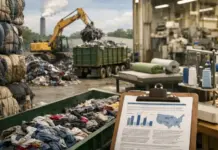




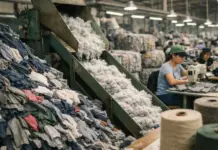


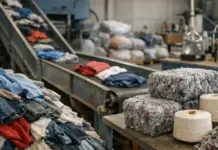













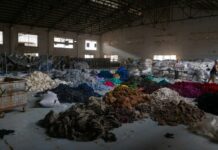






The U.S. Government Accountability Office (GAO) released a detailed report on October 16 titled The Textile Circular Economy: Policy Options for the U.S., examining how the country could develop a functional circular economy for textiles. Drawing on interviews with 49 stakeholders and site visits across four jurisdictions, the report lays out a range of policy options while also flagging significant structural and funding challenges that could hinder progress at a national scale.
What the GAO Report Covers
The textile industry is broad in scope, spanning fiber sourcing, yarn production, and manufacturing, and covering categories such as apparel, carpets, footwear, and towels. It forms a substantial part of the global economy. As consumption of textiles rises worldwide, so does the volume of textile waste, prompting both U.S. states and international governments to explore policies centered on building a textile circular economy — one in which reuse, repair, and recycling meaningfully extend the useful life of products.
This October report builds on the GAO’s earlier work from December 2024, which examined federal efforts to address textile waste. The agency states it was asked to review the subject, though the report does not identify the requesting party, cite a specific statute, or name a committee directive as its basis.
Site Visits and Stakeholder Input
To better understand how circular textile programs function in practice, the GAO conducted site visits in Washington state, Oregon, France, and the Netherlands. These visits allowed the agency to observe firsthand how different jurisdictions have structured their programs and engage directly with private sector organizations involved in various aspects of textile circular economy development.
The 49 stakeholder interviews brought in a range of perspectives from across the industry and policy landscape.
Policy Options on the Table
The report presents a menu of policy instruments that federal and state policymakers could consider if the United States moves toward building a textile circular economy. These include extended producer responsibility programs, under which companies would bear responsibility for managing their products after consumer use, tax credits for businesses that reuse textiles or work to reduce textile waste, and the removal of sales taxes on secondhand apparel.
Some U.S. states, as well as the European Union, have already proposed or enacted extended producer responsibility legislation along these lines. The GAO’s report situates the United States within this broader international policy trend without prescribing a single path forward.
Each of these options carries different implications — for which level of government takes action, which industries face new compliance requirements, and how quickly collection and processing infrastructure could realistically scale.
Key Challenges: Funding and Domestic Infrastructure
Among the most significant obstacles the report identifies are limited funding and the lack of sufficient domestic infrastructure for nationwide textile collection and recycling. The GAO notes these two constraints are closely connected: without reliable funding mechanisms, the collection networks and processing facilities that would make large-scale textile recycling viable are unlikely to develop, regardless of the policy instrument chosen.
These challenges apply whether the approach is federal or state-led, and they represent a core tension in any serious effort to build out extended producer responsibility or broader recycling infrastructure in the United States.
Industry Preference for a Federal Approach
Several stakeholders, including industry groups, expressed a preference for a federal approach to textile waste policy, citing potential advantages in coordination, compliance consistency across state lines, and alignment with international trade partners.
The GAO acknowledges this perspective but notes that a federal approach would require additional coordination and resources, and would depend on the government’s existing legal authority. This is a meaningful caveat: without a clear statutory foundation, any federal initiative would likely require new legislation rather than administrative action alone.
No Formal Recommendations Issued
The report’s highlights do not include formal recommendations, and the GAO’s published materials do not name specific federal agencies as responsible parties. What the report does provide is a structured policy framework — a set of options with described trade-offs — that legislators and policymakers at both the federal and state levels can draw upon as discussions around the textile circular economy continue to evolve.
Potential benefits of developing such an economy, as described in federal agency documents and stakeholder interviews cited in the report, include new jobs and markets tied to repair and recycling activities, reduced environmental harm, and shifts in consumer behavior toward more sustainable textile use.

