


















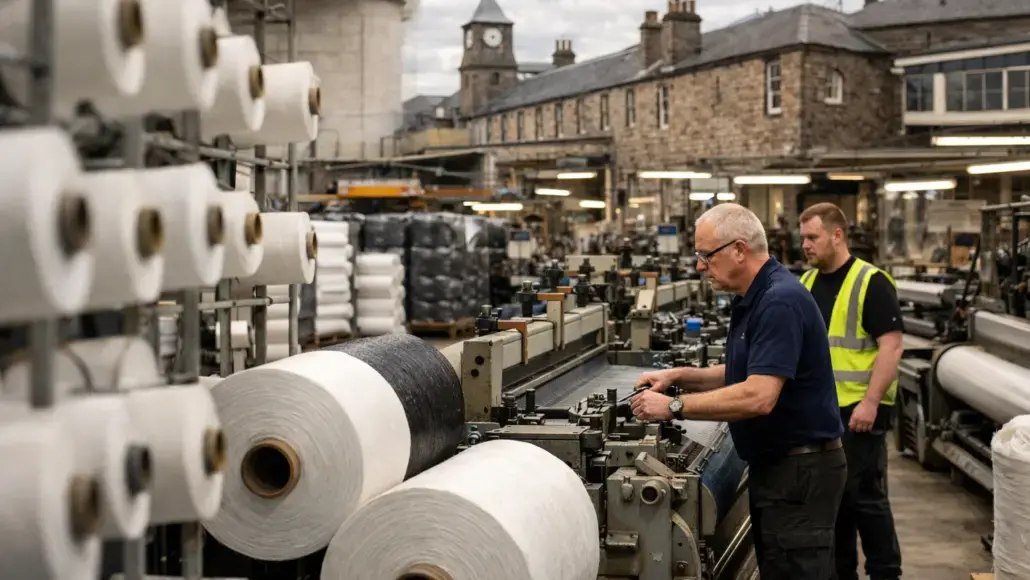
Historic Scottish textile manufacturer Don & Low Limited has reported a notable rise in turnover, reaching £61 million in its latest financial results. The Forfar-registered company, which traces its origins back to 1792, also recorded a significant narrowing of its losses, with a net loss of £1.35 million compared to £6.85 million in the prior year — a clear sign that its restructuring efforts are beginning to take effect.
The results represent a 9.4% increase in turnover, up from £56 million, while gross profit climbed to £5.8 million from £3.1 million. The operating loss narrowed to £3.9 million in 2025, down from £8.5 million the previous year. For a company navigating challenging economic headwinds, the improvement in financial performance marks meaningful progress along a clearly defined strategic path.
Exiting Artificial Grass, Focusing on Core Manufacturing
As part of its broader restructuring process, Don & Low moved to cease the manufacture of artificial grass products. An exceptional impairment of stock was recorded at £191,000, relating to a “business decision to cease manufacturing artificial grass products and the subsequent write-down to the recoverable value of the grass inventories,” compared to £1.1 million recorded the year before.
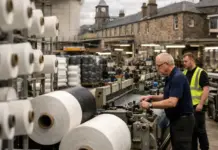
The company’s core activities continue to centre on the manufacture and marketing of woven and nonwoven polypropylene textiles. Its main woven product range includes geotextiles, industrial fabrics, carpet backing, and carpet yarns. Nonwoven products serve the construction, medical, furniture and bedding, and filtration sectors.
Exceptional reorganisation expenses of £295,000 in 2025, compared with £192,000 the previous year, were described as representing “redundancy and related costs as a result of the group’s restructuring process.” Staff numbers reduced slightly, from 344 to 338, as part of this ongoing restructuring activity — a detail that reflects the human dimension behind the financial transformation of this storied Scottish textile manufacturer.
Capital Investment and Strategic Direction
The board of directors noted that the group has undertaken a major capital investment programme in recent years, expanding and upgrading production facilities across the business. While investment in 2025 was described as “more modest,” the company has consistently focused on relatively capital-intensive processes to improve long-term competitiveness.
The directors stated that the business model follows a “clearly defined strategic plan that is designed to take the group into the future on a sustainable and profitable path.” The sales and production mix continues to be modified in response to evolving market developments, with a direct-to-market sales strategy in specific markets and an emphasis on improving the overall product mix contributing to improved sales volumes and revenues.
Challenging Economic Conditions Persist
Despite the improved financials, the directors acknowledged that “economic conditions continued to be challenging.” There was limited relief on raw material costs, and a watching brief was flagged regarding the ongoing conflict in the Middle East and its potential supply chain implications.
“External supply and demand effects remained significant, general cost-of-living pressures suppressed demand in several sectors, and surplus worldwide capacity affected volumes and market price levels,” the directors noted in their report. While there was comparatively less volatility in key cost categories — including raw materials, electricity, and transport — these costs continued to remain at historically elevated levels.
Ownership and Financial Stability
Don & Low is now a wholly owned subsidiary of Greek group Thrace Plastics. The company confirmed it has “sufficient available funds for operations and planned expansion,” offering reassurance about its financial stability going forward.
Reflecting on the overall results, the directors said: “In summary, 2025 financial performance, although in line with planned performance for the year, and improved compared with the previous year, did not recover to the full extent the group plans to achieve in the short to medium term. The long-term investment plan remains the correct approach and the strategic plan is focused on the correct actions. All the factors affecting performance, whether internal or external, continue to be monitored closely by management.”
As a Scottish textile manufacturer with more than two centuries of operating history, Don & Low’s results reflect both the resilience of its business model and the complexities of competing in an increasingly demanding global market. With textile restructuring ongoing and a renewed focus on core industrial and technical products, the company appears to be steadily progressing along the trajectory its leadership has set out.

