





























In a significant move, Bangladesh’s Chief Adviser, Muhammad Yunus, has reached out to U.S. President Donald Trump, urging a reconsideration of the recently imposed U.S. reciprocal tariffs on Bangladesh. In a letter addressed to the President, Yunus proposed a substantial reduction of 50% on tariffs for U.S. exports to Bangladesh and requested a three-month postponement of the tariffs on Bangladeshi products. This window would allow Dhaka the necessary time to implement measures aimed at boosting imports from the U.S.
President Trump has recently enacted sweeping tariffs on various imports, ranging from 10% to 50%, affecting numerous countries and economic regions. Notably, Bangladesh faces a steep 37% tariff as part of the U.S. reciprocal tariffs on Bangladesh, while the European Union will encounter a 20% tariff, China is subject to a 34% tariff, and India faces a 26% tariff, among others.
Yunus Vows to Align with Trump’s Trade Agenda
In his correspondence with Trump, Yunus emphasized Bangladesh’s commitment to supporting the U.S. trade agenda, stating, “I write to assure you that we in Bangladesh will take all necessary actions to fully support your trade agenda. Shortly after your inauguration, I sent my High Representative to Washington D.C. to indicate our intent to substantially increase American exports to Bangladesh’s rapidly growing market of 170 million people. We were the first country to take such a proactive initiative.”
Yunus expressed optimism about completing the necessary actions within the upcoming quarter, urging the U.S. to allow adequate time for implementing these important measures in consultation with American officials. He reiterated his request for a postponement of the U.S. reciprocal tariffs on Bangladesh exports to the U.S., believing that cooperation could yield mutual benefits.
He also highlighted Bangladesh’s role as the first nation to send a high-level representative to the U.S., underscoring the country’s ambition to significantly boost American exports to its burgeoning consumer base. Additionally, Yunus pointed out that Bangladesh has agreed to import liquefied natural gas (LNG) from the U.S., further solidifying economic ties.
Strengthening Economic Ties with the U.S.
In his letter, Yunus outlined several measures to foster stronger economic relations with the U.S., including increased agricultural imports and proposed tariff reductions by 50% along with the elimination of non-tariff barriers. He emphasized that Bangladesh imposes the lowest tariffs on U.S. exports in South Asia and is willing to eradicate all tariffs on critical agricultural commodities such as cotton, wheat, corn, soybean, and scrap metals. He concluded by urging Trump to reconsider the U.S. reciprocal tariffs on Bangladesh, recognizing the potential for enhanced bilateral trade.
The Impact of U.S. Tariffs on Bangladesh’s Garment Industry
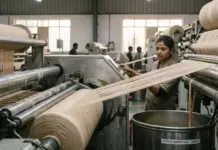
Textile and garment production constitutes approximately 80% of Bangladesh’s total exports, making it a vital sector for the country’s economy. The industry has been working to rebuild after facing significant challenges following a political revolution that toppled the government last year. However, Trump’s punitive new tariffs of 37% have raised alarms about potential trade losses. The U.S. reciprocal tariffs on Bangladesh add a layer of complexity that could jeopardize the growth of the garment sector.
As the second-largest garment producer globally—behind only China—Bangladesh manufactures apparel for numerous international brands, including U.S. firms like Gap Inc., Tommy Hilfiger, and Levi Strauss. These tariffs pose a considerable threat to the South Asian nation, and following the announcement, Bangladesh’s stock market tumbled by 31 points over the weekend, reflecting the market’s apprehension regarding the tariffs’ implications.
Industry leaders reported immediate repercussions, noting that U.S. buyers have begun to halt orders from Bangladesh, jeopardizing the livelihoods of workers and manufacturers dependent on this crucial export market. The interim government has actively sought understanding from U.S.-based buyers while working to devise measures to mitigate the adverse impact of the U.S. reciprocal tariffs on Bangladesh goods.
In the previous year, Bangladesh exported approximately $8.4 billion worth of goods to the U.S., with about $7.34 billion coming from the ready-made garments sector alone. In light of the new tariffs, Bangladesh’s National Board of Revenue is expected to convene and assess the fallout of the increased tariffs, aiming to develop strategies to navigate this challenging landscape.

