






















The UK Fashion and Textile Association has reinforced its commitment to the UK textile industry through a comprehensive address delivered by CEO Adam Mansell at the UKFT Weaving Conference held in Huddersfield on 8 October. The speech laid out the organisation’s wide-ranging efforts to support textile manufacturers across the country, touching on government engagement, export promotion, sustainability compliance, skills development and technological innovation.
Member Engagement Driving UKFT’s Agenda
Mansell emphasised that direct engagement with businesses remains central to how UKFT shapes its work. So far this year, the organisation has visited more than 60 textile businesses to better understand the challenges they face. It has also worked with over 100 textile companies at export shows and connected with many more through events, webinars and roundtables.
“Our members and their challenges sit at the heart of everything we do, so our work starts with the conversations we have with you,” Mansell told attendees.
He acknowledged that much of the work carried out by a trade association happens quietly behind the scenes but stressed that it remains vital to the UK textile industry.
Government Representation and Policy Advocacy
A significant portion of UKFT’s efforts involves representing the textile sector to various parts of government, both at Westminster and across the four nations, as well as in Europe and increasingly in the United States. This work spans a range of policy areas, from changes in emissions permitting with the Environment Agency and lobbying on international trade regulations to campaigning for the expansion of the BICS energy scheme and pushing for the best possible terms for UK manufacturers within free trade agreements.
Mansell highlighted UKFT’s sustained campaign to promote the economic and security advantages of using public procurement to support UK textile manufacturing. He also drew attention to the organisation’s ongoing push for UK businesses to receive the same level of export support as their international competitors, describing the current lack of financial support for exports as “indefensible.”
Export Promotion and International Presence
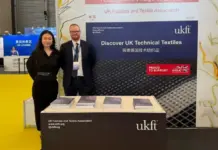
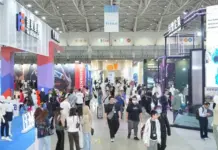
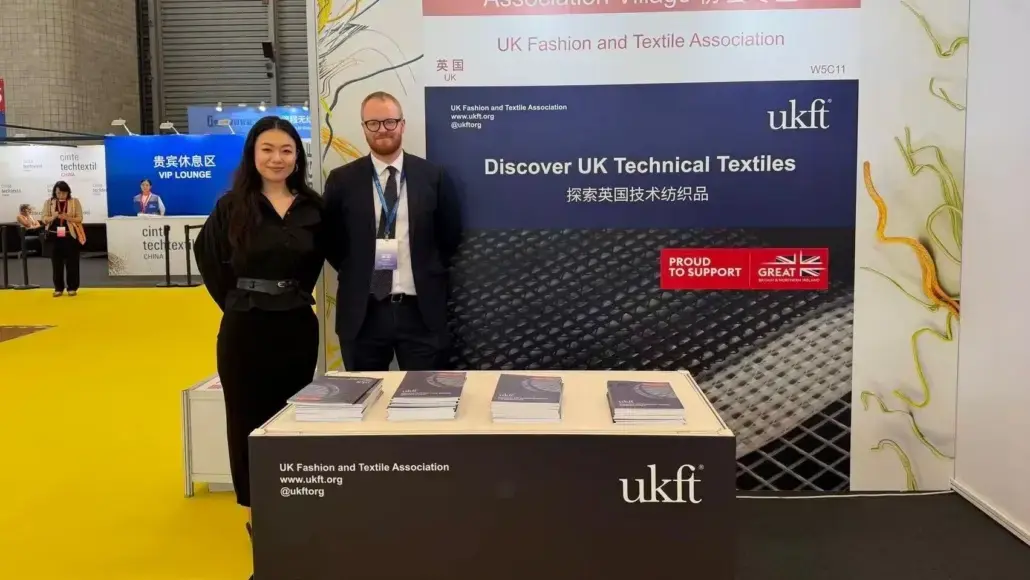
To bridge that gap, UKFT has raised £250,000 over the last two years to fund export promotion activities. In 2026 alone, the organisation has promoted UK textile manufacturing at a series of major international trade shows. These include showcasing apparel fabrics at Milano Unica, Intertextile Shanghai and VIATT in Vietnam, as well as highlighting the innovation and technical capabilities of the sector at Techtextil in Germany and CINTE Techtextil in China.
Mansell also noted that UKFT’s President, Her Royal Highness The Princess Royal, visited a narrow fabric weaver, a wool sorter, a bedding manufacturer and a technical textiles company this year, further raising the profile of UK textile manufacturing on the global stage.
Tackling Sustainability Compliance and Regulation
Growing regulatory complexity was identified as one of the most pressing concerns for textile businesses. Mansell outlined an expanding list of obligations facing manufacturers, covering product safety, packaging, Extended Producer Responsibility, Digital Product Passports, supply chain transparency, environmental claims, chemicals, water usage and international trade compliance.
In response, UKFT has developed a suite of practical resources including guides, webinars, workshops and its Regulation and Policy Newsletter. The organisation has also introduced Sustainability Clinics, green claims audits, circular design resources and its annual Sustainability Conference. Additionally, UKFT helps businesses connect with research organisations and funding opportunities and is working with fibre innovators to help them better understand the UK textile industry.
The 2026 UKFT Regulation Summit, held in June, and the Textile Innovation Showcase at the Sustainability Conference were highlighted as key events supporting businesses in this area. UKFT also launched its Textile Industry Advancement Days this year, bringing textile professionals together to identify challenges, share expertise and shape the next steps for advancing product development, process efficiency and textile innovation across the sector.
Addressing the Skills Gap in Textile Manufacturing
Skills remain a long-term challenge for the industry, with businesses repeatedly reporting difficulties in finding the right people, developing technical capability and passing knowledge between generations. Mansell said this is slowing companies’ ability to innovate, invest and grow.
To help raise awareness of career opportunities, UKFT has talked to more than 7,500 young people about careers in textiles over the past couple of years through careers events around the country. The organisation has brought education providers and businesses together through its UKFT Education Partners Conference and developed training and industry-focused continuing professional development opportunities in partnership with Leeds, Manchester and Huddersfield universities.
Through the support of its partners, UKFT provides more than £250,000 a year in training support through programmes including the Young Textile Technician Training Fund, Made IT and the Weavers x UKFT Bursary.
Mansell revealed that the organisation has this year undertaken its largest piece of research into skills challenges facing the UK textile industry, speaking in depth to more than 65 businesses. The ambition, he said, is to develop a vocational skills system that directly supports UK textile manufacturing and avoids the shifting goalposts of government-backed skills provision.
Innovation and Technology for Textile Manufacturing
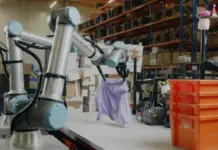
Mansell noted that members are increasingly asking how textile innovation and emerging technologies can make their businesses more productive, competitive and resilient. Questions about artificial intelligence, robotics and digital transformation are becoming more common, and the most frequent query UKFT receives is simply: “Where do I start?”
The UKFT Weaving Conference was positioned as a forum to begin answering those questions. “Today isn’t about technology for technology’s sake,” Mansell said. “It’s about understanding what is possible, seeing real examples, and understanding where these technologies can genuinely improve productivity, quality, efficiency and decision-making.”
A Collective Voice for the Sector
Mansell closed by reaffirming UKFT’s passion for the sector and its role in ensuring the right environment exists to support the growth and evolution of textile manufacturing in the UK. He urged members to maintain an open dialogue with the organisation, stressing that continued conversation about challenges and needs is essential for UKFT to deliver meaningful support.
“We can bring the industry together. We can give you a collective voice. And we can help you understand what is changing,” he said. “But to do that, we need you to keep talking to us, keep telling us what your challenges are, and where you need our support.”