



















Canopy has announced significant updates to its Hot Button Report, introducing stricter forest sourcing goals, a streamlined ratings system, and a stronger emphasis on scaling alternative fibres and landscape-level conservation. The revised criteria are set to take effect with the 2027 Hot Button Report.
The Hot Button Report serves as a critical tool for assessing viscose and other man-made cellulosic fibre (MMCF) producers on their forest sourcing practices and use of recycled textile fibres. It is a key reference point for over 550 global apparel brands participating in the CanopyStyle initiative, making its updates particularly consequential for sourcing decisions across the textile industry.
A Leaner, Clearer Framework
One of the most notable structural changes in the updated framework is the reduction of the rating system from seven categories to five. According to Canopy, this simplification is designed to offer clearer goals and expectations for producers, with defined targets expressed in both volume and percentage terms. The criteria have also been tailored to reflect the varying capacities of small, medium, and large MMCF companies, recognising that a one-size-fits-all approach may not equitably serve the diversity of producers operating at different scales.
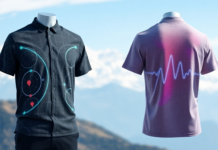
The rating system will now use just three shirt colours — green, yellow, and red — to represent overall risk levels. Producers found to be sourcing fibres from known high-risk locations will automatically receive a red shirt designation, indicating the presence of Ancient and Endangered Forests or other controversial sources within their supply chains. This automatic classification sends an unambiguous signal to brands and sourcing partners about supply chain risks.
Greater Weight for Next Gen Solutions and Landscape Conservation
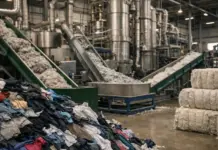
A significant development within the revised framework is the increased weighting assigned to companies that are actively investing in Next Gen Solutions. These include fibres produced from recycled textiles, as well as participation in landscape-level forest protection initiatives. Canopy has emphasised that these shifts directly address the mounting pressures of the global climate crisis and an increasingly stringent international regulatory environment.
The focus on Next Gen Solutions reflects the growing recognition within the industry that forest sourcing practices must evolve beyond harm reduction toward active contribution to circular and resilient fibre systems.
Industry Consultation and Legal Review
The development of the updated Hot Button Report framework was not conducted in isolation. Canopy stated that the process included consultation with all 28 rated MMCF producing companies and select brand partners. A legal review was also undertaken to ensure the framework’s compliance with international legislation — an important step given the tightening of environmental regulations in key markets globally.
Canopy senior lead MaryAnn Ramirez commented on the evolution of the Hot Button Report: “The Hot Button helped change the conversation about where fashion’s fibres come from. Ten years ago, the industry was asking whether viscose could be sourced without destroying the world’s most vital forests. Today, we have the opportunity to build a fibre system that is circular, resilient, and keeps forests standing. Hot Button is a system that must feel fair, equitable, and consistent year-to-year so producers can plan with confidence. At the same time, it must remain flexible enough to credit diverse pathways to impact.”
What This Means for the MMCF Sector
For MMCF producers, the revised Hot Button Report sets a clearer path forward while raising the bar on responsible forest sourcing. The updated framework’s three-colour system removes ambiguity in how risk is communicated, and the tailored targets across company sizes ensure expectations are proportionate and achievable. At the same time, the emphasis on Next Gen Solutions and landscape-level conservation signals that the direction of the Hot Button Report is firmly aligned with the broader sustainability demands now shaping the global textile industry.
With over 550 apparel brands anchored to the CanopyStyle initiative relying on the Hot Button Report for their sourcing decisions, the impact of these updated criteria will be felt across a wide span of the fashion supply chain when the 2027 edition comes into effect.