


























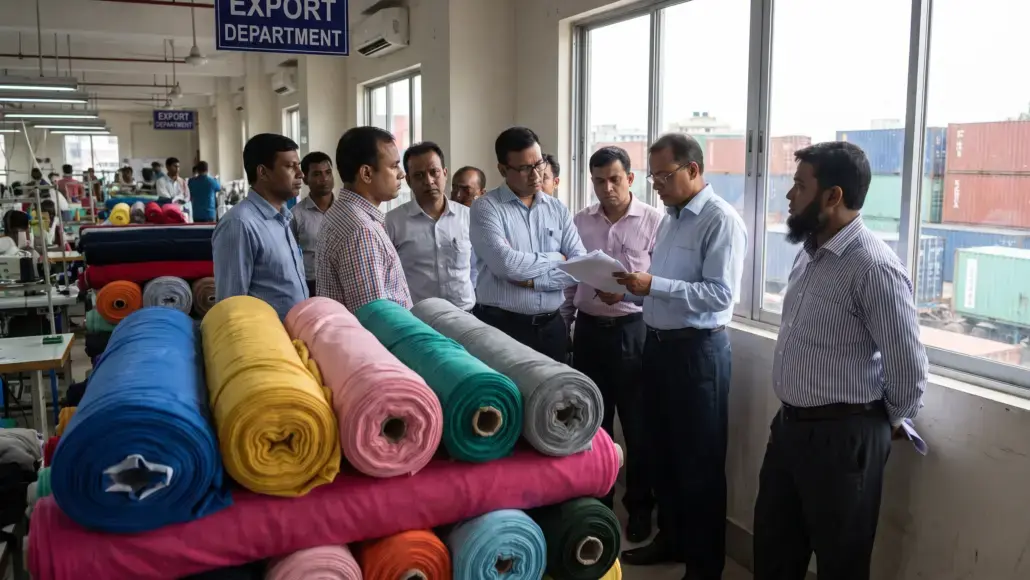
Bangladesh’s government has halted the import of knit fabrics used by knitwear exporters under its newly issued Import Policy Order, triggering serious concern across the country’s apparel industry. Stakeholders warn the move could directly impact knitwear exports, which account for more than half of Bangladesh’s annual apparel export earnings of approximately $39 billion.
The commerce ministry has not offered a detailed explanation for the decision to restrict the knit fabric import ban. However, Commerce Minister Khandakar Abdul Muktadir acknowledged that while local industries have developed the capacity to meet most knitwear raw material demand, certain specialised imports remain necessary. “We will understand the issue better once we hold the meeting,” he told.
Industry stakeholders believe the government moved to restrict imports primarily to protect domestic textile mills that have made heavy investments and, according to their own claims, are capable of meeting the sector’s full raw material requirements.
What the Import Policy Order Actually States
The Import Policy Order issued by the commerce ministry specifies that knit fabrics are no longer eligible for import under standard provisions. However, the order does carve out an exception for specialised knit fabrics that are not produced locally — including man-made fibre fabrics, sportswear fabrics, and functional or technical textiles — provided they are backed by recommendations from the relevant exporters’ association and certification from the lien bank.
Exporters Fear Orders Could Shift to Competing Countries
Apparel industry owners are vocal about the risks posed by the knit fabric import ban. Their central concern is that buyers may redirect orders to competing manufacturing countries if they cannot source their preferred yarn or fabric through Bangladesh-based exporters.
Mohammad Hatem, president of the Bangladesh Knitwear Manufacturers and Exporters Association (BKMEA), stated clearly that not every type of knit fabric is produced domestically. “Some high-value-added knit fabrics need to be imported. In some cases, buyers also supply raw materials on a free-of-cost basis. That is why these fabrics need to be imported,” he said.
He further pointed out that cost competitiveness is equally critical. If imported raw materials are available at lower prices than locally produced alternatives, the inability to access them would make Bangladesh a less attractive sourcing destination. “Even if we can get the same raw material at a lower price from abroad than in the local market, we will not be able to import it. Then why would buyers place orders here?” he said.
Hatem, a Narayanganj-based knitwear exporter, described the decision as part of a “deep conspiracy” targeting the export-oriented apparel sector and called for an urgent identification of those responsible. He also noted that the matter had previously been raised at the ministry level, where exporters had protested and made their case.
“Based on our arguments, the then acting secretary of the Commerce Ministry assured us at that meeting that the issue would not be included in the Import Policy Order. We need to know how it eventually made its way into the order,” he said.
Industry data indicates that approximately 80% of yarn and fabric required by the knitwear sector is currently sourced from local mills, while the remaining portion is imported. By comparison, local textile mills supply around half of the raw material requirements of the woven garment sector.
Textile Millers Assert Full Supply Capacity
On the other side of the debate, representatives from the textile manufacturing segment maintain that domestic capacity is more than adequate to serve the Bangladesh RMG sector’s knitwear needs.
Showkat Aziz Russell, president of the Bangladesh Textile Mills Association (BTMA), stated that local mills have surplus capacity beyond what the knitwear sector currently demands. “We have more capacity than the amount of raw materials required for knitwear production. Bangladesh is now the king of knitwear,” he said.
Russell also argued that under the previous arrangement, buyers — not garment exporters — were the primary beneficiaries when imports took place, since it was largely buyers who dictated sourcing decisions. “But buyers dictate the sourcing here. So even if imports take place, the benefits do not go to garment exporters; rather, the buyers get the benefit,” he said. He added that the government’s decision would effectively end buyers’ ability to control raw material sourcing.
The ongoing debate between knitwear exporters and textile millers over the knit fabric import ban reflects the deeper structural tensions within Bangladesh’s apparel supply chain, as the Bangladesh apparel industry navigates the competing interests of upstream manufacturers and export-focused garment producers. With knitwear exports forming the dominant share of the country’s $39 billion annual apparel output, the resolution of this policy dispute carries substantial economic weight for the Bangladesh RMG sector.