


























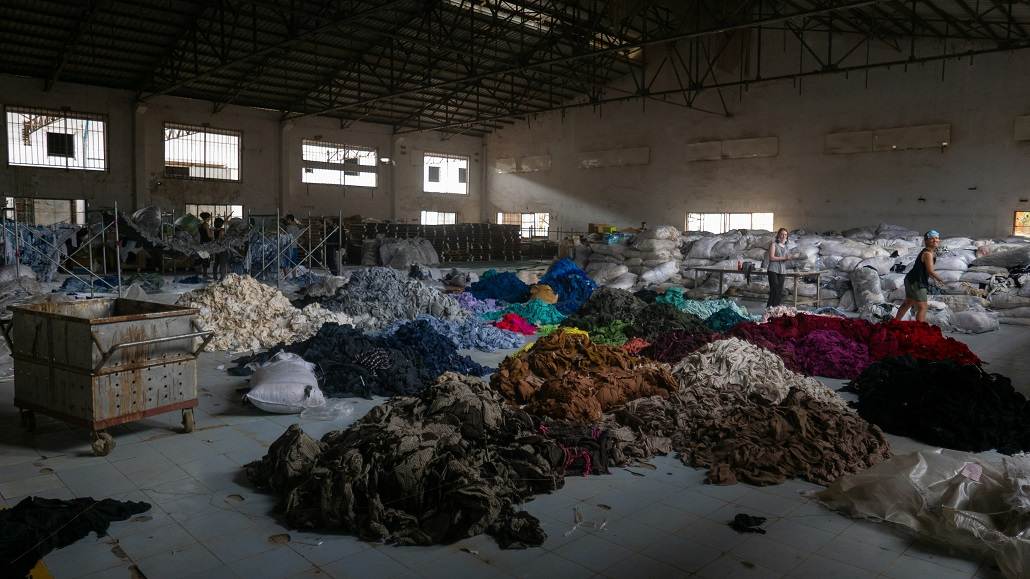
On Tuesday, the European Parliament granted final approval for new regulations aimed at minimizing food and textile waste throughout the European Union. Under the new Extended Producer Responsibility (EPR) schemes, textile manufacturers will be held accountable for the expenses associated with the collection, sorting, and recycling of their products. Each member state is required to implement these schemes within 30 months of the directive becoming effective.
These regulations will apply to all producers, including those utilizing e-commerce platforms, regardless of their location inside or outside the European Union (EU). Micro-enterprises will benefit from an additional year to meet the EPR obligations.
The newly established rules will encompass a wide range of products, including clothing, accessories, hats, footwear, blankets, bed and kitchen linens, and curtains. At the initiative of the Parliament, EU nations may also consider EPR schemes specifically for mattress manufacturers. Furthermore, member states must tackle ultra-fast and fast fashion practices when calculating the financial contributions to the EPR initiatives. During the plenary session, the President announced that the proposed legislation was officially adopted, having already received the Council’s approval earlier in the summer.
By enacting this legislation, the EU is marking a decisive shift away from the era of disposable fashion, laying the groundwork for a more sustainable fashion economy. This effort is part of a broader initiative for textile waste reduction in the EU. However, these new requirements may impose additional challenges on the textile and apparel sectors in developing countries like Bangladesh, Vietnam, China, and India. The global textile industry is already experiencing instability due to US tariffs, and this new EU regulation adds another layer of disruption. It is anticipated that garment and textile exporters will face increased pressure as retailers, brands, and e-commerce companies dominate the market and pass financial responsibilities down the supply chain. This transformation is particularly impactful for millions of individuals in Asian countries whose livelihoods are linked to the textile and garment industry.
As the world’s largest textile importer, the EU sources a significant portion of its fast fashion from these nations. The implementation of these rules is expected to have far-reaching effects on global supply chains, compelling exporters to adopt circular design principles and enhance traceability mechanisms. Overall, the recent measures reflect a serious commitment to textile waste reduction in the EU, emphasizing a more sustainable approach to fashion and textiles moving forward.

