





























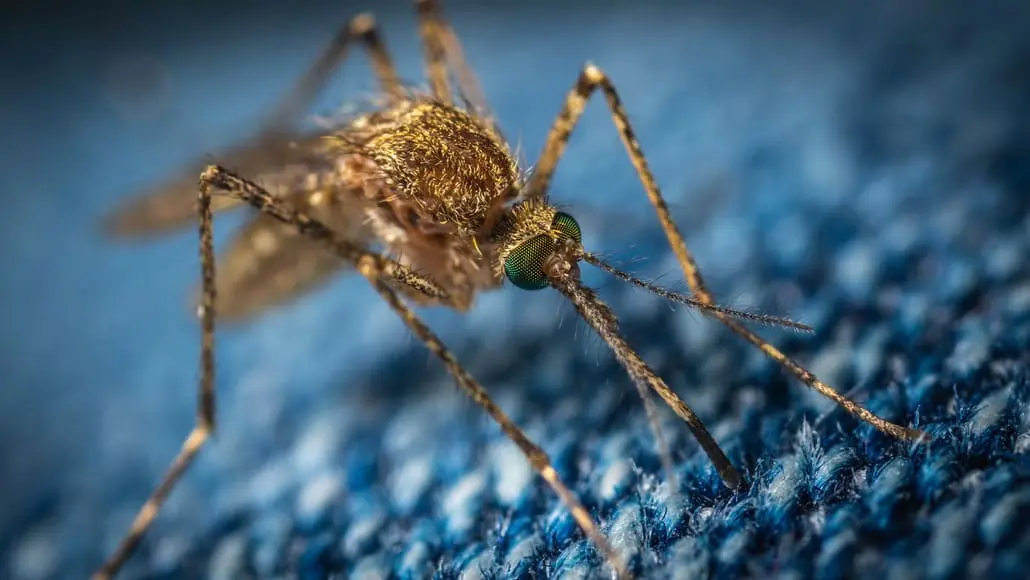
Researchers at North Carolina State University’s Wilson College of Textiles have produced a new seamless knitted garment that aims to stop mosquito bites without relying on insecticides—while still meeting the comfort and flame-retardant requirements expected in military uniforms. The project, led by Andre West, director of The Zeis Textile Extension, uses engineered fabric geometry to physically prevent biting, replacing the conventional approach of treating clothing with slow-release chemicals.
Rather than attempting to repel insects, the team designed textiles that mosquitoes can land on but cannot penetrate. Their approach starts with mathematical modelling of mosquito mouthpart anatomy, translating biological dimensions into engineering limits for fabric construction. From this, the researchers defined combinations of pore size and fabric thickness that block a mosquito’s proboscis from reaching the skin, even when an insect probes after landing. The aim is durable, insecticide-free mosquito protection that is inherent to the knit structure itself.
To validate the concept, the team produced AiryPique knit fabrics on Shima Seiki machines and tested them in controlled bioassays using Aedes aegypti, a species often used in laboratory studies because of its strong host-seeking behaviour. In arm-in-cage trials, the AiryPique samples prevented blood feeding while still drawing high landing rates. The researchers interpret that result as potentially beneficial: if mosquitoes are not deterred by repellency, they may be less likely to abandon the garment and search for exposed skin nearby, a scenario that can occur when insects are repelled from one area of the body.
After proving performance at swatch level, the group moved to a finished garment by selecting a knit made from a Nomex and Protex C yarn blend. Using WHOLEGARMENT technology, they produced a complete shirt in a single seamless process, avoiding conventional cut-and-sew assembly. The researchers argue that this production pathway could make scaling more realistic by reducing steps, labour and time, while enabling “fit on demand” sizing without the burden of holding large inventories.
In walk-in cage evaluations—designed to better mimic real-world exposure—the garment was tested against approximately 200 host-seeking mosquitoes with stationary human volunteers over 20 minutes. Across multiple replicates, the shirt delivered very high bite protection, with only a small number of bites recorded.
Comfort was assessed alongside protection. Thermal testing indicated the knit performed similarly to existing Army combat uniform garments, while the AiryPique structure supported breathability through high air permeability. Moisture-management testing also shaped the final material choice: a Nomex-only version was removed from consideration because it showed weaker wetting and spreading behaviour compared with blended alternatives.
Flame-retardant performance was confirmed through standard vertical flame tests and a garment-level PyroMan manikin assessment. In those evaluations, the garment self-extinguished and charred without after-flame, supporting the “no-melt, no-drip” behaviour required for protective apparel applications.
The researchers position the work as a step toward protective clothing that delivers insecticide-free mosquito protection without sacrificing wearability or safety requirements. By combining biological modelling with automated seamless knitting, the team says the approach could offer a scalable route to uniforms and protective garments designed for environments where mosquito-borne disease risk and flame exposure concerns can overlap.