






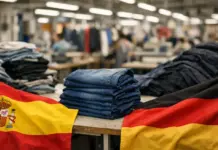



















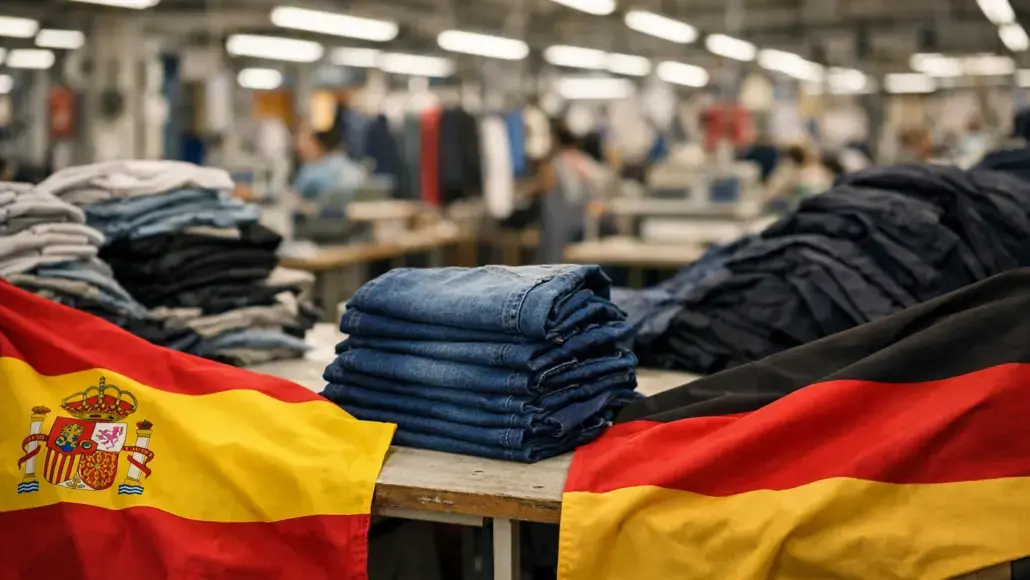
A notable realignment is taking shape within the European Union when it comes to the distribution of Bangladesh’s readymade garment exports. Figures from the Export Promotion Bureau cited in media reports show that during the first quarter of FY2026–27, Bangladesh’s RMG exports to Spain rose 13.73 per cent year-on-year, reaching $1.148 billion. In the same period, exports to Germany came in at approximately $1.123 billion, reflecting a marginal decline of 0.15 per cent.
The shift in ranking between the two markets is striking when placed in historical context. Just a year earlier, Germany led Spain by approximately $115 million in terms of Bangladesh’s apparel shipments. By the first quarter of FY2026–27, Spain had moved ahead, albeit by a narrower margin of around $25 million. While this repositioning within individual EU markets draws attention, it does not capture the fuller and more pressing picture of Bangladesh’s standing across the EU apparel market as a whole.
Broader EU Performance Raises Deeper Concerns
When looking at the EU apparel market in aggregate, the trends are considerably more worrying for Bangladesh. According to media reports citing Eurostat data, Bangladesh’s apparel exports to the EU fell by 11.67 per cent year-on-year during the January to August 2026 period. The country’s share of total EU apparel imports declined from 21.5 per cent to 19.8 per cent during the same window. Notably, the EU’s overall apparel imports fell by a comparatively modest 3.83 per cent in the same period, meaning Bangladesh’s decline was considerably steeper than the broader market contraction.
The challenge goes beyond just the value of shipments. Export volumes from Bangladesh also reportedly fell 4.58 per cent, while the average unit price realised by Bangladeshi exporters declined by 7.43 per cent. This dual compression — fewer units shipped and lower prices per unit — signals a structural squeeze on the country’s export competitiveness within the EU apparel market.
Competing Suppliers Gaining Ground
The difficulties faced by Bangladesh are further highlighted when set against the performance of its rivals. China’s apparel exports to the EU reportedly grew by 2.38 per cent, pushing its market share to 32.7 per cent. Vietnam also reportedly recorded export growth of 4.46 per cent to EU buyers over the same period. While Bangladesh’s EU apparel market share contracted, these two major competing suppliers were moving in the opposite direction.
LDC Graduation: An Added Layer of Uncertainty
An additional concern shaping the outlook for Bangladesh apparel exports is the country’s impending graduation from least developed country status. The transition away from LDC classification is expected to alter the preferential trade arrangements Bangladesh currently enjoys when accessing EU markets. As these preferences change, the country’s cost competitiveness relative to rival suppliers could come under further pressure, making the existing market share erosion all the more consequential.
One Quarter Does Not Define a Trend
The movement of Spain ahead of Germany in receiving Bangladesh’s RMG exports is a development worth monitoring, though industry observers are careful not to read too much into a single quarter’s data. One set of figures is insufficient to confirm a durable shift in buyer preferences or sourcing patterns at the country level within the EU.
What is less ambiguous, however, is the overall trajectory of Bangladesh’s position in the EU apparel market. Declining export value, shrinking market share, falling volumes, and lower average unit prices together present a more challenging picture than any single bilateral market milestone can offset. As stakeholders have emphasised, Bangladesh would have to work on strengthening its competitiveness across the EU as a whole, rather than concentrating on performance in individual markets, especially as trade preferences and buyer requirements continue to evolve.