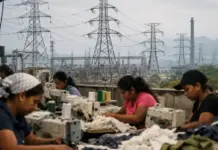




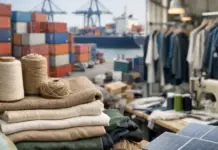
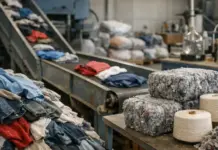




















For the past three years, Turkey’s textile exporters have navigated a landscape defined by significant challenges. Surging labor costs, persistent inflation, escalating financing expenses, and aggressive competition from lower-cost production markets have squeezed manufacturers. The gross minimum monthly wage alone has increased by over 146 percent in Turkish lira terms during this period. Furthermore, inflation has steeply raised production costs, with an item valued at 100 Turkish lira in mid-2023 now approximated at 267.5 lira, according to World Bank data.
Amidst these pressures, the urgent pursuit of a competitive edge has become paramount for Turkish exporters. For those in the apparel and textiles sector, this has translated into exploring niche positioning through innovative design, specialized markets, advanced production techniques, and new materials that can command a premium in international markets.
Hemp Emerges as a Strategic Answer
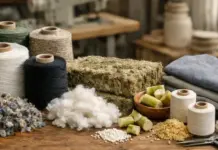
Across Turkey’s textile industry, industrial hemp fabrics are rapidly emerging as a compelling solution. Manufacturers are moving beyond mere research, actively integrating hemp fabrics and hemp-cotton blends into their commercial offerings. They are strategically positioning themselves to capture growing demand from European and North American buyers. This transformative Turkish Textile Hemp Shift was prominently showcased at Texhibition Istanbul earlier this year. The exhibition’s Innovation Hub, specifically dedicated to technological developments in textiles, featured a strong focus on hemp and its applications, with many products already in commercial production rather than concept displays.
Arzu Kaprol, a renowned Turkish fashion designer who curated the Innovation Hub, noted a dramatic shift in the industry’s focus on hemp in recent years. She underscored its superior sustainability when compared to cotton in terms of production. Kaprol also highlighted that hemp is softer than linen, slightly firmer than cotton, and possesses a variable capacity to absorb humidity. She further pointed to younger consumers as key drivers for alternative natural fibers, noting their increasing concern for sustainable and natural materials.
Global Interest Fuels Turkish Innovation
Global brands, including Patagonia, Levi Strauss & Co., Outerknown, and Tentree, have expanded or experimented with hemp-based collections in recent years, recognizing its environmental benefits over more resource-intensive fibers. While China remains dominant in hemp textile manufacturing and France leads Europe in cultivation, Turkey is carving out a distinct strategy. Rather than competing solely on agricultural scale, Turkish exporters are leveraging the nation’s sophisticated textile and apparel manufacturing infrastructure to become a preferred near-shore supplier of hemp garments for European fashion brands. This concerted effort increasingly extends across the entire value chain, encompassing farming, spinning, weaving, and blending technologies. Manufacturers are actively developing hemp-organic cotton combinations designed to improve softness without sacrificing durability or crucial sustainability credentials.
Leading this push is Egedeniz Textile, one of Turkey’s longest-established sustainable production companies and the country’s first organic-certified textile manufacturer. Egedeniz has invested directly in hemp cultivation, promoting Turkish-grown hemp as an integral part of a vertically integrated sustainability strategy. Mehmet Ünsal, director of Egedeniz Group, noted increasing interest from brands in traceable, low-impact raw materials, stating that hemp is currently the “rising star.” He emphasized the importance of continuity for farmers and highlighted that Egedeniz has achieved good quality in local hemp cultivation, continuously improving efficiency. Their hemp is gaining traction in various categories, including woven fabrics for T-shirts, underwear, sweatshirts, women’s dresses, casual wear, activewear, and home textiles. Even the waste from hemp is in demand from European companies due to its inherent sustainable properties.
Ünsal further elaborated on hemp’s qualities for longevity, sustainability, and regenerative farming. He cited an example where hemp planted in a U-shape around cotton acted as a natural repellent against red spiders, a common pest for cotton crops. This observation demonstrated how different crops, when planted together, can create significant value and aid the ecosystem’s balance without the need for additional labor, pesticides, or chemicals.
Ahmet Şişman, chairman of the Istanbul Textile and Raw Materials Exporters’ Association (İTHİB), affirmed that hemp is not a new material for the textile industry, having been utilized in Anatolia for centuries. He underscored its significant potential due to its durability, longevity, and versatility, and its resurgence as sustainable production gains global importance. Şişman highlighted the clear increase in global brands’ interest in alternative and environmentally friendly raw materials, driven by their sustainability-focused transformation efforts and regulations introduced under the European Union’s Green Deal. While currently used in technical textiles, upholstery fabrics, and selected apparel, advancements in processing technologies are expected to broaden its range of applications significantly.
Denim Sector Paves the Way
The denim sector has become one of the most active areas of innovation, with several Turkish companies now integrating hemp into their denim collections. Prominent examples include Çalık Denim, Adasya Denim, and Bossa. These initiatives aim to combine sustainability benefits such as reduced water consumption and agricultural inputs with the performance characteristics, appearance, comfort, and durability demanded by mainstream consumers. Collaborations, like Bossa’s participation in international hemp-denim innovation projects with Fashion for Good and technology partners, are exploring advanced cottonized-hemp processing techniques designed to increase hemp content in denim without sacrificing comfort. These developments are propelling hemp beyond niche collections towards commercially viable apparel manufacturing.
A Broader Strategic Transformation
This growing interest in hemp signifies a profound structural shift within Turkey’s textile industry. For decades, manufacturers competed heavily on price and production efficiency. However, the conversation is now increasingly revolving around sustainability, traceability, recycled materials, organic certification, and near-shoring advantages. Manufacturers recognize that long-term competitiveness will depend less on being the cheapest supplier and more on their ability to deliver lower-carbon products through transparent and resilient supply chains. Hemp naturally aligns with this long-term strategy.
However, challenges persist. Global brands continue to raise questions about the scalability of hemp production and its pricing, which remains significantly higher than many conventional textile options, particularly polyester blends. Arzu Kaprol acknowledged this irony, stating that organic materials often appear more expensive due to widespread societal reliance on synthetic materials. She argued that the industry’s relationship with clothing should extend beyond cost alone, emphasizing the body’s connection with biomaterials and what touches our skin.
Despite the enthusiasm, hemp currently represents only a small fraction of Turkey’s overall textile and apparel exports. Mehmet Ünsal of Egedeniz Group pointed out that while global brands seek suppliers who can offer full vertical integration from farm to finished fabric, a stronger commitment from them is crucial to assure farmers and foster the necessary continuity for sustainable production.
Mustafa Gültepe, chairman of the Türkiye Exporters Assembly (TİM), reiterated the point that Turkish exporters increasingly need to position themselves as strategic solution partners rather than mere manufacturers. This shift supports broader economic goals: protecting employment, generating foreign currency earnings, and maintaining the competitiveness of a vital export sector that generated approximately $26 billion in 2025. Recent figures indicate signs of resilience, with Turkey’s apparel exports reaching approximately $6.61 billion during the first five months of 2026, stabilizing despite ongoing challenges compared to roughly $6.7 billion during the same period a year earlier.
The textile industry in Turkey has a long history of adaptability. Whether through innovations in denim, organic cotton, recycled fibers, or near-shoring strategies, Turkish manufacturers have repeatedly sought new ways to remain relevant in changing global markets. The Turkish Textile Hemp Shift represents the latest chapter in this ongoing story, transforming hemp from a mere sustainability trend into a strategic investment for the future.