

























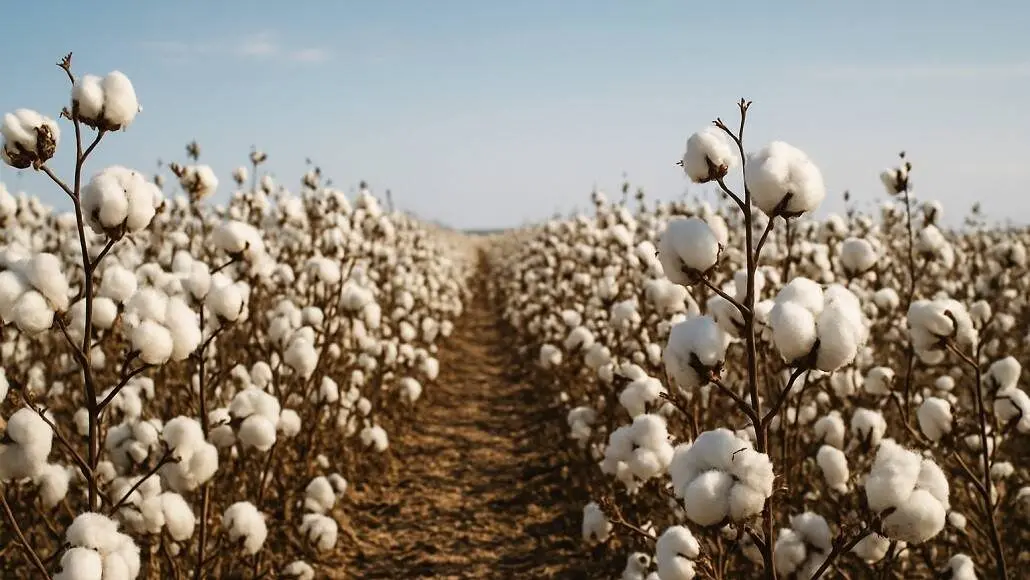
Bangladesh is intensifying efforts to strengthen its cotton sector with an ambitious long-term strategy aimed at reducing dependence on imported fibre and improving the resilience of its textile and apparel value chain. The government plans to significantly expand domestic cotton production over the coming decades, positioning local cultivation as a key pillar of the country’s export-driven textile industry.
According to the Cotton Development Board (CDB), Bangladesh currently produces just over 224,000 bales of cotton lint annually, supplying only around 16–17% of the industry’s requirements. To bridge this gap, authorities have set phased production targets of 500,000 bales by 2030 and 1.9 million bales by 2050. Achieving this Bangladesh cotton production target is expected to reduce the country’s heavy reliance on imported raw cotton while improving supply chain stability.
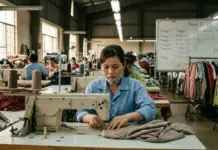
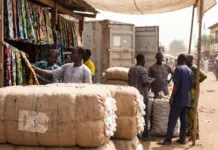
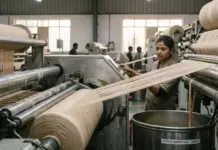
Bangladesh’s garment and textile industry consumes approximately 9 million bales of cotton each year, making it one of the world’s largest cotton importers. Annual imports currently range between 7.5 million and 8 million bales. During FY2025–26 alone, the country imported nearly 7.3 million bales valued at around Tk45,000 crore.
Officials estimate that reaching the interim goal of 500,000 bales by 2030 could save nearly Tk800 crore in foreign exchange every year by lowering import requirements. The Bangladesh cotton production target is therefore expected to strengthen both the country’s trade balance and raw material security.
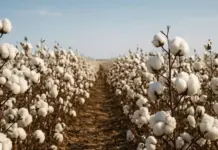
To achieve these objectives, the government plans to introduce higher-yielding hybrid cotton varieties, expand cultivation into new agricultural zones and continue providing financial incentives to growers. While cotton is currently cultivated on roughly 45,000 hectares, the CDB believes as much as 200,000 hectares could potentially support cotton farming.
Expansion efforts will primarily focus on char lands, the Barind region and suitable plains in hilly districts where food crop cultivation remains limited. Officials say this approach will allow cotton acreage to increase without affecting national food production.
For FY2026–27, the government has allocated Tk20 crore to encourage cotton cultivation. Around 25,000 smallholder farmers across 26 districts will receive quality seeds, fertilisers and pesticides to grow cotton as an intercrop on one bigha of land.
In addition, authorities are integrating cotton growers into the national farmer card programme while exploring carbon trading-linked financing to improve farmers’ access to credit and encourage wider cultivation.
According to Md Rezaul Amin, Executive Director of the Cotton Development Board, cultivating cotton on one bigha requires an investment of approximately Tk15,000, while farmers can generate close to Tk60,000 by harvesting around 15 maunds of seed cotton. He also noted that every kilogram of domestically produced cotton reduces import expenditure by roughly $4, highlighting the economic benefits of expanding local production.
Researchers at the Cotton Development Board added that climatic conditions across more than 32 districts are favourable for cotton cultivation. They also believe that introducing genetically modified cotton varieties in the future could significantly improve yields, helping Bangladesh reduce import dependence while strengthening the competitiveness of its textile and apparel sector.