





























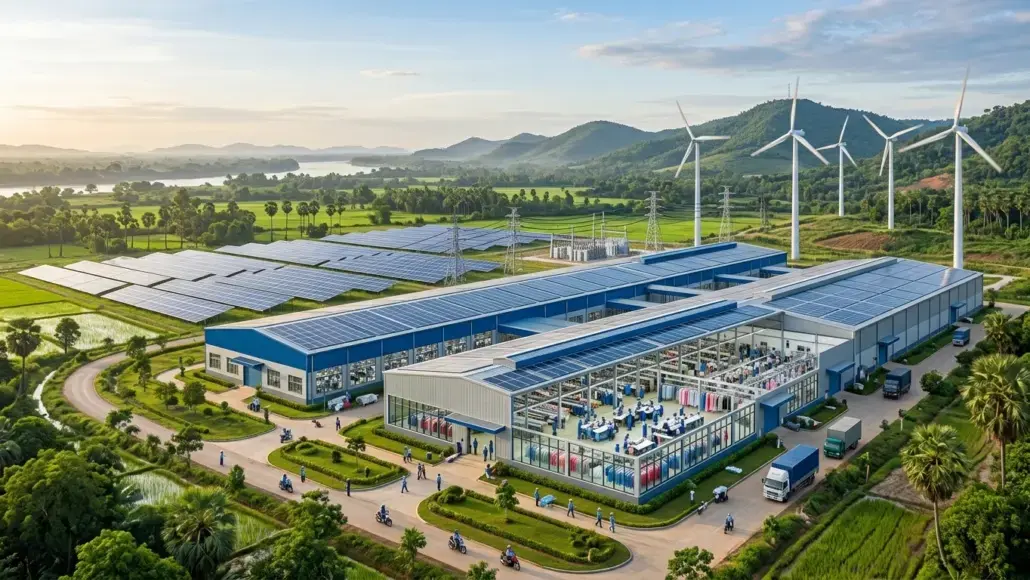
The global apparel manufacturing landscape increasingly rewards producers who embrace sustainable practices, and Cambodia’s textile and garment industry stands at a critical juncture where renewable energy apparel integration could determine its competitive standing in the international market. Industry analysts and stakeholders have identified renewable power sources as essential to maintaining and strengthening Cambodia’s position as a significant garment production hub.
Cambodia’s apparel manufacturing sector, which employs hundreds of thousands of workers and contributes substantially to the nation’s economic output, has long relied on conventional energy sources. However, as international brands and retailers impose stricter environmental standards on their supply chains, the shift toward renewable energy apparel solutions has become increasingly necessary. Factories that successfully transition to clean energy sources gain a decisive advantage in securing orders from major global retailers committed to sustainability targets.
The Strategic Importance of Clean Power for Manufacturing
The adoption of renewable energy apparel facilities addresses multiple market pressures simultaneously. International buyers now routinely evaluate their suppliers’ environmental footprints, with many implementing mandatory green energy requirements for their manufacturing partners. Cambodia textile manufacturing operations that proactively invest in solar, wind, or hydroelectric power position themselves favorably in competitive bidding processes.
Energy costs represent a substantial portion of operational expenses in garment production. By transitioning to renewable sources, factories can reduce long-term energy expenditures while simultaneously meeting buyer expectations regarding apparel industry sustainability. This dual benefit creates compelling economic incentives beyond environmental considerations.
Strengthening Global Market Position
Cambodia’s reputation as a reliable garment production destination rests partly on its ability to adapt to evolving market demands. The renewable energy apparel transition demonstrates the sector’s commitment to modernization and environmental stewardship. Facilities implementing clean power competitiveness measures report improved relationships with international customers and enhanced contract retention.
The global apparel industry is undergoing rapid transformation, with major retailers establishing science-based targets for supply chain emissions reduction. Manufacturers in emerging markets like Cambodia who embrace renewable energy apparel technologies early position themselves ahead of competitors still dependent on traditional power grids.
Industry-Wide Implications
The garment sector green energy shift extends beyond individual factories. A comprehensive transition toward renewable power across Cambodia textile manufacturing would strengthen the nation’s overall competitive positioning in global markets. This transformation supports Cambodia’s international commitments to climate action while simultaneously creating a more attractive business environment for manufacturing investments.
Stakeholders recognize that renewable energy apparel adoption is not merely an environmental initiative but a strategic business imperative. Factories that delay this transition risk losing market share to more forward-thinking competitors in other regions already invested in clean energy infrastructure.
The pathway forward for Cambodia’s apparel manufacturing competitiveness increasingly runs through renewable energy adoption. As global demand for sustainably produced garments continues expanding, clean power competitiveness becomes intertwined with long-term commercial viability. The industry’s capacity to harness renewable resources will significantly influence its trajectory in an evolving global marketplace.