

























Cambodia’s garment, footwear and travel goods industry—an export engine worth more than $16 billion—has been warned it cannot rely on low wages as its main selling point as the country approaches graduation from Least Developed Country (LDC) status and faces intensifying competition across Asia. At the Cambodia Textile Summit 2026, industry leaders and government officials argued the Cambodia garment sector must invest more aggressively in skills, sustainability, innovation and domestic supply-chain capacity if it wants to remain a preferred sourcing destination in a post-LDC trade landscape.
The summit, held on 16 June and convened by EuroCham Cambodia, brought together stakeholders to map a competitiveness roadmap ahead of expected shifts in trade rules. The one-day event was co-hosted by TAFTAC, the International Labour Organisation (ILO), Better Factories Cambodia (BFC) and Germany’s development agency GIZ, with sessions centred on sustainability, skills, innovation and supply-chain resilience.
The timing is consequential for one of Cambodia’s most important economic pillars. In 2025, the garment, footwear and travel goods (GFT) sector generated about $16.2 billion in exports—more than half of the country’s total—after growing 16.5% year on year.
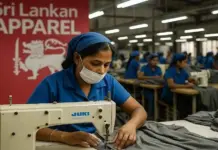
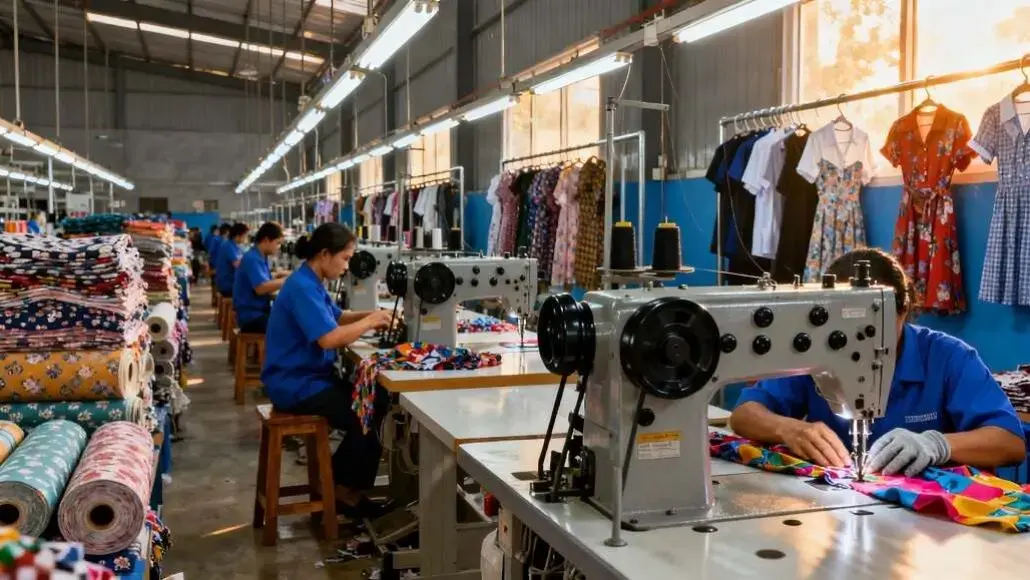
TAFTAC deputy chairman Robert Hwang said the industry is entering a new chapter shaped by geopolitical volatility and rising expectations from buyers. Celebrating TAFTAC’s 30th anniversary, he said the association passed 1,000 member factories in May 2026. Cambodia now counts around 1,867 factories, including about 900 export-focused sites, employing more than 1.1 million workers—72.5% of them women.
“The industry’s future competitiveness will rely less on low labour costs and more on reliability, compliance, sustainability, productivity, innovation and resilience,” Hwang said.
He warned that supply-chain disruption, higher logistics and energy costs, stricter sustainability requirements and shifting trade agreements are changing how brands evaluate sourcing countries. LDC graduation and new trade frameworks such as the CPTPP, he added, will sharpen competition further. To stay ahead, he called for more investment in skills, digitalisation, renewable energy, cleaner production and supporting industries that can move the sector up the value chain.
ILO: low-cost labour is no longer enough
ILO country director Xiaoyan Qian said the GFT sector supports roughly 1.2 million to 1.3 million workers—around 78% women—and indirectly sustains two to three million livelihoods. She noted that exports continued to rise in early 2026, up 7.7% in the first quarter, but said Cambodia’s proposition must evolve.
“As Cambodia graduates from LDC status, competitiveness must increasingly come from higher skills, productivity, innovation, compliance and sustainability,” she said.
Qian set out four priorities: strengthen factory-level compliance and occupational safety; tackle systemic risks such as transport safety and climate impacts through collective action; expand lifelong skills development; and promote Cambodia’s transparency and reliability to global buyers.
Germany backs due diligence and circularity
Christof Weigelmeier, deputy head of mission and head of development cooperation at the German Embassy, said Cambodia’s textile industry remains central to job creation. Citing World Bank data, he said Cambodia created about 800,000 jobs last year, with more than 200,000 linked to textiles.
He highlighted Germany’s FABRIC project, which supports better working conditions, environmental management and human-rights due diligence through factory support and policy engagement. He also pointed to women’s empowerment programmes and circular economy projects aimed at cutting textile waste.
Looking ahead, he said environmental and human-rights due diligence systems will matter more as Cambodia targets LDC graduation by 2029 and prepares for the eventual phase-out of the EU’s Everything But Arms (EBA) preferences by 2032. Weigelmeier welcomed Cambodia’s selection to host the OECD Footwear and Apparel Due Diligence Forum in 2027, calling it international recognition of Cambodia’s growing profile in responsible sourcing.
Government targets upstream capacity to meet origin rules
Labour and vocational training minister Heng Sour said the government wants Cambodia to be seen as a sustainable, trusted sourcing base, but acknowledged a structural weakness: the country imported about $8.7 billion in inputs—nearly 60% of production requirements.
To reduce that exposure and prepare for tougher rules-of-origin after LDC graduation, he said Cambodia plans to develop a special economic zone focused on textiles, aiming to attract weaving, spinning, dyeing and fabric production. The goal is to replace at least 30% of imports over time, lowering costs and improving speed and resilience.
“Diversification does not mean we have to move away from this industry,” Sour said. “Diversification is not only horizontal, but it can also be vertical.”
Sour said Cambodia will host the OECD due diligence forum in April 2027, the first time it will be held in a producing country after 12 years in Paris. He said officials see the event as a chance to demonstrate progress to brands and investors.
He also insisted labour compliance will remain central to the Cambodia garment sector strategy. Cambodia is finalising a new five-year memorandum with Better Factories Cambodia that would keep participation mandatory for garment and travel goods factories and extend compulsory coverage to footwear. The government also plans to bolster the Arbitration Council as donor funding declines and aims to pass Cambodia’s first comprehensive Occupational Safety and Health law by the end of 2026, with support from the ILO and the Republic of Korea.
Summit speakers broadly agreed the next phase will depend on coordinated action among government, employers, workers, brands and development partners. The message from Phnom Penh’s textile leadership was clear: Cambodia’s future advantage will be built less on cheap labour and more on capability, compliance and a stronger domestic ecosystem.

